
AI Factories: How GPU-Scale Data Centers Are Rewiring Infrastructure
Published:Executive Summary: The data center is no longer a building that stores servers. It is becoming an AI factory — a facility that manufactures intelligence in the form of inference tokens. This shift is not incremental. It breaks every assumption that governed data center design for the last two decades: rack power jumps from 10 kW to 140 kW, cooling moves from air to liquid, fiber counts double, and the hardware you design for today will be obsolete before construction finishes.
This guide breaks down what changes when a data center becomes an AI factory, what infrastructure decisions are now irreversible, and how to design for hardware that does not exist yet.
Quick Navigation
- 1 What Is an AI Factory?
- 2 The Power Hierarchy: When Watts Become the Binding Constraint
- 3 GPU Density and the Cabling Explosion
- 4 Cooling: From Air to Liquid and the Ripple Effect
- 5 The 12-18 Month Hardware Cycle: Designing for the Unknown
- 6 New KPIs: Time to Token and Tokens per Watt
- 7 The Digital Twin Imperative: Build Twice
- 8 What This Means for Infrastructure Vendors
- Q Key Questions & Answers
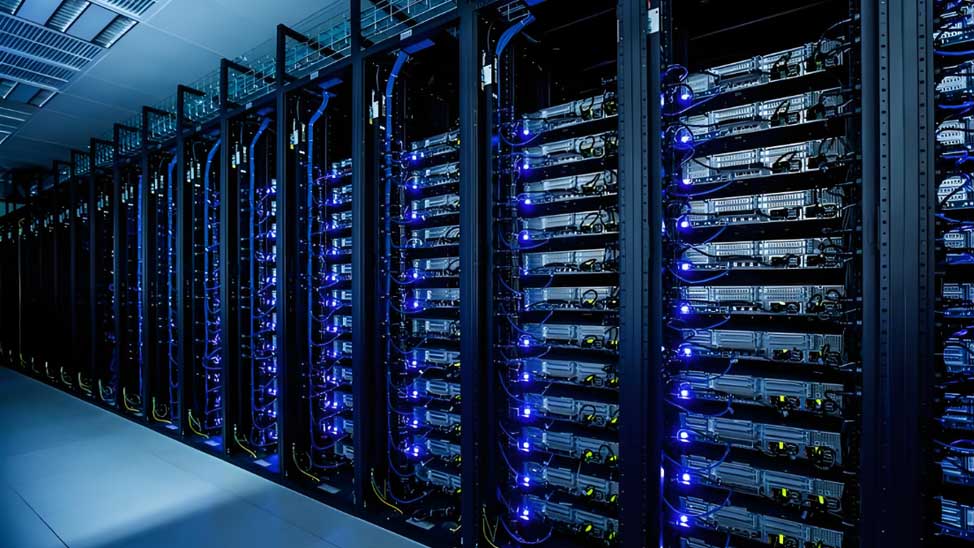
AI factories combine the characteristics of a process plant, a power utility, and an IT environment — all under one roof
What Is an AI Factory?
A traditional data center stores, processes, and delivers data for business applications. An AI factory does something fundamentally different: it transforms data into intelligence across the entire AI lifecycle — from data preparation and model training to fine-tuning and large-scale inference.
The distinction is not semantic. It changes the building's purpose, its economics, and its physical infrastructure. As John DeBoer, Head of Data Center Vertical at Siemens North America, puts it: "We call them AI factories because these future-facing data centers are literally manufacturing the building blocks of knowledge — tokens."
According to Omdia's Global AI Factory Market Landscape report, leading technology companies are projected to invest more than $600 billion in AI infrastructure in 2026 alone, with approximately 75% targeted specifically at AI workloads. This is not an incremental upgrade cycle — it is a new industrial category.
| Dimension | Traditional Data Center | AI Factory |
|---|---|---|
| Primary Goal | Process, store, deliver data | Transform data into intelligence |
| Core Workloads | Enterprise apps, databases, cloud services | AI training, inference, reasoning |
| Compute Architecture | CPU-centric | GPU-accelerated |
| Network Requirements | General-purpose connectivity | High-bandwidth, ultra-low-latency AI fabrics |
| Rack Power Density | 5 to 15 kW | 40 to 140+ kW |
| Cooling | Air-cooled | Liquid-cooled (direct-to-chip) |
| Success Metric | Availability and utilization | Token economics (tokens per watt) |
The critical insight is that an AI factory is simultaneously three things that never had to coexist before: a process industrial plant (because of liquid cooling), a power utility (because of megawatt-scale consumption), and an IT environment. These three domains are now forced to collaborate inside the same building on a compressed timeline.
The Power Hierarchy: When Watts Become the Binding Constraint
Power is no longer a cost to optimize. It is a capacity constraint that defines how much AI output a facility can produce. As Tim Schenk, Principal Key Expert at Siemens, notes: "Much of the U.S. and the world simply cannot produce enough electricity to build all the AI factories that enterprises expect to build at the scale they expect."
This transforms every design decision. Power wasted in one part of the system is not just an efficiency loss — it is irrecoverable capacity that cannot be reclaimed for token production.
The Rack Density Trajectory
The numbers tell the story plainly:
| Year | Platform | Per-Rack Power | GPUs per Rack | Interconnect |
|---|---|---|---|---|
| 2015 | Traditional x86 | 5 kW | N/A | 10 GbE |
| 2020 | Early GPU (A100) | 10 to 15 kW | 8 | HDR InfiniBand |
| 2023 | NVIDIA H100 DGX | 30 to 40 kW | 8 | NDR InfiniBand |
| 2025 to 26 | GB300 NVL72 | 132 to 140 kW | 72 | NVLink 5.0 (130 TB/s) |
| 2026 to 27 | Vera Rubin NVL72 | 120 to 130 kW | 72 | NVLink 6 (3.6 TB/s per GPU) |
| 2027+ | Rubin Ultra NVL576 | ~600 kW | 576 | NVLink 6 (Kyber fabric) |
Sources: NVIDIA GTC 2025, Computex 2025, Tom's Hardware, DatacenterDynamics
Meta's average rack density rose from approximately 18 kW in 2022 to about 34 kW in 2025, according to Omdia. Maximum rack density reached approximately 130 kW with NVIDIA Blackwell NVL72 deployments. Vladimir Galabov, senior research director at Omdia, expects the trajectory to continue: "From where I stand, the industry is ready for a 600 kW rack."
The 800 VDC Revolution
At megawatt-scale rack power, traditional 54V DC distribution becomes physically impossible. Delivering 1 megawatt at 54V requires approximately 18,500 amps — the copper busbars alone would consume up to 64 rack units of space, crowding out compute hardware.
The solution is 800 VDC distribution. At 800 volts, the same 1 megawatt requires only about 1,250 amps. The results:
- 45% less copper in power distribution
- End-to-end efficiency improves from 83% to over 92%
- Total cost of ownership reduced by approximately 30%
As of mid-2026, 29 companies are in the 800 VDC hardware ecosystem. Vertiv, Schneider Electric, Eaton, and Delta are expected to release commercial products in the second half of 2026, synchronized with NVIDIA Kyber rack shipments. Foxconn's Kaohsiung data center has already validated 800 VDC at production scale.
800 VDC distribution cuts copper usage by 45% and improves end-to-end efficiency from 83% to over 92% at megawatt scale
GPU Density and the Cabling Explosion
AI factories do not just consume more power — they require exponentially more fiber. The transition from 400G to 800G Ethernet is not a simple transceiver swap. It doubles the fiber count per link. Existing 8-fiber multimode infrastructure cannot support 800G, which means data centers cabled in the last two to three years face unexpected capital expenditure to keep pace.
The Fiber Count Problem
At 400G, a single SR4 transceiver uses 8 fibers (4 transmit, 4 receive) via an MPO-12 connector. At 800G, the options are:
- Dual-connector approach: Two MPO-12 connectors side by side — physically possible but doubles connector density and management complexity
- 16-fiber VSFF connectors: SN-MT and MMC format connectors pack 16 fibers into a footprint smaller than a single LC duplex — but require updated cleaning procedures and test equipment
- Singlemode migration: Moving to 800G-FR4 over singlemode fiber, which uses 2 fibers via WDM — but at significantly higher transceiver cost
IEEE 802.3dj, defining 1.6T Ethernet over singlemode fiber, is nearing ratification. Broadcom has been shipping non-standard 1.6T transceivers since September 2024. The backend cluster fabric is already moving from 800G to 1.6T and beyond. For a detailed breakdown of fiber connector selection criteria for these speeds, see our fiber connector selection guide for the AI era.
Frontend vs. Backend Networks
AI factories operate two fundamentally different network domains:
| Characteristic | Frontend (Management + Storage) | Backend (GPU Compute Fabric) |
|---|---|---|
| Traffic Pattern | North-south (client to server) | East-west (GPU to GPU) |
| Speed | 100G to 400G Ethernet | 400G to 800G+ InfiniBand or Ethernet |
| Latency Sensitivity | Millisecond | Microsecond |
| Fiber Count | Moderate (hundreds per row) | Extreme (thousands per row) |
| Topology | Spine-leaf, hierarchical | Full-mesh or fat-tree, non-blocking |
These two domains require different cabling strategies, different fiber types, and different management paradigms. For a detailed comparison of frontend and backend network design in AI data centers, see our analysis of AI frontend vs. backend network design differences.
Cooling: From Air to Liquid and the Ripple Effect
Air has reached its thermal limit. GPU chips now exceed 1,000 W TDP (thermal design power), and the heat flux at the silicon surface surpasses 1,000 W per square centimeter. No amount of airflow engineering can remove that much heat from a rack efficiently.
4.1 The Cooling Technology Landscape
| Cooling Technology | PUE Range | Max Rack Density | 2026 Market Status |
|---|---|---|---|
| Traditional Air | 1.4 to 1.8 | ~30 kW | Declining — legacy standard |
| Direct-to-Chip (DTC) Liquid | 1.10 to 1.35 | ~200 kW | Market leader (42.85% revenue share) |
| Rear-Door Heat Exchanger | 1.20 to 1.40 | ~50 kW | Growing — retrofit-friendly |
| Single-Phase Immersion | <1.10 | 300+ kW | Emerging — PFAS regulatory risk |
| Two-Phase Immersion | <1.08 | 400+ kW | Niche — operational complexity |
Sources: Markets and Markets, Grand View Research, Vertiv Data Center Cooling Reports
Direct-to-chip (DTC) cooling has emerged as the definitive winner for 2025 to 2026 deployments. Single-phase DTC holds approximately 55% of the market in 2026 due to lower operational complexity and the absence of PFAS (per- and polyfluoroalkyl substances) regulatory risk. Two-phase DTC offers 10x to 100x better heat transfer, but PFAS-containing fluids face increasingly strict EPA reporting requirements and multi-state bans — a critical liability for facilities with 10 to 15 year lifespans.
Google's global fleet achieves a PUE of 1.09. AWS operates at 1.15. These benchmarks are achieved primarily through DTC implementations at scale.
4.2 The Grey Space Inversion
Traditional data centers allocate most floor space to "white space" — the area occupied by IT equipment. AI factories invert this ratio. According to Steven Carlini, Schneider Electric's chief advocate for AI and data centers: "AI factories have very limited white space, and the majority of the physical space is for the 'grey space' — chillers, generators, transformers, switchgear."
Cooling towers expand. Electrical systems scale up. Mechanical equipment occupies a larger footprint than the server rows themselves. This changes building design, structural load requirements, and campus layout fundamentally. For guidance on material compatibility and routing design for 30kW to 120kW racks, see our analysis of material compatibility and routing for high-density AI racks.
The 12-18 Month Hardware Cycle: Designing for the Unknown
Here is the fundamental mismatch at the heart of AI factory design: compute hardware evolves every 12 to 18 months, but physical infrastructure takes years to build. The NVIDIA Blackwell platform arrived in 2024. Vera Rubin arrives in 2026. Rubin Ultra is planned for 2027. Each generation may be 10x to 10,000x more powerful.
A facility that breaks ground in 2026 will not be operational until 2028 or 2029. By then, two or three GPU generations will have shipped. The hardware you designed the building for does not exist yet — and the hardware that will actually occupy the building has not been invented.
The Simulation Imperative
Schenk explains the only viable approach: "How do I plan the factory 18 months from now so that it works with the next generation of compute, so that all the physical parameters are right and the equipment operates correctly? But that computer doesn't even fully exist yet. Well, I have to do it in the digital world. I have to simulate it."
This is not optional. There is no alternative. You cannot iterate on a concrete pour. You cannot retrofit a structural slab to support 3-ton racks. You cannot add liquid cooling plumbing after the walls are up without demolition.
For a detailed analysis of how NVIDIA's accelerated hardware cycles impact network and cabling infrastructure planning, see our report on NVIDIA's 2026 data center roadmap and what faster hardware cycles mean for cabling infrastructure.
New KPIs: Time to Token and Tokens per Watt
Traditional data centers measure success in PUE (Power Usage Effectiveness) and availability (uptime, nines). AI factories introduce two metrics that render PUE insufficient:
| Metric | What It Measures | Why It Matters |
|---|---|---|
| Time to Token | Speed from concept to operational AI factory producing tokens | Every day of delay is lost production — tokens have market value |
| Tokens per Watt | How efficiently the facility converts electricity into AI output | Power is the binding constraint, not cost — maximize output per available watt |
PUE tells you how efficiently you use power. It does not tell you whether that power is producing intelligence. A facility with PUE 1.10 that produces zero tokens is worse than one with PUE 1.30 that produces millions. Tokens per Watt shifts the optimization target from "minimize overhead power" to "maximize useful output per watt consumed."
Similarly, Time to Token reframes the construction schedule. In traditional data centers, delay means lost revenue opportunity. In AI factories, delay means lost production — every day the facility is not operational, the tokens it would have produced are gone forever. GPU idle time exceeding 1% in a billion-dollar cluster translates to millions of dollars per hour in lost productivity.
The Digital Twin Imperative: Build Twice
Given the hardware cycle mismatch and the irreversibility of physical construction, the only safe path is to build the facility twice — once in a digital twin, then in reality.
This is the "Build Twice" philosophy. The digital twin is not a 3D visualization. It is an executable model that combines physics-based simulation, multi-disciplinary validation, and continuous lifecycle management into a single digital thread from concept through commissioning to operations.
What the Digital Twin Must Model
- Thermal simulation: Liquid cooling flow rates, coolant temperature differentials, heat transfer coefficients at the chip-to-coldplate interface
- Power distribution: 800 VDC load flow analysis, fault current calculations, redundancy path verification
- Cable routing: Fiber pathway fill ratios, bend radius compliance, connector density at patch panels
- Structural load: Rack weight distribution (GB300 NVL72 weighs 2.5 to 3 tons), floor loading at 20kN per square meter
- Operational simulation: Maintenance access, cable tracing workflows, failure isolation and recovery procedures
From Design to Operations: The Continuous Thread
The digital model does not get archived when construction begins. It transitions from a design validation tool into an operational digital twin. The same model that validated cooling flow during design now monitors real-time thermal performance during operation. The same simulation that verified cable routing now feeds the maintenance system when a technician needs to trace a specific fiber.
This continuity — from concept to commissioning to operations — is what differentiates a digital twin from a 3D model. It is the only approach that addresses the complexity, speed, and multi-disciplinary nature of AI factory design.

The digital twin connects design validation to real-time operations through a continuous digital thread
What This Means for Infrastructure Vendors
For network cabling and infrastructure vendors, the AI factory transition creates both risk and opportunity. The requirements are fundamentally different from traditional enterprise or cloud data centers:
AI Factory Infrastructure Checklist
- Over-provision fiber pathways: Run 288-fiber trunks even if current need is 144 — 800G and 1.6T upgrades will double or quadruple fiber requirements
- Specify singlemode from day one: OM4 multimode maxes out at 400G for practical distances. OS2 singlemode scales to 1.6T and beyond without cable replacement
- Plan for VSFF connectors: SN-MT and MMC format connectors will become standard at 800G+ — ensure maintenance teams are trained and test equipment is compatible
- Design cable management for liquid: Overhead trays must accommodate both fiber and liquid cooling hoses simultaneously — routing conflicts are the field issue in AI factory retrofits
- Pre-terminated trunk systems: On-site termination in a facility with active liquid cooling is high-risk — pre-terminated MPO trunk cables with tested insertion loss eliminate field failures
- Labeling per TIA-606-D: With thousands of fibers per row, unambiguous labeling is not optional — structured cabling with hierarchical identification is mandatory
For structured cabling strategies specific to AI data center environments, see our guide on what is changing in structured cabling for AI data centers. For 800G and 1.6T cabling trends, see our analysis of 800G and 1.6T data center cabling trends for 2026.
The AI data center liquid cooling market is projected to grow from $3.7 billion in 2026 to $18.1 billion by 2036 — a 17.2% compound annual growth rate
Key Questions & Answers
Q1: What exactly is an AI factory?
An AI factory is a purpose-built data center designed to transform data into intelligence through the full AI lifecycle — data preparation, model training, fine-tuning, and large-scale inference. Unlike traditional data centers that store and deliver data for business applications, AI factories use GPU-accelerated computing, high-bandwidth low-latency networking (InfiniBand or 400G+ Ethernet), and liquid cooling. Their primary output is AI-generated tokens, and their success metric is tokens per watt rather than application uptime.
Q2: How much power does a single AI factory rack consume?
The NVIDIA GB300 NVL72 — the current deployment standard for AI-native facilities — consumes 132 to 140 kW per rack, integrating 72 Blackwell Ultra GPUs via NVLink 5.0 with 130 TB/s aggregate bisection bandwidth. For comparison, a traditional enterprise rack consumes 5 to 15 kW. Next-generation platforms push further: Vera Rubin NVL72 targets 120 to 130 kW, and Rubin Ultra NVL576 is projected to reach approximately 600 kW per rack by 2027.
Q3: Why is air cooling no longer viable for AI factories?
Air cooling reaches its thermal ceiling at rack densities above 30 to 40 kW. Modern GPU chips exceed 1,000 W TDP, and the heat flux at the silicon surface surpasses 1,000 W per square centimeter — beyond what forced air can physically remove. Direct-to-chip liquid cooling achieves PUE below 1.15 and captured 42.85% of liquid cooling revenue in 2025. Single-phase DTC holds approximately 55% market share in 2026 due to simpler deployment and absence of PFAS regulatory exposure.
Q4: What is 800 VDC and why is it replacing 48V/54V DC in AI data centers?
800 VDC (volt direct current) is a high-voltage power distribution architecture designed for megawatt-scale AI racks. At 54V DC, delivering 1 megawatt requires approximately 18,500 amps — the copper busbars consume up to 64 rack units, physically crowding out compute hardware. At 800V DC, the same power requires only 1,250 amps, reducing copper usage by 45%, improving end-to-end efficiency from 83% to over 92%, and cutting total cost of ownership by approximately 30%. As of mid-2026, 29 companies are in the 800 VDC hardware ecosystem, with Vertiv, Schneider Electric, Eaton, and Delta expected to release commercial products in the second half of 2026.
Q5: How does AI factory cabling differ from traditional data center cabling?
AI factories require dramatically higher fiber counts and different connector strategies. Upgrading from 400G to 800G doubles the fiber per link — existing 8-fiber multimode MPO infrastructure cannot support 800G without dual-connector solutions or migration to 16-fiber VSFF connectors (SN-MT, MMC). IEEE 802.3dj defining 1.6T Ethernet over singlemode fiber is nearing ratification. The practical implication: facilities cabled for 400G in the last two to three years face unexpected re-cabling costs. The solution is over-provisioning fiber pathways — running 288-fiber trunks and specifying singlemode from day one.
Q6: What are Time to Token and Tokens per Watt?
These are the two emerging KPIs replacing PUE as the primary success metrics for AI factories. Time to Token measures the speed from project concept to a fully operational facility producing inference tokens — every day of delay is permanently lost production. Tokens per Watt measures how efficiently the facility converts electrical power into AI output — critical because power availability, not cost, is the binding constraint on AI scaling. A facility with excellent PUE that produces no tokens is a failure; a facility with mediocre PUE that maximizes token output per watt is a success.
Q7: Can you retrofit an existing data center into an AI factory?
Full retrofits are extremely challenging. Most legacy facilities lack the utility feed capacity (AI racks need 10x more power per square foot), structural load capacity (minimum 20kN per square meter for liquid-cooled racks weighing 2.5 to 3 tons), ceiling height (6 meters minimum for overhead cooling and cable infrastructure), and plumbing infrastructure for liquid cooling. According to Schneider Electric, "It is extremely challenging to convert a legacy data center into an AI factory using the latest GPUs." Operators increasingly build purpose-built AI campuses rather than retrofitting.
Q8: How much capital is flowing into AI factory infrastructure?
According to Omdia's Global AI Factory Market Landscape report, leading technology companies are projected to invest more than $600 billion in AI infrastructure in 2026, with approximately 75% targeted at AI workloads. The AI data center liquid cooling market alone is projected to grow from $3.7 billion in 2026 to $18.1 billion by 2036, representing a 17.2% compound annual growth rate. Hyperscalers — Microsoft, Google, Amazon, Meta — are leading the investment, but new cloud providers and colocation operators are also racing to build AI-specific capacity.
About AMPCOM
AMPCOM supplies the full spectrum of network cabling infrastructure for AI factory and high-density data center deployments — from 288-fiber pre-terminated MPO trunk systems and OS2 singlemode backbone to high-density patch panels, bend-insensitive fiber assemblies, and structured cabling solutions engineered for liquid-cooled environments. Our technical team provides end-to-end consultation from pathway design through certification testing, ensuring your infrastructure is ready for 800G today and 1.6T tomorrow.
Related Articles
- AI Infrastructure: Data Center Cabling Requirements — Why AI workloads demand higher fiber counts, bandwidth, and lower latency than traditional computing
- AI Frontend vs. Backend Networks: Key Design Differences in Data Center Architecture — How AI compute fabrics and management networks require fundamentally different cabling strategies
- NVIDIA's 2026 Data Center Roadmap: What Faster Hardware Cycles Mean for Cabling — Planning infrastructure for 12 to 18 month GPU refresh cycles
- 800G and 1.6T Data Center Cabling Trends for 2026 — VSFF connectors, singlemode migration, and fiber pathway planning for next-generation Ethernet

AMPCOM Technical Team
Industry experts with 17+ years in enterprise network infrastructure, structured cabling systems, and AI data center deployments
Planning an AI factory or high-density GPU deployment?
Our technical team provides free consultation on fiber infrastructure, structured cabling, and high-density rack solutions for AI data center environments worldwide.
Get Free Expert Consultation

