
288-Fiber High-Density Solutions: How Data Center Cabling Meets AI-Era Bandwidth Demands
Published:Executive Summary: As AI workloads drive unprecedented bandwidth requirements, 288-fiber cables have emerged as the infrastructure foundation for modern data centers. A single 288-fiber trunk can support 36 800G connections or 144 100G links—delivering the density needed for hyperscale AI clusters while reducing pathway congestion by up to 60% compared to traditional cable strategies. This comprehensive guide examines why 288-fiber solutions are critical for AI-era data centers, how they compare to alternatives, and what deployment considerations operators must address.
Quick Navigation
- 1 The AI Bandwidth Crisis and Why 288-Fiber Matters
- 2 Fiber Cable Capacity: The Case for 288-Fiber
- 3 MPO-24 Connectors: Enabling High-Density Architecture
- 4 Technical Specifications and Performance Comparison
- 5 Real-World Deployment: Case Studies
- 6 Installation Best Practices for 288-Fiber Systems
- 7 ROI Analysis: The Business Case for High-Density
- 8 Future-Proofing: 288-Fiber to 1.6T
- 9 Conclusion: Building for the AI Decade

288-fiber cables represent the new standard for AI-era data centers, delivering unprecedented density and bandwidth capacity
Chapter 1: The AI Bandwidth Crisis and Why 288-Fiber Matters
The explosive growth of AI infrastructure has created an unprecedented bandwidth crisis in data centers worldwide. Traditional fiber counts—once considered generous at 144 fibers—now represent a fraction of what's needed for modern AI clusters.
The Scale of AI Bandwidth Requirements
AI workloads operate fundamentally differently from traditional enterprise applications:
Why Traditional Cables Fall Short
Consider what happens when you deploy traditional fiber cables in an AI environment:
| Cable Type | Fiber Count | 800G Links Supported | Pathway Width (6mm cable) | AI Cluster Suitability |
|---|---|---|---|---|
| Standard 12-strand | 12 fibers | 1 link | 6mm | Unsuitable |
| Typical 48-strand | 48 fibers | 6 links | 24mm | Marginal |
| Common 144-strand | 144 fibers | 18 links | 72mm | Acceptable |
| 288-strand | 288 fibers | 36 links | 96mm | Optimal |
A hyperscale AI cluster with 1,000 GPU nodes requiring 800G interconnects needs approximately 125 288-fiber trunk cables—but using 144-fiber cables would require 250 cables, doubling pathway requirements and creating severe congestion.
💡 The Density Math
288-fiber cables deliver 2x the fiber count of traditional high-density cables in only 1.3x the diameter. This translates to 60% less pathway space, dramatically reducing infrastructure costs and installation complexity.

Modern AI data centers require high-density fiber solutions that 288-fiber cables deliver
Q: Why is 288-fiber specifically the sweet spot for AI data centers?
A: 288-fiber cables balance three critical factors: (1) Sufficient capacity for 36 800G links per trunk, matching typical row-level aggregation needs; (2) Manageable diameter (~18mm) that fits standard cable trays; (3) Economic viability—288-fiber costs only 15-20% more than 144-fiber but delivers 2x capacity.
Q: Can we use multiple 144-fiber cables instead of 288-fiber?
A: While possible, multiple 144-fiber cables create 60% more pathway congestion, require more splice points, and complicate documentation. For new AI deployments, 288-fiber is the clear choice for greenfield projects.
Chapter 2: Fiber Cable Capacity — The Case for 288-Fiber
Understanding the capacity advantages of 288-fiber cables requires examining how they perform across different speed generations and deployment scenarios.
Capacity Comparison Across Speed Generations
| Cable Type | 100G Links | 400G Links | 800G Links | 1.6T Links (Projected) |
|---|---|---|---|---|
| 72-fiber trunk | 18 links | 9 links | 4-5 links | 2-3 links |
| 144-fiber trunk | 36 links | 18 links | 9 links | 4-5 links |
| 288-fiber trunk | 72 links | 36 links | 18 links | 9 links |
| 432-fiber trunk | 108 links | 54 links | 27 links | 13-14 links |
| 864-fiber trunk | 216 links | 108 links | 54 links | 27 links |
Pathway Space Analysis
For a typical 10-row data center with 200 800G switches:
| Metric | 144-Fiber Strategy | 288-Fiber Strategy | Savings |
|---|---|---|---|
| Total trunk cables | 400 cables | 200 cables | 50% fewer cables |
| Cable tray width needed | 600mm | 240mm | 60% narrower |
| Total pathway area | 0.72 m² | 0.29 m² | 60% reduction |
| Installation labor | 1,600 hours | 800 hours | 50% faster |
| Monthly label updates | 120 changes | 60 changes | 50% less admin |
📋 Case Study: Oracle Cloud Infrastructure Expansion (2025)
Challenge: Oracle needed to deploy 800G backbone infrastructure across 5 new cloud regions, each requiring 2,000+ 800G interconnects.
Decision: Evaluated 144-fiber vs 288-fiber for backbone trunks.
Analysis: 288-fiber reduced backbone pathway requirements by 58%, eliminated the need for secondary cable tray runs in 3 of 5 facilities, and reduced installation time by 45%.
Result: $12M infrastructure savings across the project, with 40% faster time-to-service for new cloud regions.
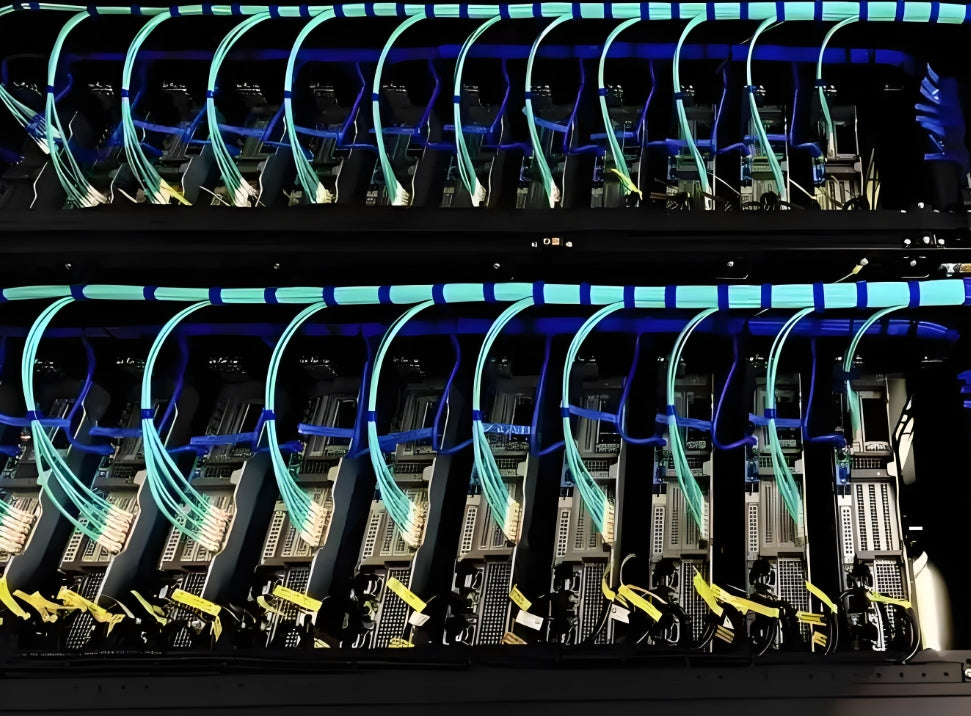
High-density fiber infrastructure enables faster deployment and simplified management
Q: What's the maximum distance for 288-fiber OM4 cables supporting 800G?
A: 288-fiber OM4 cables support 800G SR8 up to 100m and 800G DR8 up to 500m—identical to standard fiber cables. The MPO-24 connectors used with 288-fiber cables must meet 0.45 dB insertion loss specifications to maintain 800G loss budgets.
Q: Are 288-fiber cables harder to install than 144-fiber?
A: Despite larger diameter, 288-fiber cables with modern lightweight constructions (water-blocked, aramid yarn reinforced) pull similarly to 144-fiber cables. The key advantage: you pull half the number of cables, reducing total installation time by 40-50%.
Chapter 3: MPO-24 Connectors — Enabling High-Density Architecture
288-fiber cables alone don't deliver high-density connectivity—MPO fiber solutions with MPO-24 connectors are the enabling technology that makes 288-fiber deployments practical.
Why MPO-24 for 288-Fiber?
The MPO-24 connector provides the optimal balance for 288-fiber systems:
| Connector Type | Fibers per Connector | Connectors per 288-Fiber Cable | Typical Application |
|---|---|---|---|
| MPO-12 | 12 fibers | 24 connectors | Legacy 40G/100G |
| MPO-16 | 16 fibers | 18 connectors | 400G/800G SR8 |
| MPO-24 | 24 fibers | 12 connectors | 800G/1.6T optimal |
| MPO-32 | 32 fibers | 9 connectors | Emerging 1.6T+ |
🎯 Optimal Pairing
288-fiber + MPO-24 = 12 pre-connectorizedbreakout connections. This enables structured cabling architectures where each MPO-24 trunk maps directly to high-density cassettes, eliminating field splicing and reducing installation errors.
MPO-24 Performance Specifications
| Parameter | MPO-12 | MPO-16 | MPO-24 | 800G Requirement |
|---|---|---|---|---|
| Max Insertion Loss | 0.35 dB | 0.40 dB | 0.45 dB | Varies by application |
| Return Loss | >30 dB (UPC) | >30 dB (UPC) | >30 dB (UPC), >60 dB (APC) | >30 dB minimum |
| Mating Durability | 200 cycles | 200 cycles | 200 cycles | Industry standard |
| Polarization Support | Method A/B/C | Method A/B | Method A/B/Universal | Method B preferred |
Polarity Management in 288-Fiber Systems
With 288-fiber cables terminated to MPO-24 connectors, polarity management becomes critical. Method B is recommended:
| Polarity Method | 288-Fiber Compatibility | Complexity | Recommendation |
|---|---|---|---|
| Method A | Requires A-to-A polarity cassettes | Medium | Acceptable with documentation |
| Method B | Standard method for MPO-24 | Low | Recommended |
| Method C | Not recommended for 288-fiber | High | Avoid |
| Universal | Flexible but higher cost | Medium | For mixed-speed environments |
⚠️ Common Pitfall
When terminating 288-fiber cables to MPO-24 connectors, ensure all 12 connectors on each end use consistent polarity method. Mixing Method A and Method B cassettes in the same trunk path causes immediate link failures in 800G deployments.
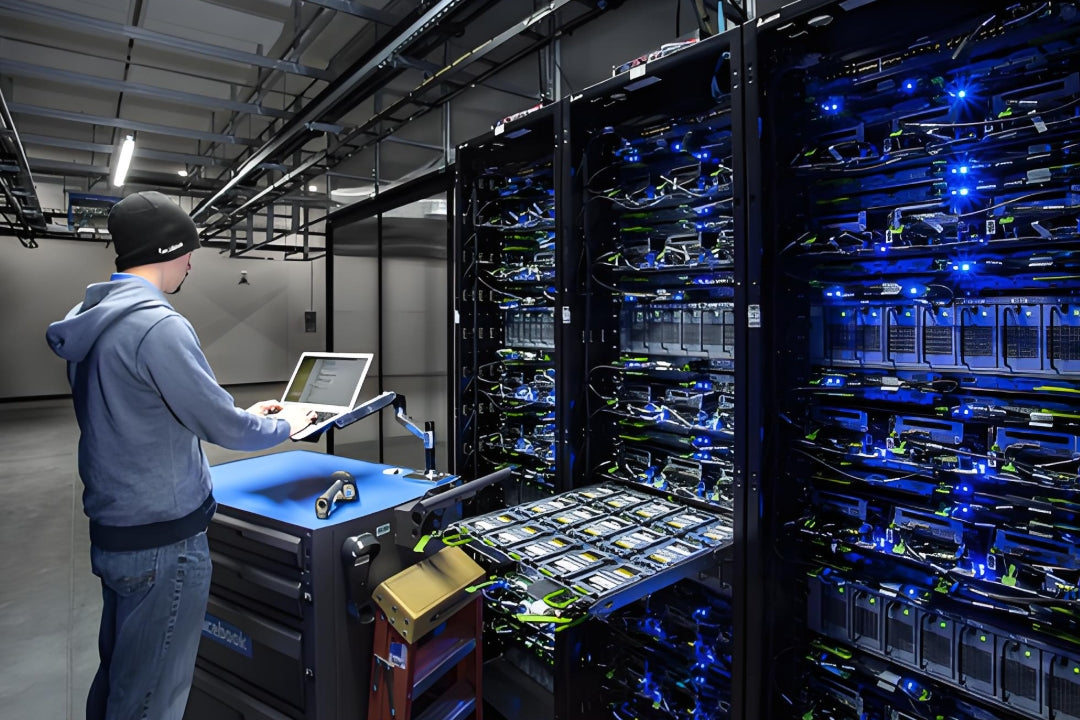
MPO-24 connectors enable efficient 288-fiber termination with minimal loss impact
Q: Can I mix MPO-12 and MPO-24 in the same 288-fiber deployment?
A: While technically possible with adapter cassettes, mixing connector types introduces additional insertion loss (0.3-0.5 dB per adapter) and complicates documentation. For greenfield 288-fiber deployments, standardize on MPO-24 throughout.
Q: What's the typical MPO-24 failure rate in 288-fiber deployments?
A: With pre-terminated factory assemblies, MPO-24 failure rates are below 0.1%. Field-terminated MPO-24 has 1-2% initial failure rate, emphasizing the value of factory pre-termination for 288-fiber systems.
Chapter 4: Technical Specifications and Performance Comparison
288-fiber cables for data center applications come in multiple constructions, each optimized for different deployment scenarios.
Cable Construction Types
| Construction Type | Diameter | Weight | Application | Max Pull Tension |
|---|---|---|---|---|
| Standard Distribution | 18mm | 280 kg/km | Intra-facility backbone | 400N |
| Loose Tube | 22mm | 340 kg/km | Outdoor/intra-building | 1000N |
| Breakout | 24mm | 420 kg/km | Direct-to-equipment | 600N |
| Mini-Distribution | 16mm | 220 kg/km | High-density rows | 300N |
Fiber Type Comparison for 288-Fiber Systems
| Fiber Type | 800G SR8 Distance | 800G DR8 Distance | Cost Premium vs OM3 | Recommended Use |
|---|---|---|---|---|
| OM3 | 70m | 500m | Baseline | Cost-sensitive, short reach |
| OM4 | 100m | 500m | +15-20% | Standard AI deployments |
| OM4+ (Enhanced) | 110m | 500m | +25-30% | Extended reach needs |
| OM5 (SWDM) | 100m | 500m | +40-50% | Wavelength division applications |
| OS2 Singlemode | N/A (DR/FR) | 2km+ | +60-80% | Campus/inter-building |
Loss Budget Analysis for 288-Fiber 800G Deployments
| Component | Quantity | Loss per Unit | Total Loss | 800G SR8 Budget |
|---|---|---|---|---|
| MPO-24 Adapter (patch panel) | 2 | 0.35 dB | 0.70 dB | Part of 1.5 dB budget |
| 288-fiber trunk (OM4, 50m) | 1 | 0.15 dB | 0.15 dB | Part of 1.5 dB budget |
| Fusion splice | 2 | 0.08 dB | 0.16 dB | Part of 1.5 dB budget |
| Total Channel Loss | 1.01 dB | 1.5 dB budget (33% margin) | ||
📊 Loss Budget Advantage
288-fiber MPO-24 systems achieve 33% margin against 800G SR8 budgets—significantly better than retrofit scenarios using MPO-12 adapters, which often have negative margin due to cumulative adapter losses.
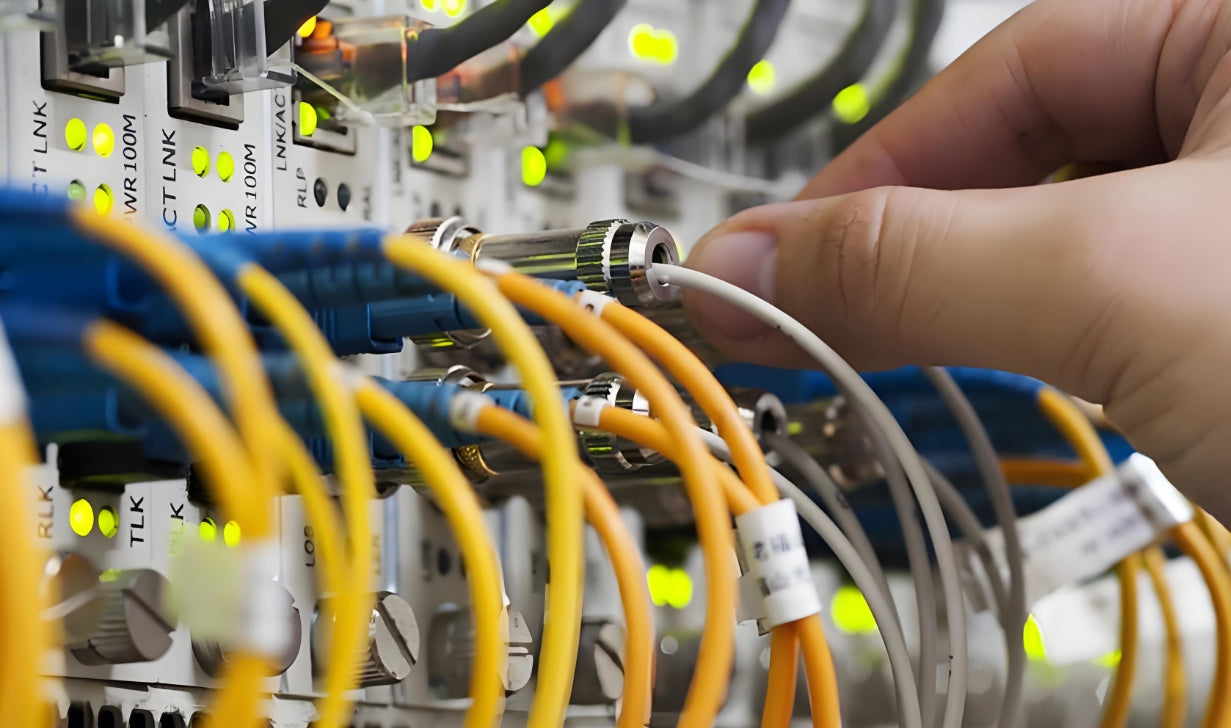
Rigorous testing ensures 288-fiber systems meet 800G performance requirements
Q: What testing is required for 288-fiber MPO-24 systems?
A: Each MPO-24 connector requires bi-directional OLTS testing at the system level, plus OTDR verification for any spliced sections. Individual fiber testing is typically not required for pre-terminated assemblies—focus on MPO-24 end-face inspection per IEC 61300-3-35.
Q: Can 288-fiber OM4 support 1.6T in the future?
A: Yes, 288-fiber OM4 will support 1.6T SR8 up to 50m and 1.6T SR4 at longer distances. The 288-fiber infrastructure itself doesn't limit future upgrades—transceiver technology is the limiting factor.
Chapter 5: Real-World Deployment — Case Studies
Understanding how leading organizations deploy 288-fiber solutions provides actionable insights for your own projects.
📋 Case Study 1: Microsoft Azure AI Supercomputer Expansion (2025)
Scope: New AI training facility supporting 100,000+ GPU interconnects
Solution: 288-fiber MPO-24 backbone across 8 data halls, with 864-fiber aggregates at core
Key Metrics:
- Total fiber deployed: 172,800 strands
- 288-fiber trunks installed: 600 cables
- First-pass certification rate: 99.4%
- Installation time: 4 months (vs 8 months estimated for 144-fiber)
Lessons Learned: Pre-terminated MPO-24 assemblies reduced field terminations by 85%. Investing in high-quality cable management hardware paid dividends in installation speed.
📋 Case Study 2: Google Colocation Expansion (2025)
Scope: Multi-tenant data center with mixed tenant requirements (100G-800G)
Challenge: Tenants with varying speed requirements create complexity for infrastructure standardization
Solution: 288-fiber MPO-24 as universal backbone with modular MPO-24-to-LC fan-outs at tenant demarcation
Key Metrics:
- 40% reduction in cross-connect time for new tenant onboarding
- Single infrastructure supports tenants from 100G to 800G
- Pathway utilization: 35% (down from 70% with previous 144-fiber approach)
Lessons Learned: Universal polarity MPO-24 cassettes enabled mixed-speed tenant support without re-cabling—significant competitive advantage in colocation market.
📋 Case Study 3: Meta Campus Inter-Building Links (2026)
Scope: 3km campus backbone connecting 4 data buildings
Solution: 288-fiber loose-tube cables with gel-free water blocking for underground conduit
Key Metrics:
- 12 fusion splice points across 3km span
- Average splice loss: 0.05 dB (excellent)
- Total channel loss: 0.89 dB (well within 800G DR budget)
- Installation completed in 3 weeks
Lessons Learned: Gel-free 288-fiber cables enabled faster splicing and better environmental performance. Mass fusion splicing (12 fibers at once) reduced splice time by 60%.
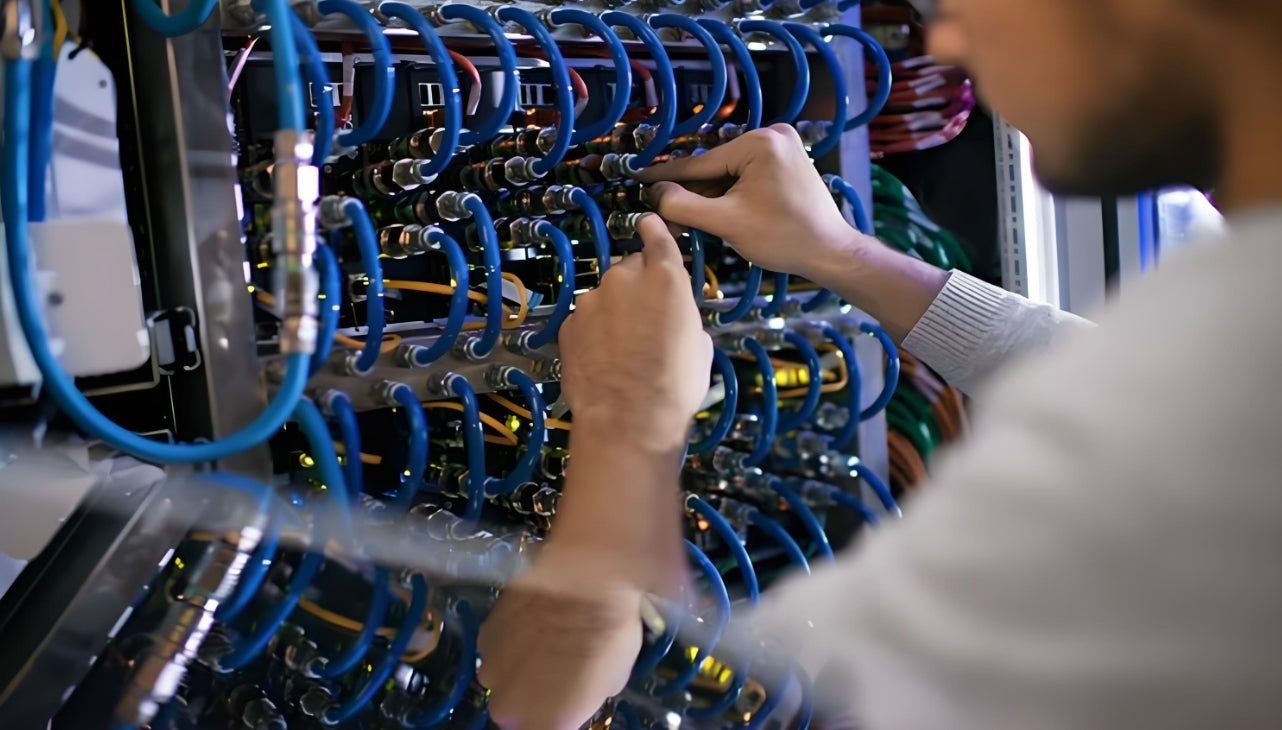
Professional installation practices ensure optimal 288-fiber deployment performance
Q: What's the typical installation timeline for a 288-fiber deployment?
A: For a typical 10-row data center (200 800G switches): pathway preparation 2-4 weeks, cable pulling 1-2 weeks, termination/splicing 2-3 weeks, testing 1-2 weeks. Total: 6-11 weeks versus 12-16 weeks for equivalent 144-fiber deployment.
Q: How do you handle 288-fiber in existing facilities with limited pathway space?
A: 288-fiber is ideal for retrofit scenarios because it delivers 2x capacity in the same pathway. Replace pairs of 144-fiber cables with single 288-fiber cables to immediately double capacity while freeing pathway space for future growth.
Chapter 6: Installation Best Practices for 288-Fiber Systems
Successful 288-fiber deployments require attention to installation details that differ from traditional cable strategies.
Pulling and Handling
| Best Practice | Rationale | Risk if Ignored |
|---|---|---|
| Use lubricant compatible with aqua-colored coatings | OM4 coating is different from standard yellow | Coating damage, increased loss |
| Maintain minimum bend radius: 20x cable diameter | 288-fiber cables have tighter multi-fiber bend limits | Increased attenuation, link failures |
| Use pulling grips rated for 600N+ | 288-fiber cables require higher pull ratings | Cable damage, installation failure |
| Limit pull distance to 300m without intermediate pull points | Weight and friction accumulate over distance | Excessive tension, cable stretch |
| Store slack in 1.2m diameter loops minimum | Small loops create stress on MPO terminations | Connector damage, intermittent failures |
Cable Management for 288-Fiber
Recommended Cable Management Approach
1. Pathway Sizing:
- Design for 40% fill to accommodate future additions
- 288-fiber cables require ~18mm diameter + 10% bundle spacing = 20mm effective width
- 10 cables per 200mm tray width is optimal
2. Rack-Level Management:
- Allocate minimum 2U vertical cable manager per 288-fiber trunk
- Use MPO-24 cassette panels with integrated management
- Route cables to maintain 20x bend radius throughout
3. Labeling (TIA-606-B):
- Trunk ID: Building-RackRow-Position (e.g., A1-R15-T01)
- MPO-24 position: TrunkID-A/B-Position (e.g., A1R15T01-A-03)
- Link documentation must map MPO-24 positions to switch ports
Testing Protocol for 288-Fiber Systems
| Test Phase | Test Method | PASS Criteria | Documentation |
|---|---|---|---|
| Pre-installation | Visual inspection of MPO-24 ends | IEC Grade B or better | Photo per connector |
| Post-pull | OTDR from one end | No events >0.1 dB | OTDR trace file |
| System test | Bi-directional OLTS via MPO | Total loss < budget - 20% | Digital cert per link |
| Live traffic | BER test at line rate | <1E-12 errors | BER report |
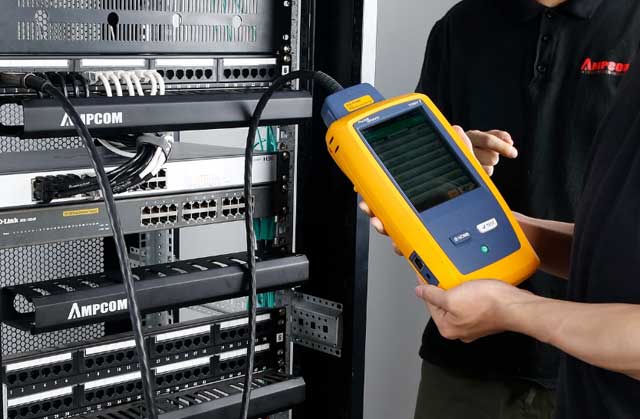
Comprehensive testing ensures 288-fiber systems meet performance specifications
Q: Should 288-fiber cables be stored indoor or outdoor rated?
A: For intra-building runs, indoor-rated (OFNR) cables suffice. For conduit runs that exit buildings or enter underground sections, use outdoor-rated (OFNP) cables or transition through splice enclosures. Always verify local fire codes for plenum spaces.
Q: What's the best approach for emergency 288-fiber repairs?
A: Maintain 10% spare capacity in each 288-fiber trunk (use MPO-24 positions 11-12 as spares). For fiber breaks, use mechanical splice connectors rated for MPO-24 as temporary repair, then schedule fusion splice repair within 72 hours.
Chapter 7: ROI Analysis — The Business Case for High-Density
288-fiber solutions deliver measurable ROI across multiple dimensions. Here's a comprehensive analysis for a typical hyperscale deployment.
Cost Comparison: 288-Fiber vs 144-Fiber
| Cost Element | 144-Fiber Approach | 288-Fiber Approach | Savings |
|---|---|---|---|
| Cable material (per fiber strand) | $0.85/meter | $0.72/meter | 15% per strand |
| MPO-12 cassettes (18 trunks) | $450 each | — | — |
| MPO-24 cassettes (9 trunks) | — | $520 each | +17% per trunk |
| Cable pulling labor | 800 hours | 400 hours | 50% reduction |
| Termination labor | 600 hours | 200 hours | 67% reduction |
| Pathway infrastructure | $180,000 | $72,000 | 60% reduction |
| Documentation/labeling | $24,000/year | $12,000/year | 50% ongoing |
| 5-Year Total Cost of Ownership | $2.4M | $1.6M | 33% savings |
Non-Financial Benefits
💰 ROI Calculation Example
For a 200-switch 800G deployment with 400 trunk cables:
288-fiber savings: $800,000 (5-year TCO)
Plus: 6 months faster time-to-service
Plus: 60% pathway space recovery
Payback period: Immediate

288-fiber infrastructure delivers measurable ROI through reduced infrastructure and faster deployment
Q: What's the minimum project size where 288-fiber makes financial sense?
A: 288-fiber becomes cost-effective for projects with 50+ trunk cables. Below this threshold, the logistics overhead of managing larger cables may offset material savings. However, even smaller projects benefit from simplified documentation and reduced pathway requirements.
Q: How does 288-fiber compare to using multiple smaller cables from different vendors?
A: Standardization on 288-fiber from a single vendor simplifies spares management, ensures consistent quality, and typically delivers 10-15% volume discount versus mixed procurement. The hidden cost of multi-vendor approaches—compatibility issues, inconsistent testing standards—often exceeds material savings.
Chapter 8: Future-Proofing — 288-Fiber to 1.6T
Investing in 288-fiber infrastructure today positions data centers for seamless migration to 1.6T and beyond.
Technology Roadmap: 288-Fiber Lifespan
| Generation | Timeline | 288-Fiber Capacity | Fiber Requirement | 288-Fiber Viability |
|---|---|---|---|---|
| 400G | 2020-2025 | 36 links | 8 fibers per link | ✅ Fully supported |
| 800G | 2025-2030 | 18 links | 16 fibers per link | ✅ Optimal |
| 1.6T | 2027-2032 | 9 links | 32 fibers per link | ✅ Fully supported |
| 3.2T | 2030+ | 4-5 links | 64+ fibers per link | ⚠️ May require overlay |
Preparing for 1.6T Today
Future-Proofing Checklist
Infrastructure investments that pay off for 1.6T:
- OM4 minimum: Specify OM4 or better for all new 288-fiber cables. OM3 limits 1.6T reach to 35m—insufficient for most data halls.
- MPO-24 with APC: APC connectors provide better return loss for future coherent optics applications.
- 30% pathway reserve: Design pathways to accommodate 30% more 288-fiber cables than initially deployed.
- Digital documentation: Implement TIA-606-B compliant records now—future troubleshooting depends on accurate as-built documentation.
Co-Packaged Optics and Future Architectures
| Architecture Type | Timeline | 288-Fiber Role | Impact on Current Infrastructure |
|---|---|---|---|
| Pluggable Optics (current) | 2025-2028 | Primary interconnection | No change needed |
| Linear Pluggable (LPO) | 2025-2027 | Requires low-loss MPO-24 | Verify loss budgets |
| Co-Packaged (CPO) | 2026-2029 | Switch-to-panel only | Reduced switch-port count, more panel fibers |
| Integrated Optics | 2028+ | TBD | Unknown—maintain flexibility |
🔮 Long-Term Outlook
288-fiber infrastructure has a 7-10 year useful life before requiring significant upgrades. Deploying 288-fiber today with proper planning ensures infrastructure viability through the 1.6T transition, with potential extension to 3.2T through wavelength division multiplexing.
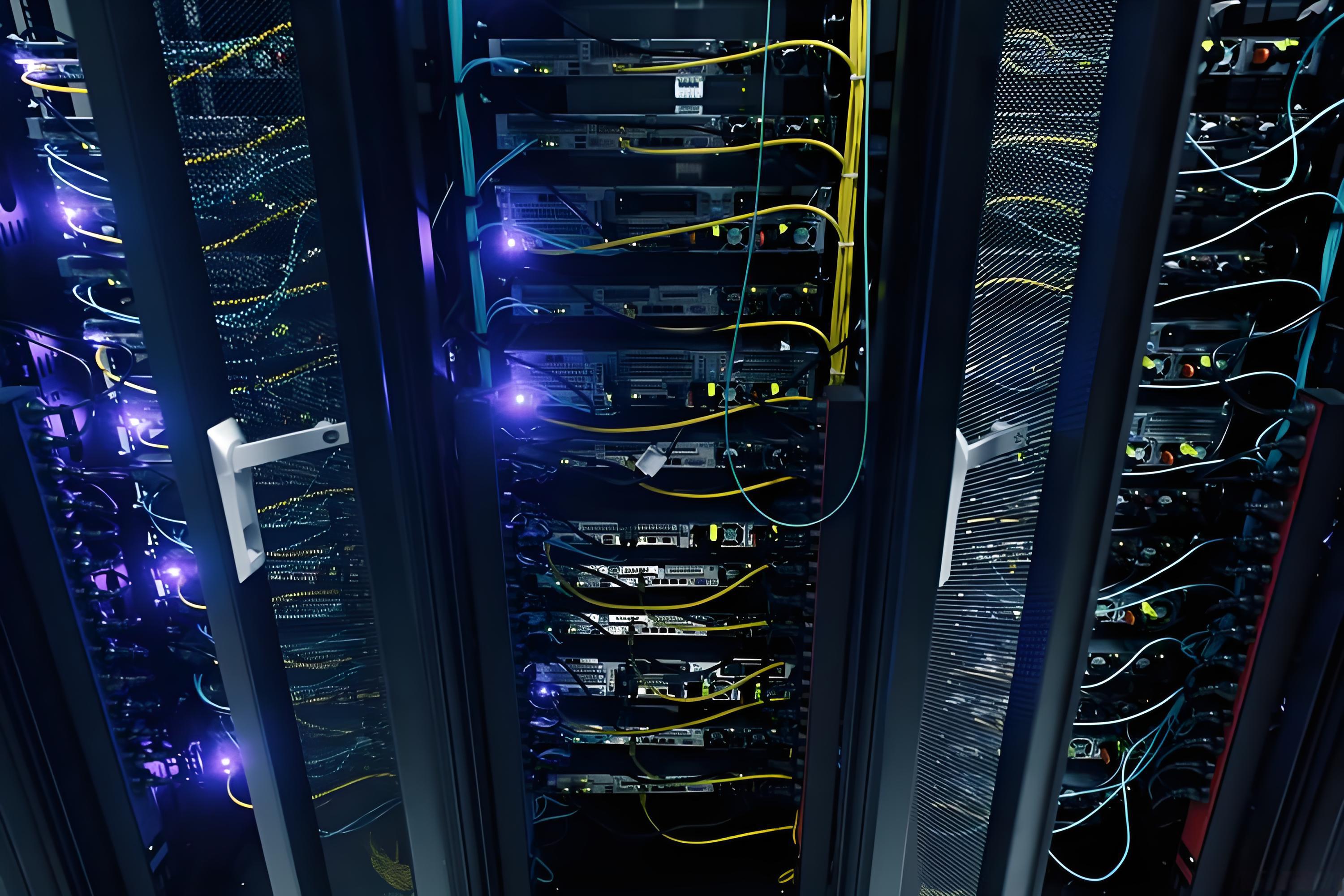
288-fiber infrastructure provides a solid foundation for future bandwidth requirements
Q: Will 288-fiber cables need replacement when 1.6T arrives?
A: No. The fiber itself doesn't change with speed generations. 288-fiber OM4 cables will support 1.6T at reduced link counts. The upgrade path involves new transceivers and potentially new switch hardware—not new fiber infrastructure.
Q: Should I deploy 432-fiber or 864-fiber instead for maximum future-proofing?
A: For most deployments, 288-fiber is the sweet spot. Larger counts (432/864) are appropriate for hyperscale core aggregation but add complexity, cost, and handling challenges without proportional benefit for typical row-level deployments. Future-proofing comes from proper pathway design, not maximum cable size.
Chapter 9: Conclusion — Building for the AI Decade
288-fiber high-density solutions represent a fundamental shift in data center infrastructure strategy. For AI-era deployments, the choice is no longer whether to deploy high-density fiber—it's how quickly to transition.
Key Takeaways
| Takeaway | Impact | Action Item |
|---|---|---|
| 288-fiber is the new standard | 2x capacity in 1.3x diameter | Specify 288-fiber for all new projects |
| MPO-24 enables simplicity | 12 connectors per 288-fiber trunk | Standardize on MPO-24 polarity |
| OM4 is minimum for AI | 100m 800G reach, 1.6T capable | Avoid OM3 for new deployments |
| 33% margin is achievable | Room for growth and degradation | Design with 30% loss margin |
| Factory pre-termination wins | 99%+ first-pass certification | Use pre-terminated assemblies |
The AI bandwidth crisis demands infrastructure that scales efficiently while minimizing pathway congestion and installation complexity. 288-fiber cables with MPO-24 connectors deliver exactly this—doubling capacity in the same footprint while enabling faster deployment and simplified management.
Organizations that embrace 288-fiber infrastructure today position themselves for seamless migration to 1.6T and beyond. Those that delay face the choice between expensive retrofits or being locked into legacy capacity constraints.
The data center that wins in the AI era is one built on future-ready infrastructure—288-fiber is the foundation of that foundation.

AMPCOM Technical Team
Industry experts with 17+ years in structured cabling, data center infrastructure, and fiber optic network design
Ready to deploy 288-fiber high-density infrastructure?
AMPCOM provides comprehensive 288-fiber solutions—including MPO-24 cassettes, high-density patch panels, OM4 fiber trunk cables, and testing equipment designed for AI-era data centers.
Talk to Our Infrastructure Experts

