
Why Pre-Terminated MPO/MTP Trunk Cables Are the First Choice for High-Density AI Data Centers
Published:Executive Summary: The AI compute boom has moved data center cabling from a supporting discipline to a hard bottleneck. A single GPU rack in a 2026 AI "factory" can draw 100–150 kW and require dozens of 400G/800G optical links to its peers. In that environment, conventional field-terminated or fusion-spliced backbone cabling simply cannot keep up with deployment speed, fiber density, or loss budgets. This article explains why pre-terminated MPO/MTP trunk cables have become the default backbone for high-density AI rooms — and how to specify 8/12/24-fiber MPO correctly for 400G, 800G, and 1.6T.
Quick Navigation
- 1 The AI Density Surge: Why Traditional Backbone Cabling Breaks
- 2 What Are MPO/MTP Trunk Cables?
- 3 Why Pre-Terminated Beats Field-Terminated and Fusion-Spliced
- 4 MPO vs MTP, and 8 / 12 / 24-Fiber: How to Choose
- 5 Deployment Best Practices for High-Density AI Rooms
- 6 Case Study & Future-Proofing for 800G/1.6T

High-density AI rooms push fiber counts and port speeds far beyond what legacy field-terminated backbones can deliver economically
Chapter 1: The AI Density Surge — Why Traditional Backbone Cabling Breaks
From North-South to East-West at Scale
Enterprise data centers were historically built around north-south traffic: clients in, servers respond, traffic leaves. AI training clusters invert that. A distributed training job splits a model across hundreds or thousands of GPUs, and those GPUs constantly exchange gradients. The result is massive east-west bandwidth inside the fabric — and it scales with the square of the cluster.
Typical AI-fabric links in 2026 run at 400G today, with 800G rolling out and 1.6T on the roadmap. A single high-density rack can terminate 32–64 optical ports just for GPU-to-GPU and GPU-to-switch connectivity. Multiply that across a 50- or 200-rack zone and the backbone fiber count explodes into the tens of thousands.
Where Legacy Methods Fall Apart
Field-terminating LC fiber one connector at a time, or fusion-splicing backbone runs on site, was acceptable when a cabinet needed a handful of links. At AI scale it collapses for three reasons:
- Time: Thousands of field terminations per zone mean weeks of skilled labor — incompatible with AI build schedules measured in quarters.
- Consistency: Hand-polished connectors vary in insertion loss; in a tight 400G/800G budget, one bad mated pair can fail the link.
- Rework: Dust, mis-polish, or wrong polarity triggers re-termination on site — each rework risks damaging expensive cable.
1️⃣ Why does AI traffic specifically favor MPO instead of individual LC links?
Because AI fabric density is about port count per rack unit. One 24-fiber MPO connector carries as much as 24 LC connectors would — but in a single push-pull mating instead of 24 separate ones. At thousands of links, that difference is the gap between a deployable schedule and an impossible one.

Advanced AI server rooms demand backbone cabling that installs fast and fills minimal rack space — exactly what pre-terminated MPO delivers
Chapter 2: What Are MPO/MTP Trunk Cables?
The Multi-Fiber Connector, Defined
An MPO (Multi-Fiber Push-On) connector terminates multiple fibers — typically 8, 12, or 24 — in a single rectangular ferrule that mates with one push-pull action. An MTP® connector is the enhanced, trademarked version of MPO made by US Conec: it adds an elliptical (rather than circular) guide pin, a floating ferrule, and a removable housing so the connector can be re-polished and gender/key changed in the field.
MPO vs MTP — The Practical Distinction
MPO: The generic industry-standard interface. Any compliant MPO connectors intermate.
MTP®: A performance-upgraded MPO (US Conec brand) with tighter geometry, better spring design, and field-reconfigurable housing.
In practice: Most "MPO/MTP" products are intermateable; buyers should specify MTP® when they need the field-repolish and gender-flexibility features, but the trunk's performance depends more on factory polishing and testing than on the label.
What "Trunk" Means Here
A pre-terminated MPO trunk cable is a factory-built assembly: a multi-fiber cable (ribbon or stranded) with MPO connectors polished and tested at both ends, ready to plug between two enclosures or cassettes. The factory does the work that used to happen on site:
- End-face polishing to specified geometry (typical IL 0.2–0.35 dB per mated connection)
- Return-loss verification (≥ 45 dB UPC, ≥ 55 dB APC)
- Polarity assignment (Type A / B / C) built into the assembly
- Individual fiber testing with a printed or digital test report
Ribbon vs Stranded — and Why It Matters at Density
| Attribute | Ribbon (Flat) Trunk | Stranded (Loose-Tube) Trunk |
|---|---|---|
| Diameter at equal fiber count | Smaller — fits more in a tray | Larger, more bulky |
| Bend radius | Tighter tolerated | More conservative |
| Routing flexibility | Best for high-count backbone | Better for long, protected pathways |
| Typical AI use | Intra-zone 24-fiber trunks | Campus-scale OS2 runs |
2️⃣ Do I lose anything by using a "generic" MPO instead of MTP®?
For a fixed, plug-and-play trunk, almost never — the assembly is factory-tested regardless of label. MTP® earns its premium when you need field-reconfigurable gender/key or expect to re-polish connectors over a long asset life. For most AI backbone trunks, a properly tested MPO assembly is the right call.
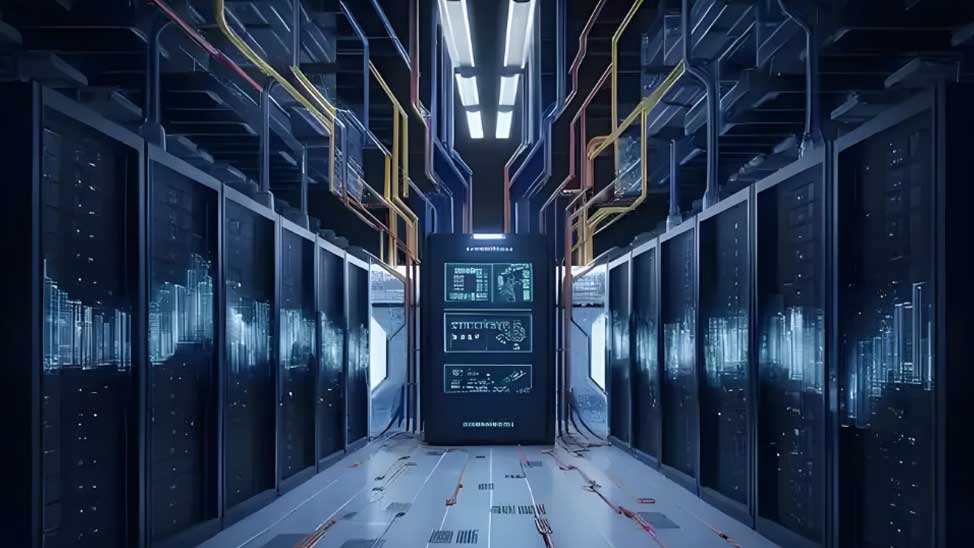
A fiber optic cabling room built on pre-terminated MPO trunks: one connector per 12 or 24 fibers, tested before it ever ships
Chapter 3: Why Pre-Terminated Beats Field-Terminated and Fusion-Spliced
The Three-Way Comparison
For AI backbones, the realistic choices are pre-terminated MPO trunk, field-terminated MPO (mechanical/polish-on-site), and fusion-spliced backbone. Here is how they stack up on the metrics that decide an AI build:
| Criterion | Pre-Terminated MPO Trunk | Field-Terminated MPO | Fusion-Spliced Backbone |
|---|---|---|---|
| Typical insertion loss | 0.20–0.35 dB/link | 0.30–0.60 dB/link | 0.05–0.10 dB/splice |
| Install speed | Fastest (plug-and-play) | Slow (per-connector labor) | Slow (splice + protect) |
| Skill required | Low (routing + mate) | High (polish/terminate) | High (splicer operator) |
| Consistency | Factory-controlled, tested | Operator-dependent | Operator-dependent |
| Rework risk on site | Low (swap assembly) | High (re-terminate) | Medium (re-splice) |
| Upfront material cost | Higher | Lower | Medium |
| Total cost at AI scale | Lowest (labor saved) | Highest (labor + rework) | High (labor + equipment) |
The Decisive Factor: Labor and Schedule
At a few hundred links, material price dominates and cheap field termination looks attractive. At AI data center scale — thousands of links per zone — the dominant cost is skilled labor and the dominant risk is schedule slip. Pre-terminated trunks move nearly all the work into a controlled factory, so install becomes routing plus mating. Vendors such as Corning cite up to 70% faster backbone installation versus traditional methods, and even conservative estimators see 40–60% reductions.
Loss Budget Reality for 400G/800G
400G-SR8 over OM4/OM5 multimode allows roughly 1.5–2.0 dB channel loss depending on the optics. Field-terminated MPO at 0.30–0.60 dB per mated pair leaves little headroom after cassettes and adapters. Pre-terminated trunks at 0.20–0.35 dB per link keep the budget comfortable — which is exactly why AI rooms standardize on them.
3️⃣ Isn't fusion splicing lower loss? Why not use it everywhere?
Fusion is indeed the lowest-loss joint, but it is also the slowest and most labor-intensive. AI backbones need speed, density, and predictable loss across thousands of connections — not the absolute minimum at a few. Pre-terminated MPO delivers enough loss headroom for 400G/800G while installing in a fraction of the time. Fusion still earns its place for permanent campus OS2 welds and repairs, not for the plug-and-play spine.
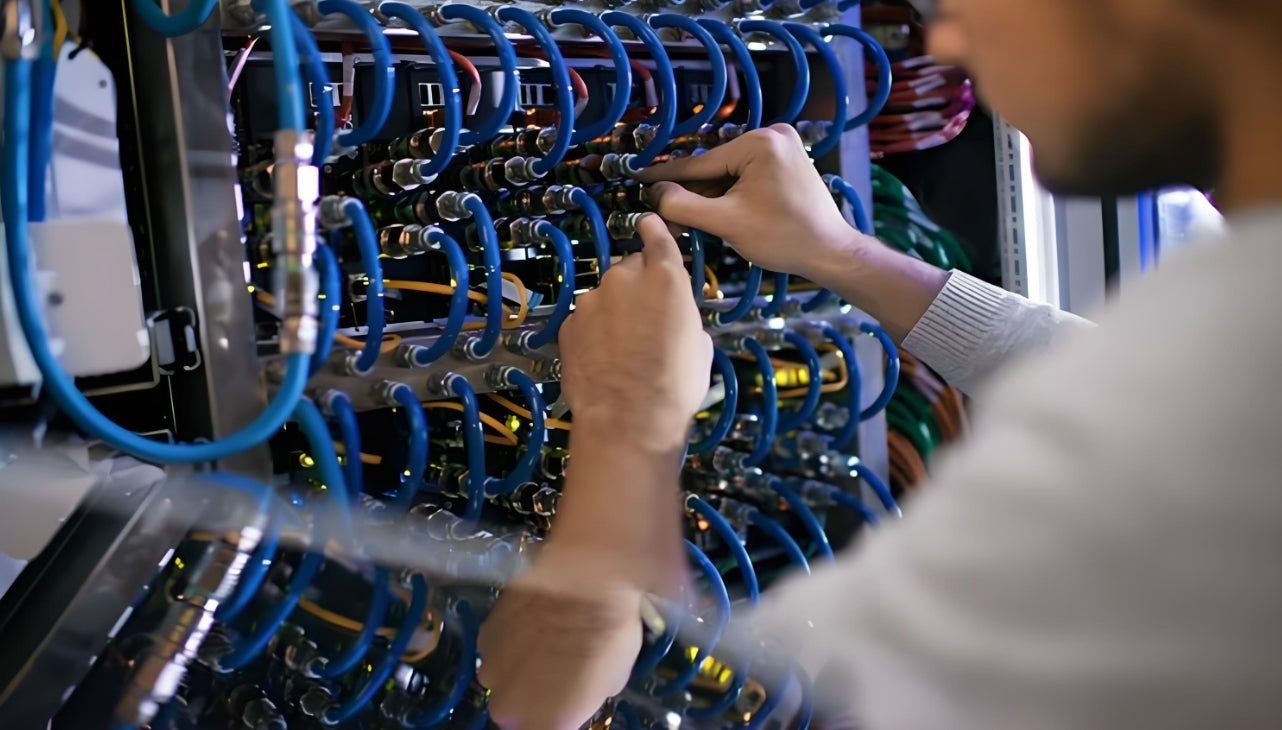
On-site work with pre-terminated trunks shrinks to routing and mating — the factory has already done the polishing and loss testing
Chapter 4: MPO vs MTP, and 8 / 12 / 24-Fiber — How to Choose
Matching Fiber Count to Link Speed
The fiber count inside the MPO ferrule must match the transceiver breakout. Get this wrong and you either waste fibers or can't light the link:
| MPO Type | Enables | Typical Use |
|---|---|---|
| 8-fiber | 40G/100G SR4 (4×10G / 4×25G) | Legacy leaf-spine, access |
| 12-fiber | 10G/40G breakout, 3× 40G | General-purpose, legacy |
| 24-fiber (12×2) | 400G SR8, 800G, future 1.6T | AI training fabric backbone |
For new AI builds, 24-fiber MPO is the safe default: a single 1U cassette can present 72–144 fibers, and the same trunk family scales from 400G today to 800G/1.6T tomorrow by changing only the optics and breakout.
Singlemode or Multimode? It Depends on Reach
Within a data center hall, most AI links are short — under 100 m — so OM4/OM5 multimode with MPO is the cost-effective choice for SR-class optics. For longer backbone runs (campus, multi-building, or >100 m), OS2 singlemode MPO wins on reach and future bandwidth. A hybrid — multimode MPO inside the zone, singlemode MPO for the backbone — is common and sensible.
Polarity — The Detail That Breaks Links
MPO polarity (Type A / B / C) determines whether transmit reaches receive. Pre-terminated trunks bake polarity into the assembly, but you must standardize it across the whole zone: pick one method, document it, and verify with a light source during install. Mismatched polarity is the most common "the link won't come up" failure in MPO deployments.
4️⃣ Should a new AI build standardize on 24-fiber or stay flexible with 8/12-fiber?
Standardize on 24-fiber MPO for the AI fabric. It supports 400G SR8 and 800G today and leaves the cleanest path to 1.6T, while a 1U cassette still breaks out to 8- or 12-fiber legs where legacy gear lives. Keeping one trunk family simplifies inventory, testing, and training far more than mixing counts.
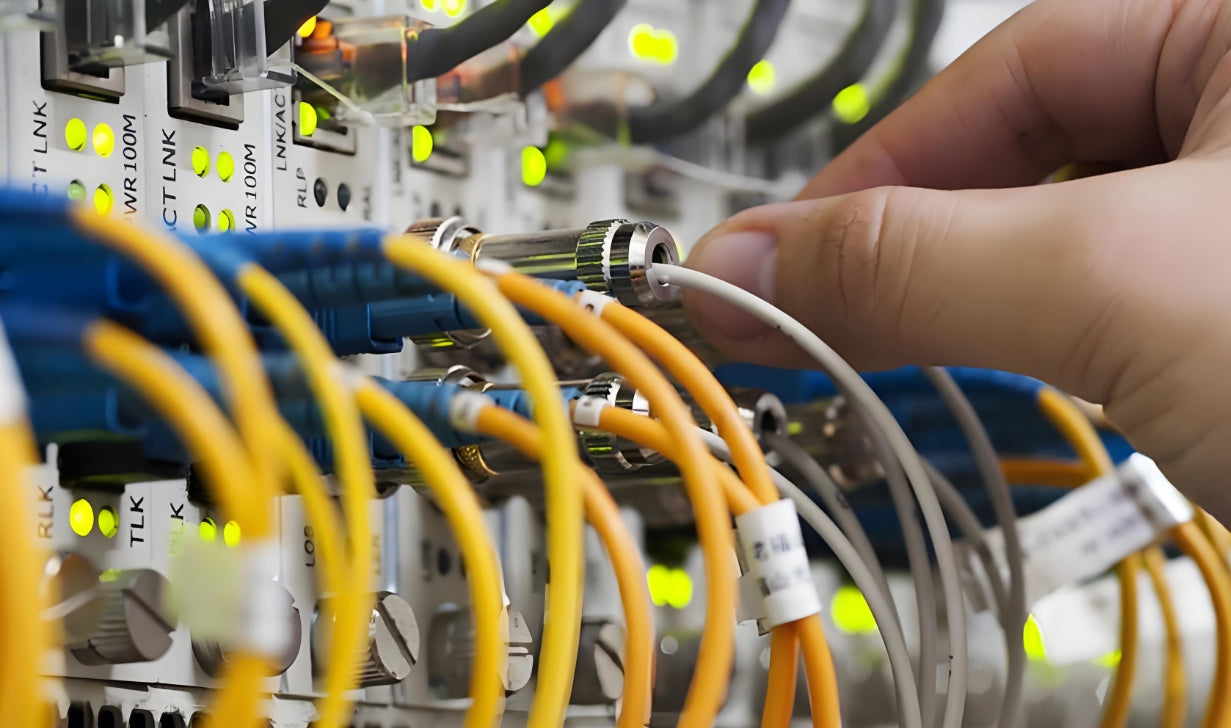
Factory and on-site testing — including polarity verification — is what makes pre-terminated MPO predictable at AI scale
Chapter 5: Deployment Best Practices for High-Density AI Rooms
Plan Fiber Counts Before You Pull Anything
Pre-terminated trunks reward good planning and punish bad planning just as much as any method. Estimate per-rack port counts from the GPU/ switch topology, add 20–30% spare capacity, and order trunk lengths with realistic routing paths — not straight-line distance.
Pre-Install Checklist
1. Topology map: Leaf-spine port count per rack → total fiber demand per zone.
2. Trunk length: Add routing slack (trays, verticals, service loops) — underestimate and the trunk won't reach.
3. Polarity standard: One method (A/B/C) across the whole zone, documented.
4. Spare capacity: 20–30% dark fibers for growth and failover.
5. Labeling plan: Trunk ID → cassette → port, TIA-606-style.
Handle the Physical Layer Correctly
- Bend radius: Keep ≥ 30 mm for the installed trunk; tight bends raise loss and can fracture ribbon fibers.
- Pull tension: Respect the vendor limit (commonly ≤ 100 N for 12/24-fiber); use proper grips, never pull on the connector.
- End-face hygiene: Cap connectors when not mated; clean with cassette + inspect before every mate. Dust is the silent killer of MPO loss budgets.
- Airflow: Route trunks to leave cold-aisle path clear — organized MPO trays improve cooling as much as they improve serviceability.
Make Day-2 Easy
The whole point of pre-terminated MPO is that moves, adds, and changes become plug operations. Structured cabling for AI data centers lives or dies on Day-2 maintainability: keep the as-built port map current, store spare trunks, and train staff on polarity and cleaning so a 2 a.m. link failure is a 10-minute swap, not a 2-hour investigation.
5️⃣ What is the single most common pre-terminated MPO failure in the field?
Dirty or mis-polarized connectors. Both are preventable: cap and clean every end-face before mating, and verify polarity with a visual fault locator during install. Neither requires special skill — just discipline — which is exactly why pre-terminated trunks are safer at scale than on-site termination.
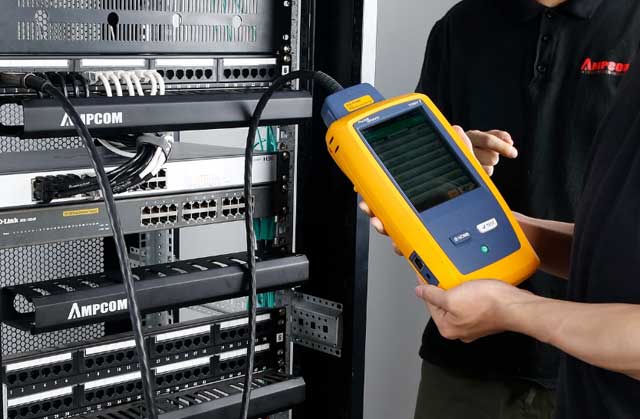
End-face inspection and loss testing turn pre-terminated MPO from "fast" into "fast and reliable"
Chapter 6: Case Study & Future-Proofing for 800G/1.6T
Example: A 50-Rack AI Training Zone
A hyperscale operator building a 50-rack GPU training zone needed roughly 8,000 backbone fiber links in under two months. Using field termination, the plan implied ~16 weeks of skilled labor plus rework. Switching to pre-terminated 24-fiber MPO trunks with factory test reports collapsed install to roughly 5–6 weeks of routing-and-mating, with link first-pass yield above 98%. The labor saved paid back the higher material cost within the project, and the spare-fiber headroom absorbed a mid-build topology change without new cabling.
Future-Proofing Past 800G
800G and 1.6T trends point to even higher fiber counts per rack. The choices you make now protect that roadmap:
- Standardize on 24-fiber MPO so 800G/1.6T is an optics change, not a re-cable.
- Reserve singlemode OS2 MPO for any run that may exceed 100 m or need coherent optics later.
- Leave 20–30% dark fiber in every trunk path for growth and failover.
- Keep polarity and labeling disciplined so the next speed jump is a swap, not a discovery project.
6️⃣ If I deploy 24-fiber MPO today, am I locked out of 1.6T later?
No — quite the opposite. 24-fiber MPO is the most future-proof trunk family for the AI fabric. 1.6T will largely be an optics and breakout change on the same physical trunk, and any run you built as OS2 singlemode MPO can carry coherent optics far beyond multimode reach. The risk is under-provisioning fiber count or neglecting polarity discipline, not the connector family itself.
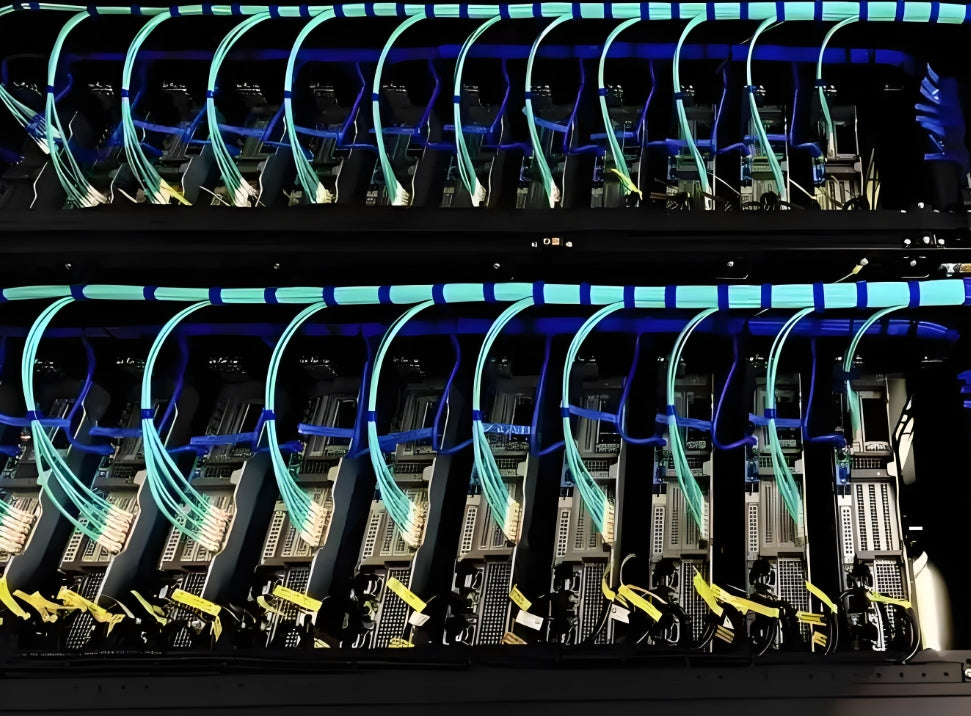
Pre-terminated MPO trunks are the backbone that lets high-speed AI network centers scale from 400G to 800G and beyond without re-cabling

AMPCOM Technical Team
Industry experts with 17+ years in structured cabling, data center infrastructure, and fiber optic network design
Planning a high-density AI data center build?
AMPCOM supplies pre-terminated MPO/MTP trunk cables, cassettes, and fiber enclosures engineered for 400G/800G/1.6T AI fabrics — factory-polished, loss-tested, and ready to deploy.
Talk to Our Infrastructure Experts

