
AI Era Data Center Fiber Selection: OM5 vs MMFD vs Singlemode — The 91.6M fkm Cabling Logic
Published:Executive Summary: CRU projects global data center fiber demand to reach 91.6 million fiber-kilometers in 2026 — a 32% year-over-year jump, driven almost entirely by AI infrastructure buildout. AI workloads are forcing a fundamental rethink of AI data center cabling strategies. This article examines why traditional fiber selection logic breaks under AI loads, compares OM5, MMFD, and singlemode (OS2) fiber, explains MPO architecture requirements, and provides a practical selection workflow for 400G/800G AI deployments.
Quick Navigation
- 1 Why AI Workloads Break Traditional Fiber Selection Logic
- 2 OM5 vs MMFD: Which Multimode Fiber Does AI Need?
- 3 Singlemode for AI: When OS2 Is the Only Logical Choice
- 4 MPO Architecture: The Fiber Density Multiplier AI Demands
- 5 Practical Implementation: The AI Fiber Selection Workflow
- 6 The Bottom Line: Making the Right Fiber Choice for AI

High-density fiber optic cabling is the backbone of modern AI data centers — and the wrong selection compounds across every GPU iteration
Chapter 1: Why AI Workloads Break Traditional Fiber Selection Logic
The Old Rule No Longer Holds
Traditional data center fiber selection was simple: short runs (under 300m) got multimode fiber, anything longer got singlemode. Bandwidth was comfortable at 10G/40G. Distance was the only real variable.
AI changes all three constraints:
- Density explosion: A single NVLink cluster can require 576 fibers between two racks. Traditional OM4 suddenly needs parallel links, doubling or tripling your fiber count.
- Latency is non-negotiable: AI training jobs run synchronously across hundreds of GPUs. A 100ns difference in fiber latency compounds across thousands of iterations. This is why you can't just "use whatever fiber is cheapest."
- Short-wave WDM is now mainstream: 400G-SWDM4 runs over OM5 at 300m. If you're still specifying OM4 for new AI builds, you're leaving capacity on the table.
The Compute-Performance Connection
Here's what many operators miss: the fiber you choose for an AI data center isn't just an infrastructure decision — it's a compute performance decision. 5ms of additional latency per training iteration × 100,000 iterations = 500 seconds of lost compute time per job. At hyperscale, that compounds into days of wasted GPU-hours monthly.
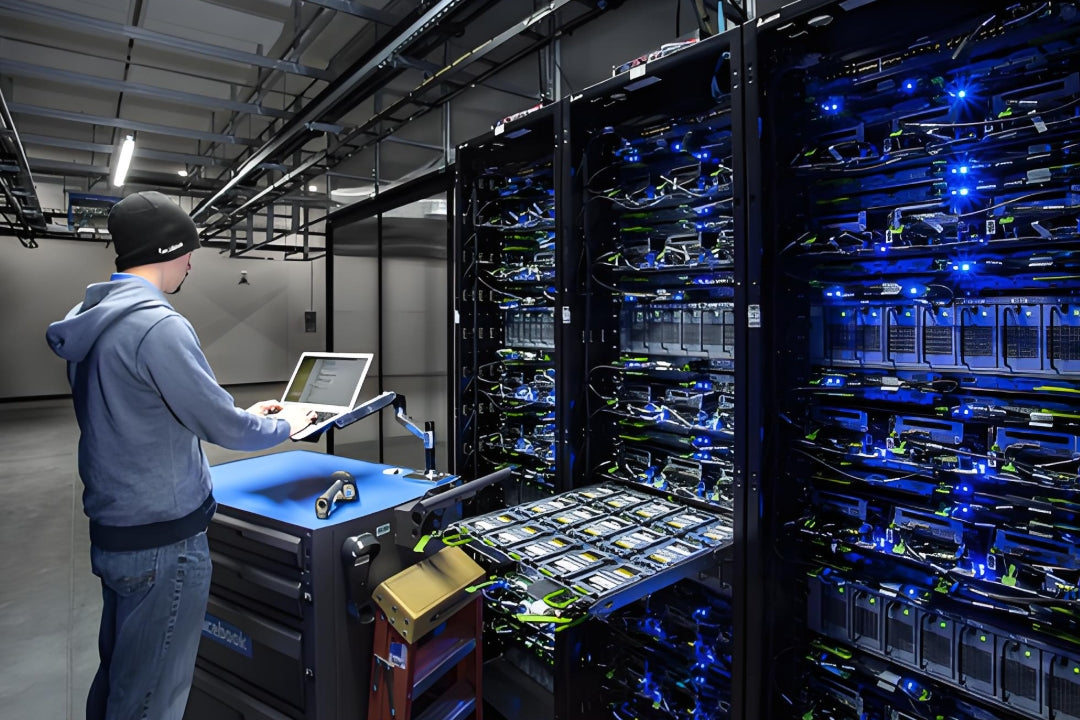
AI computing centers demand fiber infrastructure that scales with GPU cluster density — not the distance-only logic of legacy data centers
Chapter 2: OM5 vs MMFD — Which Multimode Fiber Does AI Actually Need?
OM5 — The SWDM Workhorse
OM5, standardized as TIA-492AAAE, was specifically designed to support Short-Wavelength Division Multiplexing (SWDM). For a deeper look at fiber optic cable types and their ratings, our practical guide covers OS2/OM3/OM4 specifications in detail. The key differentiator of OM5: its optimized bandwidth profile at 850nm, 880nm, 910nm, and 940nm windows.
MMFD (OM4 Extended Bandwidth) — The Newer Challenger
MMFD — sometimes marketed as OM4+ or wideband multimode — extends usable bandwidth across a broader SWDM window. The practical advantage: higher aggregate bandwidth over the same 300m distance as OM5 when using SWDM4 transceivers.
| Specification | OM3 | OM4 | OM5 | MMFD (OM4+) |
|---|---|---|---|---|
| Max Distance @ 400G-SWDM4 | ❌ Not supported | ❌ Not supported | ✅ 300m | ✅ 300m |
| Effective Modal Bandwidth (850nm) | 2,000 MHz·km | 4,700 MHz·km | 4,700 MHz·km | 6,000 MHz·km |
| SWDM Channel Support | Basic | Standard | ✅ Native | ✅ Extended |
| Cost per meter (relative) | Lowest | Moderate | Moderate-High | Moderate-High |
| Typical Use Case | Legacy 10G/40G intra-DC | Standard 40G/100G DC | 400G AI rack links | 800G+ AI backbone |
❓ Q: We have an existing OM4 plant. Should we spec OM5 for new AI links or rip-and-replace OM4?
A: For AI-era workloads, spec OM5 or MMFD for all new fiber runs. OM4 remains viable for existing 40G/100G links that aren't running AI traffic. The ROI on a full OM4→OM5 replacement doesn't justify it unless you're doing a full rack rebuild.
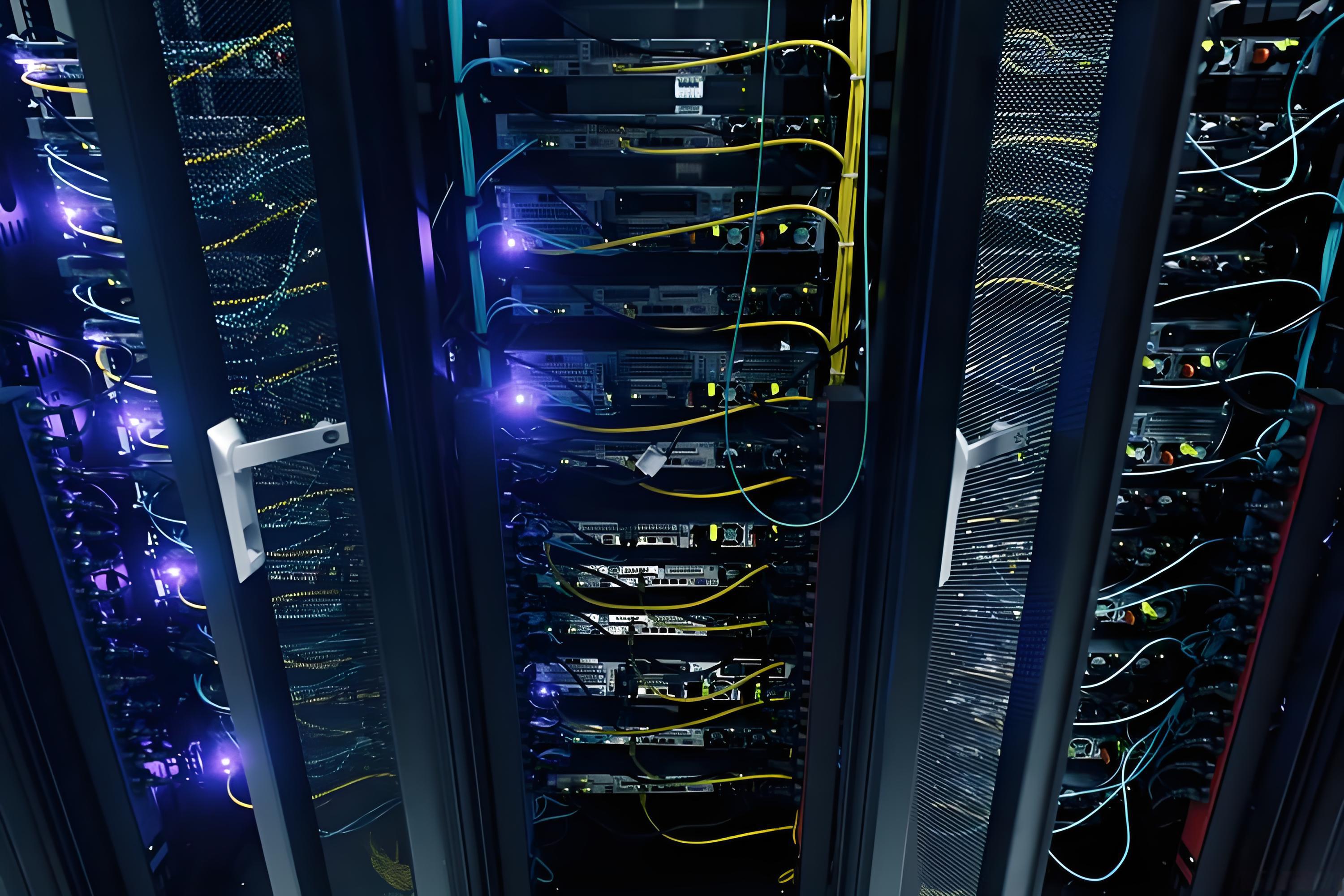
OM5 and MMFD fiber characteristics determine whether your AI rack links can sustain 400G-SWDM4 over the full 300m envelope
Chapter 3: Singlemode for AI — When OS2 Is the Only Logical Choice
Singlemode fiber (OS2) has traditionally been the choice for long-haul and campus links. In the AI era, it's creeping into the data center — for two reasons that didn't matter five years ago:
- AI fabric scale-out beyond 300m: Large GPU clusters spanning multiple rows or buildings can't use multimode. OS2 is mandatory.
- Future-proofing for 1.6T and beyond: Beyond 400G, singlemode becomes the only viable long-term path. OM5/MMFD have real limits at 800G+ over 300m. For the full picture on 800G and 1.6T cabling trends in 2026, see our dedicated analysis.
The Cost Trap Most Operators Fall Into
Many operators choose OS2 everywhere "because it's better." This ignores that singlemode transceivers (QSFP28-DWDM, CFP2-DCO) cost 3–5x more than equivalent multimode SWDM optics, and the splice/connector quality requirements are significantly stricter. OS2 inside the rack is overkill and expensive.
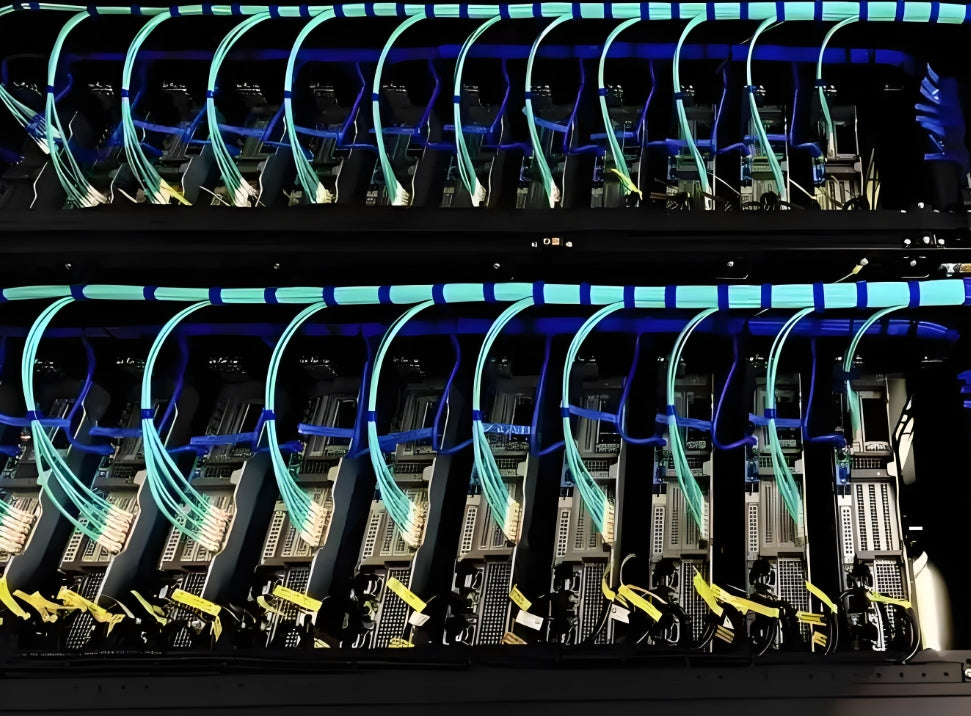
OS2 singlemode is the mandatory choice when AI fabric scale-out exceeds 300m or when planning for 1.6T+ backbones
Chapter 4: MPO Architecture — The Fiber Density Multiplier AI Demands
AI racks generate fiber counts that are simply unmanageable with LC connectors. A 400G switch with 32× 400G ports needs 128 fibers per switch if using LC duplex — or just 4 MPO-16 trunks with the right pre-terminated infrastructure. For connector selection guidance, our MPO fiber solutions guide breaks down 8, 12, and 24-fiber options for high-density cabling.
For AI data centers, MPO-8, MPO-12, and MPO-16 connector selection is as critical as the fiber type itself:
- MPO-8: Standard for 40G-SR4 and 100G-SR4. Compatible with 200G (2× MPO-8) and 400G (4× MPO-8). Best for incremental migration.
- MPO-12: The European/Japanese standard. Used in structured cabling for 40G/100G. Compatible with parallel fiber applications but being phased out for AI workloads.
- MPO-16: The AI-native choice. Supports 400G-SR4.2 (4 wavelengths over 4 pairs) in a single trunk. Required for 800G fiber links in AI clusters.
Case: Southeast Asia Hyperscale DC Buildout (2025–2026)
A 200MW AI data center project faced a critical fiber architecture decision for its GPU cluster rows. The original specification called for OM4 LC-duplex throughout.
The problem: At 400G per GPU server and 64 servers per rack, the 48-port leaf switches required 384 LC duplex connections per rack row. Cross-connects became unmanageable within 6 months.
The solution: Migrated to OM5 + MPO-16 pre-terminated trunk infrastructure. Fiber count per row dropped from 384 to 12 MPO-16 trunks. Cable management time reduced by 60%. Switch port utilization improved from 45% to 92%.
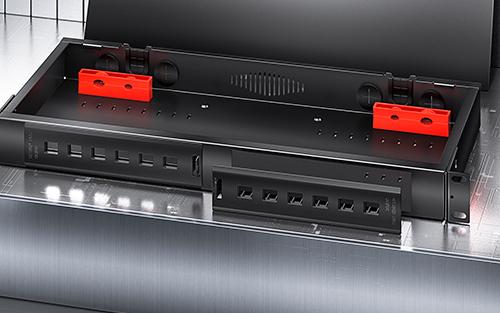
Rack-mounted fiber termination boxes designed for MPO-16 trunks are the foundation of manageable AI-scale fiber deployment
Chapter 5: Practical Implementation — The AI Fiber Selection Workflow
Step 1: Define Link Distance
Under 300m → multimode (OM5 or MMFD). Over 300m → singlemode (OS2).
Step 2: Define Speed Horizon
400G now, planning 800G within 3 years → OM5. 800G+ required today → OS2 with MPO-16.
Step 3: Calculate Fiber Count Budget
Over 48 fibers per link → mandate MPO. Under 48 fibers → LC duplex is acceptable but consider MPO for future headroom.
Step 4: Budget for Transceiver Cost, Not Just Fiber Cost
A singlemode link with DWDM optics costs 4x more per port than an equivalent SWDM4 OM5 link. Factor this into your total cost of ownership model over a 5-year lifecycle.
| Scenario | Recommended Fiber | Connector | Max Distance |
|---|---|---|---|
| AI intra-rack <100m | OM5 | MPO-16 / LC | 300m |
| AI inter-row (100–300m) | OM5 or MMFD | MPO-16 | 300m |
| AI cross-building / row-spanning | OS2 (Singlemode) | LC-UPC / SC-APC | 10km+ |
| 800G+ AI backbone | OS2 + MPO-16 | MPO-16 | 2km |
| Legacy 40G/100G migration | OM4 (existing) + OM5 (new) | MPO-8 / LC | 300m |
❓ Q: Should we specify OM5 or MMFD for a new 800G AI rack being installed in 2026?
A: At 800G over 100–200m within a row, MMFD (OM4+ wideband) with MPO-16 is currently the most cost-effective solution. OM5 is also fully supported at 800G-SR8/DR8. If you're buying in volume, MMFD often has better pricing; if you want maximum future-proofing for SWDM beyond 800G, spec OM5.
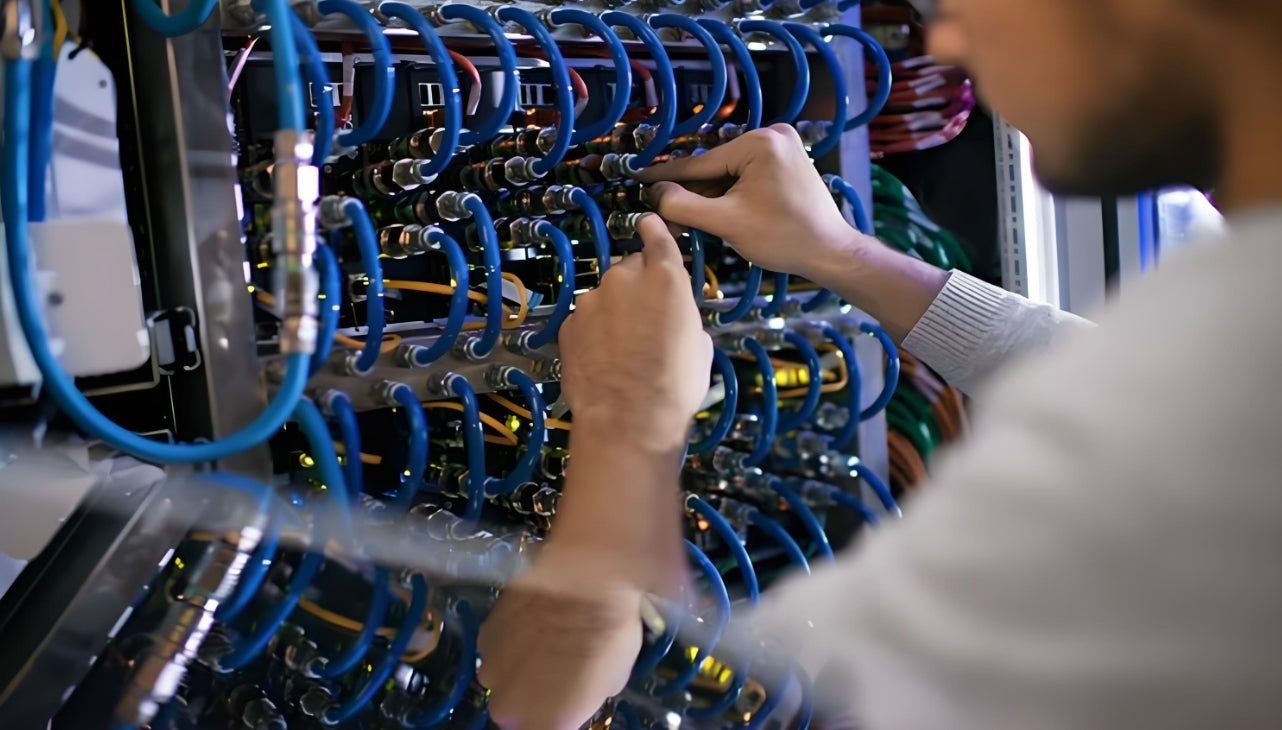
Field cable testing and validation are essential steps in the AI fiber selection workflow — verifying MPO trunk performance before go-live
Chapter 6: The Bottom Line — Making the Right Fiber Choice for AI
The 91.6 million fiber-kilometer demand figure isn't just a number — it's a signal that AI infrastructure is fundamentally reshaping what "good enough" fiber means. The operators who get this right will build AI clusters that scale, stay manageable, and don't require emergency fiber upgrades every 18 months.
The practical summary:
✅ OM5 is the new baseline
For AI intra-rack and inter-row links under 300m. Stop specifying OM4 for new AI builds.
✅ MMFD is the performance upgrade path
For 800G+ links within the same distance envelope.
✅ OS2 is mandatory
For AI fabric scale-out beyond 300m and for any 1.6T+ backbone.
✅ MPO architecture is non-negotiable
At AI-scale fiber counts. LC duplex doesn't scale past 400G.
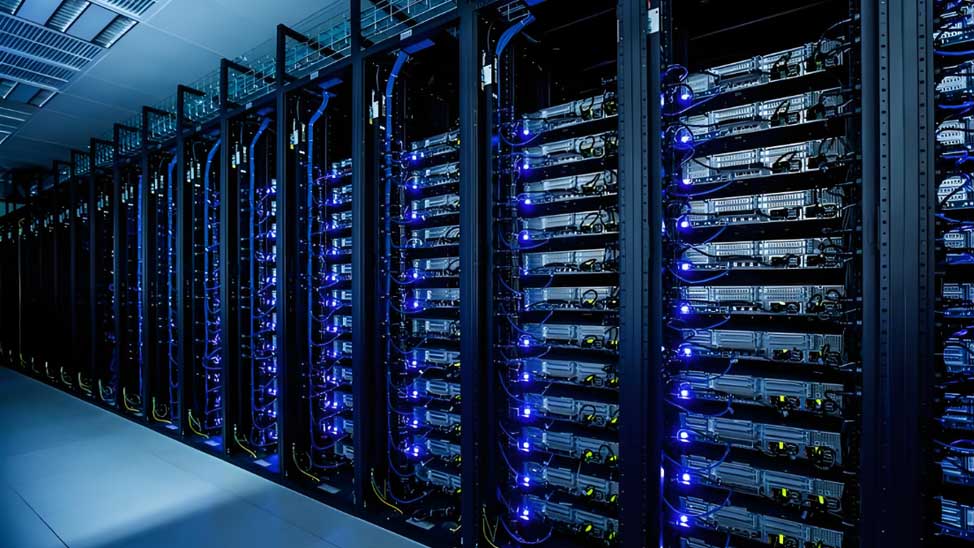
High-density, properly managed fiber infrastructure is what separates scalable AI data centers from those facing constant cabling emergencies

AMPCOM Technical Team
Industry experts with 17+ years in structured cabling, data center infrastructure, and fiber optic network design
Need a tailored fiber cabling solution for your AI data center?
AMPCOM provides custom pre-terminated fiber assemblies, MPO trunk cables, and OM5/MMFD/OS2 solutions engineered for AI-scale deployments.
Talk to Our Infrastructure Experts

