
SMF vs MCF: Data Center Fiber Selection Guide
Published:Executive Summary: Multi-Core Fiber (MCF) has moved from research labs into real-world metro and data center deployments — Microsoft has deployed Hollow Core Fiber (HCF) in Azure, STL completed 800G trials over 4-core MCF, and ITU-T published its first Spatial Division Multiplexing (SDM) framework in 2025. But for most data center operators, the question isn't "is MCF real?" — it's "should I buy it today?" This article compares standard Single-Mode Fiber (SMF) against Multi-Core Fiber across cost, deployability, standards maturity, and real-world performance, giving you a practical decision framework for 2026.
Quick Navigation
- 1 The Basics: What Exactly Are SMF and MCF?
- 2 Side-by-Side Comparison: SMF vs MCF
- 3 The MCF Promise: What Real-World Trials Show
- 4 The Deployment Reality: Where MCF Falls Short Today
- 5 Decision Framework: Which Fiber for Your Scenario?
- 6 The Hybrid Path: Running SMF and MCF Together
- 7 Bottom Line: What Should You Do in 2026?
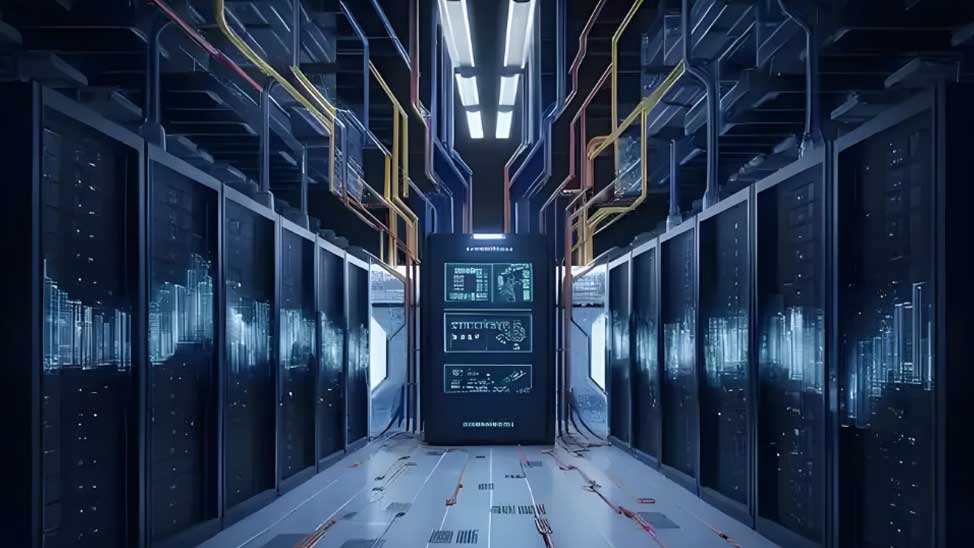
The choice between SMF and MCF determines everything from per-port cost to long-term scalability in AI-era data centers
Chapter 1: The Basics — What Exactly Are SMF and MCF?
Before we compare, let's establish what each technology actually is at the physical level.
Standard Single-Mode Fiber (SMF)
SMF is the industry-standard optical fiber that has been the backbone of long-haul, metro, and data center connectivity for decades. It uses a single core — typically 9 µm in diameter — to carry one optical signal (or multiple wavelengths via DWDM). Every transceiver in your data center today, from 10G SFP+ to 800G QSFP-DD, is designed to work with standard SMF (OS2).
Key specs: 9/125 µm core/cladding, supports DWDM up to hundreds of channels, standardized under ITU-T G.652 (standard) and G.657 (bend-insensitive), proven deployment ecosystem with mature splicing, testing, and connector tooling worldwide.
Multi-Core Fiber (MCF)
MCF packs multiple independent transmission cores — typically 4, 7, or even 19 cores — inside a single 125 µm cladding, the same outer diameter as a standard SMF. Each core is essentially a single-mode waveguide, but because they share the same cladding, one MCF cable can carry 4x, 7x, or more capacity within the same physical footprint.
Key specs: 4–19 cores per fiber, 125 µm outer cladding (same as SMF), supports DWDM per core (multiplying capacity potential dramatically), ITU-T G.Supplement 87 (2025) provides the first global SDM framework.
Core Difference at a Glance
Think of SMF as a single-lane highway: one road, carry as much traffic as you want by stacking lanes vertically (DWDM wavelengths). MCF, by contrast, is a multi-lane tunnel: multiple independent roads in the same tunnel bore, each capable of its own DWDM stack. The total capacity potential isn't additive — it's multiplicative.
Chapter 2: Side-by-Side Comparison — SMF vs MCF
Here is the head-to-head comparison across every dimension that matters for a data center decision in 2026:
| Dimension | SMF (G.652/G.657) | MCF (4–19 core) |
|---|---|---|
| Maturity / Standards | ITU-T G.652/G.657, decades mature | ITU-T G.Supp87 (2025), still maturing |
| Per-Fiber Capacity | ~200–400 Gbps per lambda × DWDM channels | 4–19× SMF capacity per fiber (same diameter) |
| Cable Cost (per meter) | $0.10–$0.50 (volume commodity) | $1.50–$5.00+ (early production) |
| Transceiver Compatibility | All standard: SFP, QSFP, OSFP, CPO | Specialized MCF transceivers (limited supply chain) |
| Splicing Equipment | Standard fusion splicers, $5k–$15k | Specialized rotational alignment splicers, $30k+ |
| Field Deployability | Proven: any technician, any environment | Controlled conditions only; street cabinets problematic |
| Crosstalk Management | N/A (single core) | Core-to-core crosstalk must be managed via design & modulation |
| Connector Ecosystem | LC, SC, MPO; billions deployed | Fan-in/Fan-out devices needed; MPO variants emerging |
| Repair & Maintenance | Standard field-repairable | Specialized skills, longer repair times |

Standard SMF remains the most widely deployed and serviceable fiber type in data centers globally — but its single-core architecture is hitting capacity limits in hyper-scale AI clusters
Chapter 3: The MCF Promise — What Real-World Trials Show
MCF is not science fiction. In the last 18 months, the technology has crossed critical milestones:
Microsoft Azure — Hollow Core Fiber in Production
Microsoft deployed Hollow Core Fiber (HCF) — a variant of multi-core/air-core technology — inside its Azure data centers. The results were documented as up to 47% improvement in data speeds and measurably lower latency for AI and cloud workloads. By March 2025, Microsoft called it "production-ready." This is not a lab demo — it is a hyperscaler's operational deployment.
STL + Colt — 800G over 4-Core MCF in London Metro
STL completed a comprehensive 800G transmission trial over 4-core MCF across Colt's London metro network. The trial covered 9 km and 63 km spans, testing chromatic dispersion, polarization mode dispersion, crosstalk, throughput, and fault analysis. Every parameter passed. Metro deployment viability is proven.
IIT Madras — World's First Quantum Key Distribution over MCF
In a world-first achievement, STL and C-DOT deployed India's first quantum-secured network over a 100 km 4-core MCF cable across the IIT Madras campus — spanning both underground and aerial infrastructure simultaneously. This demonstrates that MCF can handle cutting-edge applications requiring extreme signal integrity.
Chapter 4: The Deployment Reality — Where MCF Falls Short Today
For all the impressive benchmarks, the industry is candid about where MCF stands regarding field deployability at mass scale. As STL's technical team recently noted: "The physics has moved. The field is still catching up."
1. Splicing: The Rotational Alignment Problem
Splicing MCF requires perfect rotational alignment of every core across two fiber ends. Standard fusion splicers cannot do this. Specialized equipment using advanced alignment algorithms can achieve near-perfect results — in controlled conditions. A street cabinet in winter is not a controlled condition, nor is a congested urban duct environment. The specialized splicers also cost $30,000+ compared to $5,000–$15,000 for standard SMF splicers.
2. Connectorization: Fan-In/Fan-Out Complexity
MCF requires fan-in/fan-out (FIFO) devices that separate the multiple cores into individual SMF paths for transceiver connection. These FIFO devices add cost, insertion loss, and a potential failure point. While MPO-based variants are emerging, standardization across vendors — connectors, testing methods, and FIFO devices — remains immature.
3. Mechanical Fragility (HCF-specific)
Hollow Core Fiber's air-core structure gives it exceptional speed but makes it more sensitive to mechanical stress, sharp bends, and the handling that happens on every job site. Cable designs are evolving, but ruggedization has cost implications that operators need to factor deliberately into their budgets.
4. Standards Maturity
ITU-T's G.Supplement 87, published in 2025, represents real progress — it gives the industry its first global SDM framework. However, unified standards across connectors, testing procedures, fan-in/fan-out devices, and cross-vendor interoperability are still in active development. The ecosystem is being built in parallel with early deployments, not ahead of them.
5. Supply Chain Constraints
MCF transceivers, multicore amplifiers, and specialized test equipment are not yet available at volume pricing. Lead times are longer, and the second-source ecosystem (critical for data center reliability planning) is still limited to a few players globally.

The gap between MCF's laboratory performance and field-level deployability remains the central challenge for data center operators evaluating next-generation fiber
Chapter 5: Decision Framework — Which Fiber for Your Scenario?
Here is a practical decision framework based on your deployment scenario:
| Your Scenario | Recommended Fiber | Rationale |
|---|---|---|
| Standard enterprise data center (10G–100G) | SMF (OS2) | Proven, lowest cost, huge supply chain. No reason to adopt MCF. |
| Hyperscale AI cluster (400G–800G+ back-end) | SMF + IBR | IBR delivers higher fiber density in same duct space. MCF not yet cost-justified for in-plant. |
| Data Center Interconnect (DCI), duct-constrained | MCF candidate | Where duct space is the binding constraint, MCF's 4–19× density advantage is compelling. Evaluate per-project. |
| Metro network expansion, new build | MCF pilot | If building greenfield metro ring, consider MCF for specific high-capacity segments. Run an SMF/MCF hybrid test first. |
| Quantum-secured network / cutting-edge R&D | MCF | MCF's core isolation is uniquely suited for quantum key distribution. World-first deployments prove it. |
| Campus / SMB networks | SMF (OS2) or OM4/OM5 MMF | MCF is over-engineered and over-priced for these environments today. Stick with standard fiber. |
Real-World Case: Colocation Data Center
Scenario: A large colocation provider expanding in a downtown metro area. Existing ducts are 85% full. They need to support 400G interconnect between three buildings.
Decision: Deploy 864-fiber SMF trunk cables using IBR technology for the backbone (3× capacity without new duct work), and reserve one duct for a future MCF pilot. This de-risks the deployment while preserving the option to adopt MCF when standard connectors and field splicing mature.
Outcome: Immediate capacity solved with proven SMF + IBR. MCF readiness timeline: 2027–2028.
Chapter 6: The Hybrid Path — Running SMF and MCF Together
The smartest strategy in 2026 is not "SMF or MCF" — it's "SMF now, MCF ready."
Here is what that looks like in practice:
1. Deploy SMF + IBR for the Immediate Capacity Crunch
Intermittently Bonded Ribbon (IBR) fiber cable packs dramatically more fiber into the same duct space as traditional loose-tube cables. For AI data center campuses facing acute fiber density needs, IBR delivers immediate relief using the existing SMF ecosystem. No specialized splicing. No new transceivers. Standard connectors. Proven testing protocols. For a deeper look, read our guide on fiber optic cable types for different deployment scenarios.
2. Design Duct Infrastructure for Future MCF
When pulling new duct — whether underground campus links or in-building risers — specify conduits with enough space and bend radius tolerance for future MCF cables. The additional upfront cost is negligible, and it dramatically reduces future deployment friction.
3. Run an MCF Pilot on a Non-Critical Link
If your organization can afford it, allocate a single metro or campus link for an MCF technology evaluation. Work with vendors like STL or OFS to set up a controlled trial. Measure everything: splice loss, crosstalk stability over temperature, end-to-end latency, and total installed cost per Gbps. Your team will be ready to scale when the ecosystem matures.
4. Stay Engaged with Standards Evolution
ITU-T G.Supplement 87 was published in 2025. The next iteration — likely G.65x.y — will address connector standardization, testing harmonization, and FIFO device interoperability. Track these developments quarterly. When the standard moves from "Supplement" to "Recommendation," that is your trigger to scale procurement.
What About HCF (Hollow Core Fiber)?
Hollow Core Fiber is a distinct technology from MCF — it replaces the glass core with air, enabling ~46% faster light transmission. Microsoft's Azure deployment shows its value for latency-sensitive AI workloads. However, HCF faces even greater deployment challenges than MCF due to mechanical fragility and air-glass interface connectorization. In 2026, evaluate HCF only if your application demands latency below what standard SMF can deliver (e.g., HFT trading floors, inter-AI-cluster fabric).
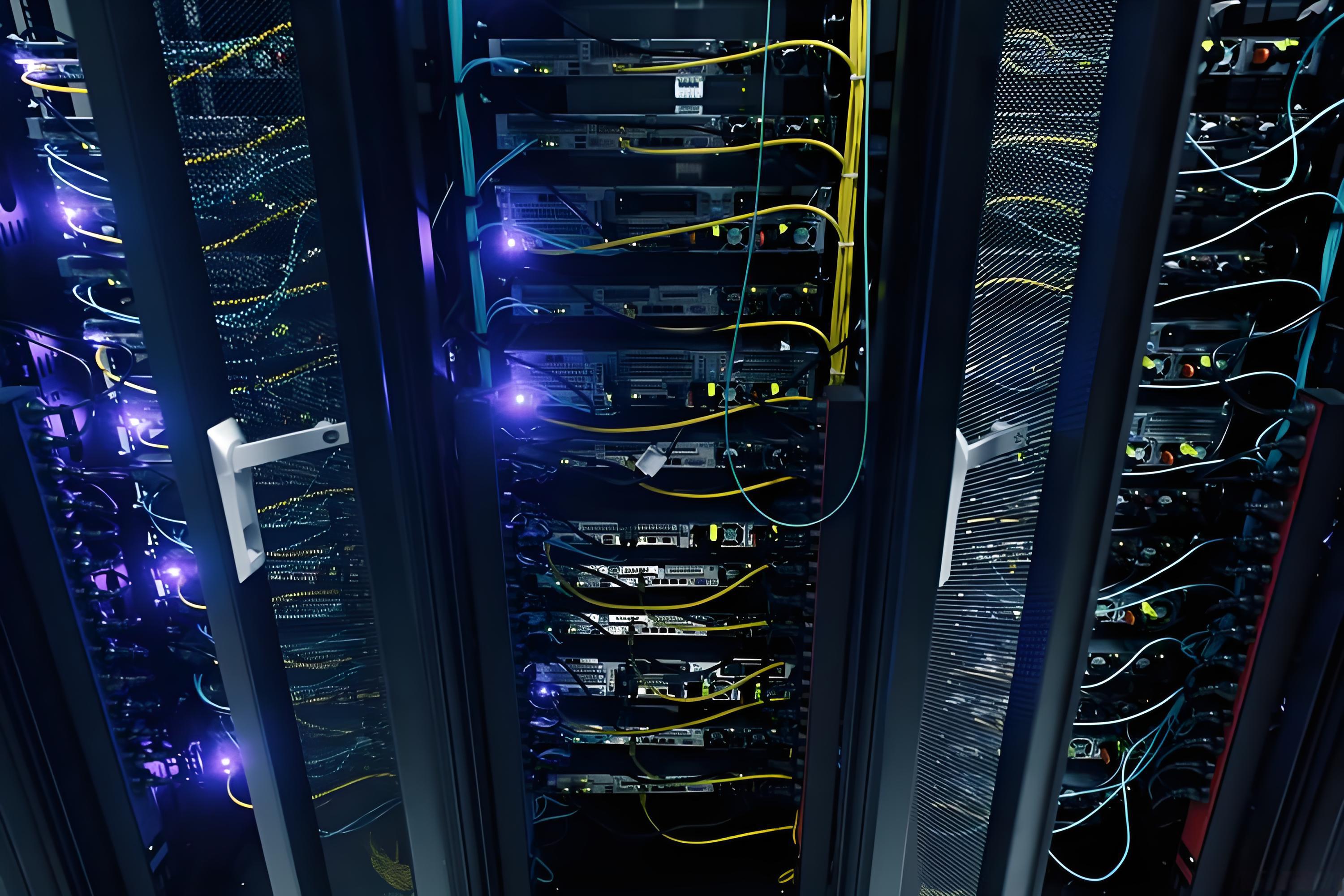
The hybrid SMF + MCF strategy allows data centers to address today's capacity needs while preserving the option to adopt next-generation fiber as the ecosystem matures
Chapter 7: Bottom Line — What Should You Do in 2026?
Here is the honest answer, stripped of hype:
✅ For 95% of data center operators in 2026
Stick with SMF (OS2). Deploy IBR cables for high-density scenarios. You are not missing out. The MCF ecosystem is 2–3 years away from being a viable mainstream procurement option. Standard SMF with DWDM and IBR will handle your capacity needs through 2028.
⚠️ For hyperscalers and large DCI operators
Run a pilot. If you are duct-constrained and expanding capacity at hyperscale pace, MCF's density advantage may justify early adoption on specific routes. Run a controlled 12-month pilot before committing to volume procurement. Partner with vendors who offer turnkey support including specialized splicing and testing.
🔬 For R&D and quantum-secure applications
MCF is ready now — for specific use cases. The IIT Madras quantum key distribution deployment proves MCF's unique advantage in scenarios requiring extreme signal isolation across independent channels. If your application matches this profile, MCF is not just viable — it is the superior choice.
💰 The Cost Reality
Even accounting for fiber material costs, the total installed cost per Gbps of MCF is currently 3–5× higher than SMF when you factor in specialized splicing, FIFO devices, limited transceiver options, and premium cable pricing. This gap will narrow as production scales, but it will not close before 2028.
For a deeper understanding of how fiber selection fits into your broader infrastructure strategy, read our comprehensive guide on strategic fiber selection for high-performance networks and our comparison of singlemode vs multimode fiber types.

AMPCOM Technical Team
Industry experts with 17+ years in structured cabling, data center infrastructure, and fiber optic network design
Need help choosing the right fiber for your data center?
AMPCOM provides a full range of SMF (OS2) patch cables, assemblies, and custom fiber solutions — including MPO trunk cables, breakout cassettes, and termination panels for high-density AI data center deployments.
Talk to Our Fiber Experts

