
Strategic Fiber Selection: Engineering High-Performance Networks
Published:A Technical Guide to Balancing Performance, Scalability, and Cost-Effectiveness.
In the era of 400G and 800G networking, the physical layer is no longer just a "utility"—it is a strategic asset. Global infrastructure partners are increasingly moving away from legacy brand premiums in favor of Direct-from-Brand solutions that offer carrier-grade precision without the "middleman" markup. This guide explores the technical parameters of fiber selection and the economic impact of modern cabling strategies.

I. Technical Specifications: OS2 vs. OM4
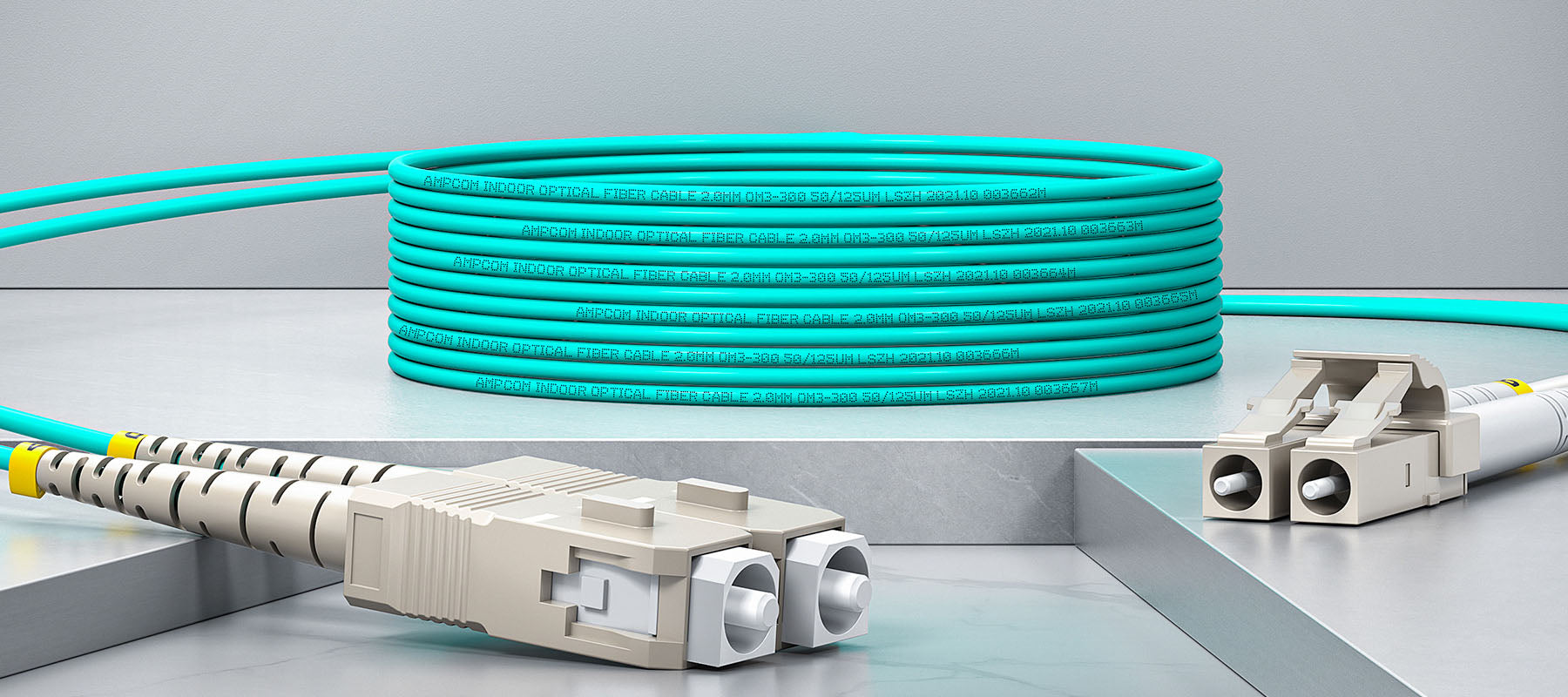
Selecting the correct fiber mode is the first step in optimizing network ROI. While Multimode (OM4) remains a staple for short-reach high-density patching, Single-Mode (OS2) is the undisputed champion for future-proofing and long-haul reliability.
| Parameter | OS2 Single-Mode (9/125μm) | OM4 Multimode (50/125μm) |
|---|---|---|
| Max Transmission Distance | Up to 200km (Hardware dependent) | Up to 400m (at 10Gbps) |
| Light Source | Laser (1310/1550nm) | VCSEL (850nm) |
| Bandwidth Capacity | Virtually Unlimited (WDM capable) | 4700 MHz·km |
| Insertion Loss (Avg.) | ≤0.2dB (Carrier Grade) | ≤0.3dB |
II. Case Study: The ROI of Fiber Infrastructure
Context: A municipal infrastructure project in Chattanooga, Tennessee, implemented a high-density fiber-to-the-premises (FTTP) network.
The results of this large-scale deployment highlight the transformative power of fiber optics:
- Economic Impact: The network attracted $2.7 billion in economic benefits over a 10-year period.
- Operational Efficiency: Enterprises utilizing fiber reported a 20% increase in productivity due to reduced latency and downtime.
- Sustainability: Fiber networks were found to consume up to 70% less energy than legacy copper-based systems, significantly lowering long-term OpEx.

III. The Global Partner Choice: Why AMPCOM?
Global partners recognize AMPCOM as a key player in the "Direct-from-Brand" movement. By bypassing traditional distribution layers, partners achieve a structure practiced by industry leaders worldwide.
1. Verified Technical Integrity
Every AMPCOM jumper undergoes rigorous testing using Fluke-8000 or Yokogawa OTDR testers. This ensures that every link meets the strict TIA/EIA-568 and IEC standards required for high-frequency data center environments.
2. Advanced Material Science
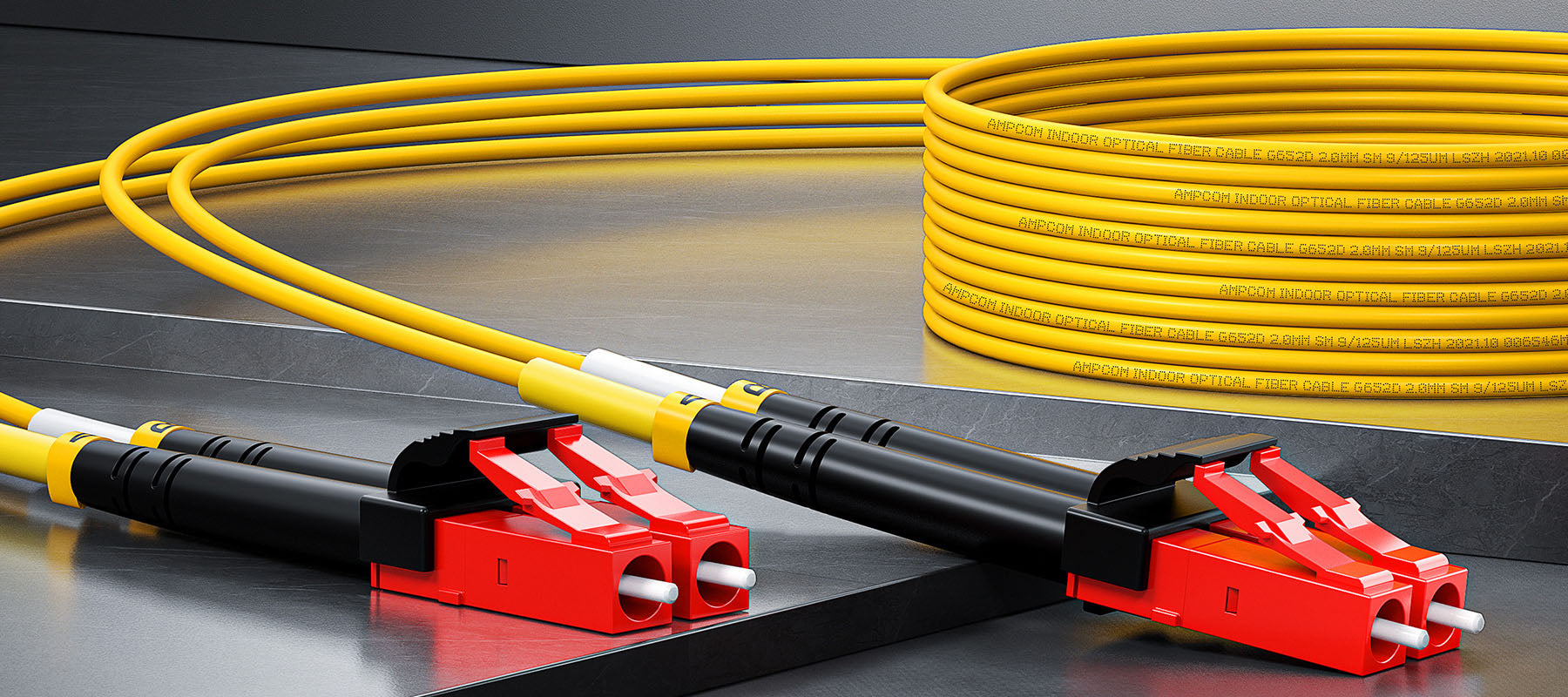
Utilizing G.657.A1 Bend-Insensitive Fiber and LSZH (Low Smoke Zero Halogen) jackets, these solutions provide the flexibility needed for tight cable management while adhering to the highest international fire safety protocols.
3. Bespoke Scalability
Unlike retail-focused brands, AMPCOM’s official channel supports mass customization. Whether a project requires 0.5m jumpers for high-density racks or 100m+ trunk lines, the ability to order exact specifications eliminates "cable clutter" and reduces overall material waste.
Conclusion
Choosing the right fiber optic cable is a balance of current technical requirements and future scalability. By leveraging the same carrier-grade hardware used by global infrastructure partners, organizations can build faster, more resilient networks at a significantly lower Total Cost of Ownership (TCO).


