
Why LC Connectors Became the First Choice for Data Center Cabling: The Evolution from SC/FC to LC
Published:Executive Summary: In modern data center cabling, the LC connector has become the undeniable standard. From its introduction by Lucent Technologies in 1997 to today's dominance in 40G/100G/400G environments, LC connectors have revolutionized high-density fiber deployments. With a 1.25mm ferrule diameter—half the size of traditional SC/FC connectors—LC enables double the port density in the same rack space. This article explores the technical evolution, comparative advantages, and selection guidelines for fiber connectors in data center environments.
Quick Navigation
Walk into any modern data center, and you'll see them everywhere: the small, rectangular LC connectors clicking into switches and patch panels. But how did we get here? Why did LC become the connector of choice, and what does this mean for your cabling infrastructure?
Let's trace the evolution from the early FC and SC connectors to today's LC standard, and understand why this matters for your next deployment.
1. The Four Main Fiber Connectors: A Quick Comparison
Before diving into why LC won, let's understand the landscape. Four connector types have dominated fiber installations over the decades:
| Connector | Appearance | Ferrule Diameter | Connection Method | Typical Application |
|---|---|---|---|---|
| FC | Round, threaded | 2.5mm | Screw-on | Legacy telecom, OSP (outside plant) |
| SC | Square, "big square" | 2.5mm | Push-pull | Enterprise, FTTH, CCTV surveillance |
| ST | Round, bayonet | 2.5mm | Twist-lock | Legacy installations, multimode |
| LC | Small square, "little square" | 1.25mm | Push-pull | Data centers, high-speed switches |

High-speed fiber optic cabling in modern data center environment
2. The Evolution: From FC to SC to LC
2.1 FC Connector: The Pioneer (1980s)
The FC (Ferrule Connector) was one of the first fiber connectors, featuring a threaded screw-on mechanism. While robust and secure, it had significant drawbacks:
- Time-consuming: Each connection required screwing/unscrewing
- Not ideal for high-density: Large round profile wastes panel space
- Still found: Legacy telecom installations and some OSP applications
— Field technician feedback
2.2 SC Connector: The Square Revolution (1990s)
Developed by NTT (Nippon Telegraph and Telephone), the SC (Subscriber Connector) introduced the push-pull mechanism:
- Easier operation: Simple push to connect, pull to disconnect
- Better density: Square shape packs more efficiently than round FC
- Widely adopted: Became standard for enterprise networks and FTTH
SC connectors remain popular for outdoor surveillance, FTTH deployments, and enterprise networks where density isn't the primary concern.
2.3 LC Connector: The Miniaturization Breakthrough (1997)
Lucent Technologies (formerly AT&T) introduced the LC (Lucent Connector) as a "Mini-SC"—and it changed everything:
LC's Three Revolutionary Features
Half the size: 1.25mm ferrule vs. 2.5mm for SC/FC
Latch mechanism: Secure retention with easy release
Superior performance: Insertion loss ≤0.1dB, return loss ≥50dB (UPC)
The result? In the same 1U panel space, LC doubles the port count compared to SC.
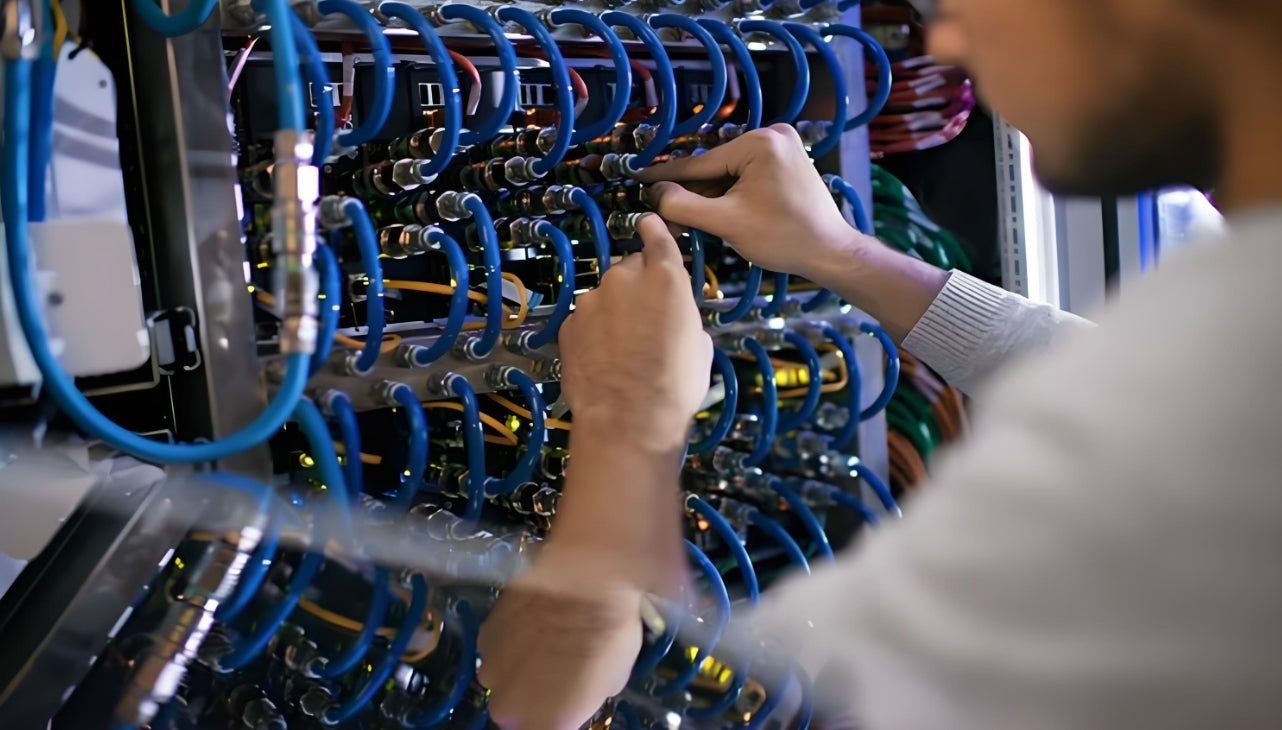
Evolution of data center cabling from legacy to modern standards
3. Why LC Dominates Modern Data Centers
3.1 Density: The Primary Driver
| Connector Type | Fibers per 1U Panel | Fibers per 42U Rack | Density Gain |
|---|---|---|---|
| SC | 24 fibers (12 duplex) | ~288 fibers | Baseline |
| LC | 48 fibers (24 duplex) | ~576 fibers | +100% |
In hyperscale data centers where every rack unit counts, LC's density advantage translates directly to cost savings:
- Less rack space needed for patch panels
- Smaller cable management requirements
- Reduced cooling load from better airflow
- Lower construction and real estate costs
3.2 Performance: Meeting 40G/100G/400G Demands
Modern data center switches—from 10G to 400G—standardize on LC interfaces. For high-density 40G/100G connections, MPO fiber solutions work alongside LC for breakout configurations:
| Speed | Form Factor | Connector Interface | Notes |
|---|---|---|---|
| 10G | SFP+ | LC duplex | Universal standard |
| 40G | QSFP+ | MPO (12-fiber) or LC duplex×4 | LC for breakout cables |
| 100G | QSFP28 | MPO (24-fiber) or LC duplex×4 | LC for edge and aggregation |
| 400G | QSFP-DD | MPO (16-fiber) or LC duplex×8 | LC for management ports |
3.3 Reliability: Built for Frequent Handling
- Insertion cycles: LC connectors rated for 1,000+ mating cycles
- Latch design: Prevents accidental disconnection
- Ceramic ferrule: Precision alignment, consistent performance
AMPCOM Field Experience
In our data center deployments, we've found LC connectors reduce troubleshooting time by 30% compared to FC—the push-pull mechanism and clear seating indicator make verification instant. For high-density environments, LC is the only practical choice.

LC connectors enable maximum density in modern data center environments
4. Selection Guide: LC vs SC vs FC vs ST
| Scenario | Recommended Connector | Rationale |
|---|---|---|
| Data center core/aggregation | LC | Maximum density, 40G/100G compatible |
| Server TOR (Top of Rack) | LC | High port count in limited space |
| Outdoor CCTV/Surveillance | SC | Robust, cost-effective, widely compatible |
| FTTH residential drop | SC | Industry standard for ONT connections |
| Legacy telecom OSP | FC | Threaded connection resists vibration |
| Older enterprise equipment | ST | Match existing infrastructure |
Quick Selection Rules
High-density requirement? → LC (no question)
Cost-sensitive, low density? → SC
Outdoor/vibration environment? → FC
Matching legacy equipment? → Whatever's installed
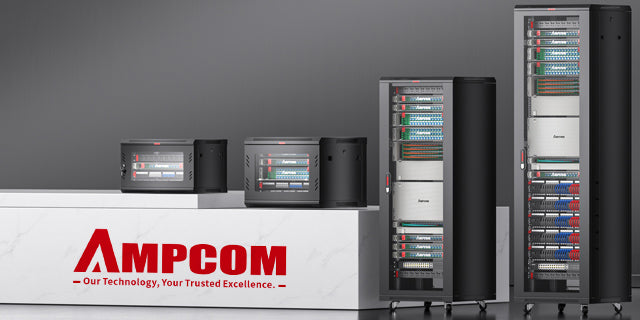
Proper connector selection ensures optimal performance in server room environments
5. AMPCOM LC Product Portfolio
AMPCOM offers a complete range of LC-based fiber optic cable solutions for data center deployments:
| Product Category | Description | Application |
|---|---|---|
| Fiber Patch Cables | Single-mode (OS2) & Multimode (OM3/OM4/OM5) | Switch-to-switch, server connections |
| Fiber Patch Panels | 12/24/48/96 fiber configurations | Main distribution area, horizontal cabling |
| MPO Cassettes | MPO-to-LC breakout modules | 40G/100G to 10G breakout |
| Fiber Enclosures | Wall-mount, rack-mount options | Edge locations, IDF closets |
Pro Tip: Plan for Upgrades
Even if you're deploying 10G today, specify LC connectors and OM4 fiber. This gives you a clear upgrade path to 40G/100G without recabling. The incremental cost is minimal; the future savings are substantial.
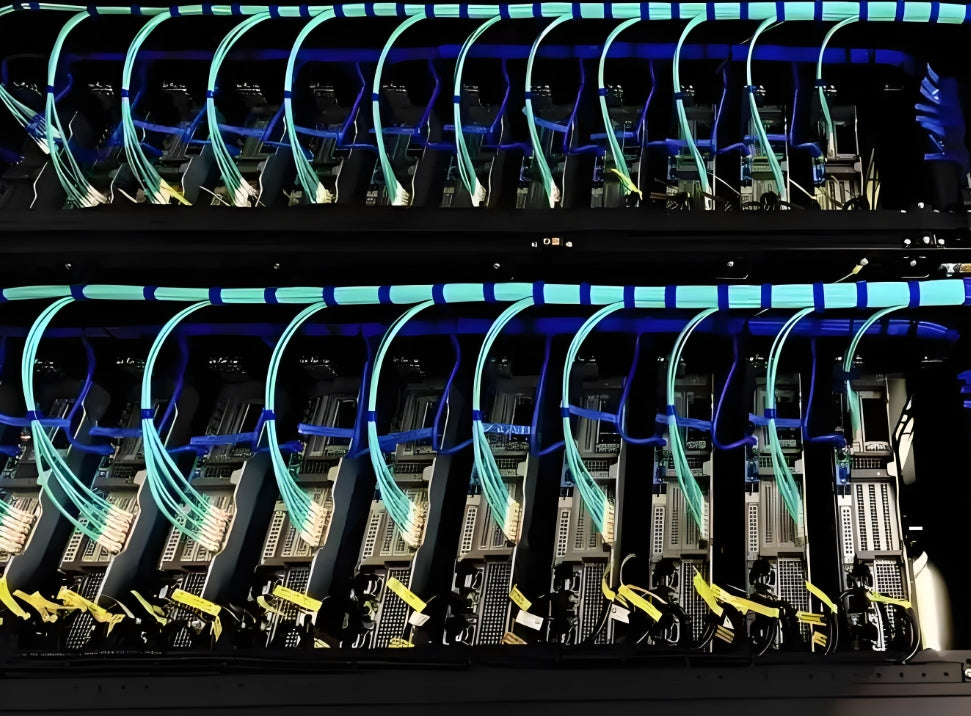
AMPCOM complete LC fiber solution portfolio for data center applications
Related Articles
- LC vs SC: Which Connector for 20km Transmission? — Real test data comparing LC and SC performance over long-distance single-mode links
- Fiber Patch Cable Selection Guide 2026: How to Choose the Right One for Your Network — You'll know exactly which cable type — OS2, OM3, OM4, or OM5 — belongs in your specific environment
- What’s the Difference Between Single-mode and Multimode Fiber? — The right answer depends on distance, bandwidth targets, optics costs, and how you expect the network to grow.
Conclusion
The LC connector's rise to dominance wasn't accidental—it was the inevitable result of data center evolution demanding higher density, faster speeds, and more reliable connections.
From FC's threaded legacy to SC's push-pull convenience to LC's miniaturized perfection, each step addressed the needs of its era. Today, for any new data center deployment, LC is the default choice—with SC reserved for specific edge cases and legacy compatibility.
At AMPCOM, we've helped hundreds of data centers make this transition. The verdict is clear: LC is the connector for the next decade of data center infrastructure.

AMPCOM Technical Team
Industry experts with 15+ years in enterprise network infrastructure
Need LC Fiber Solutions for Your Data Center?
AMPCOM provides complete LC-based fiber cabling systems with factory testing and certification
Request a Quote →

