
Ruggedized Fiber Patch Cables for Harsh Environments:The Guide for Industrial & Outdoor Networks
Published:Executive Summary: Standard fiber patch cables are engineered for climate-controlled data centers and clean indoor environments. Deploy them in an oil refinery, a 5G rooftop base station, a mining shaft, or a coastal surveillance tower—and you'll be troubleshooting intermittent signal loss, cracked jackets, and corroded connectors within months. Ruggedized fiber patch cables were built for exactly these scenarios.
This guide covers every major ruggedized cable category—armored, IP67/IP68 waterproof, military-grade, and FTTA—with up-to-date 2025 specifications, honest comparison tables, real deployment examples, and a practical selection framework. Whether you're specifying a 5G small cell rollout, hardening an industrial automation network, or building out a remote outdoor surveillance backbone, this is the reference you need before you buy.
Quick Navigation
- 1 Why Standard Patch Cables Fail in Harsh Environments
- 2 Type 1: Armored Fiber Patch Cable
- 3 Type 2: IP67/IP68 Waterproof Fiber Patch Cable
- 4 Type 3: Military-Grade Fiber Optic Cable
- 5 Type 4: FTTA Patch Cable for 5G & Base Stations
- 6 Side-by-Side Comparison: All Four Types
- 7 How to Select the Right Ruggedized Cable
- 8 Installation Best Practices
- 9 Key Questions Answered
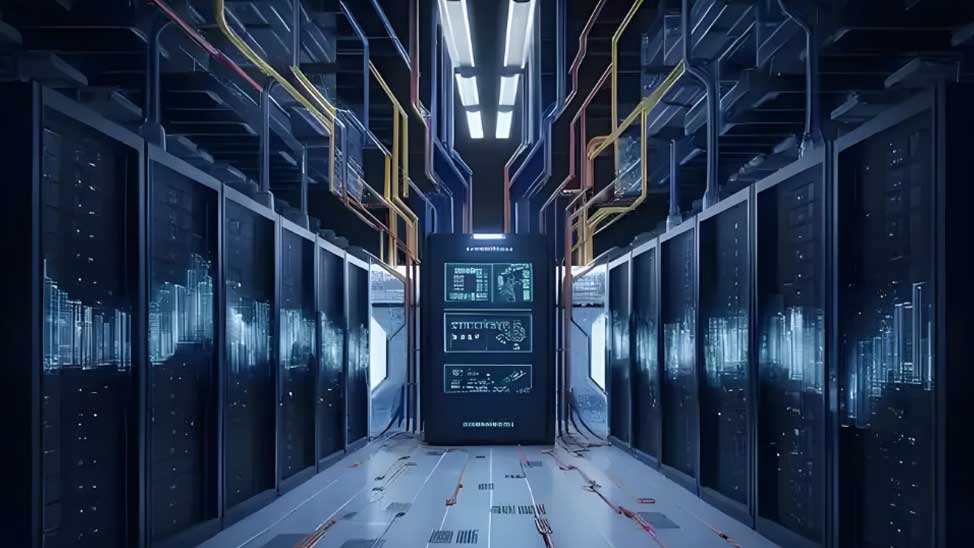
Ruggedized fiber patch cables are engineered to survive where standard cables simply won't—from 5G rooftop base stations to underground industrial networks
In 2026, fiber is everywhere. It's inside modern factories running Industrial Ethernet. It's on cell tower rooftops connecting Active Antenna Units to baseband hardware. It's running through marine vessels, mining shafts, military field deployments, and outdoor surveillance networks spanning dozens of square kilometers. And in every one of these environments, a standard data-center patch cable—designed for a temperature-controlled room with 45% relative humidity and zero mechanical abuse—is simply the wrong tool.
The consequences of under-specifying fiber connectivity in harsh environments aren't theoretical. Fiber failures in industrial automation cause production shutdowns that cost thousands of dollars per hour. A degraded connection on a 5G RRU (Remote Radio Unit) to BBU (Baseband Unit) link silently reduces cell capacity long before the link fails completely. Moisture intrusion into an outdoor fiber enclosure can take months to manifest as signal degradation—but when it does, locating and repairing the fault is expensive and time-consuming.
This guide gives you the technical depth to specify ruggedized fiber patch cables correctly the first time—across all four major types, for the environments that actually demand them.
1. Why Standard Fiber Patch Cables Fail in Harsh Environments
To understand what ruggedized cables do differently, it helps to understand exactly how standard cables fail under adverse conditions. A conventional fiber patch cable—say, a 3-meter LC/UPC duplex OM4 cable—consists of buffered glass fiber surrounded by aramid yarn strength members and a PVC or LSZH outer jacket. That construction is more than adequate for indoor structured cabling. It handles the occasional flex, survives cable tray routing, and resists basic abrasion.
Under harsh conditions, however, that same cable faces threats its construction was never designed to address:
1.1 Mechanical Threats
- Crush forces: Industrial environments routinely expose cables to foot traffic, vehicle crossings, equipment resting on cable runs, and pinch points around machinery. A standard jacket provides virtually no crush resistance—once compressed, the glass fiber inside microbends, permanently increasing attenuation.
- Repeated flexing and torsion: Robotic arms, moving conveyors, cable-festoon systems, and drag chains impose continuous flexing cycles on cable runs. Standard tight-buffered cables fatigue and crack under repeated mechanical stress.
- Impact and abrasion: Construction sites, mining operations, and port infrastructure expose cables to dropped tools, abrasive surfaces, and physical impact. A standard PVC jacket wears through in weeks under these conditions.
1.2 Environmental Threats
- Moisture and water ingress: Water is the most common cause of outdoor fiber failures. Even "outdoor-rated" standard cables with water-blocking gel can be compromised at connector termination points if the connector housing isn't sealed. Moisture at the fiber end-face causes dramatically elevated insertion loss and, over time, permanent connector damage.
- Temperature extremes: Standard cables are typically rated for 0°C to 60°C. Industrial freezer facilities, desert environments, Arctic deployments, and high-altitude base stations routinely exceed both ends of this range. At low temperatures, jacket materials become brittle and crack; at high temperatures, they soften and deform.
- UV exposure: PVC jackets photodegrade under prolonged UV exposure, becoming brittle and cracking within 2–3 years in direct sunlight applications. LSZH materials are somewhat more resistant but still not designed for long-term UV exposure without additional protection.
- Chemical and oil exposure: Industrial facilities routinely use cleaning agents, hydraulic fluids, cutting oils, and corrosive chemicals. Standard jacket materials—particularly PVC—swell, dissolve, or become structurally compromised when exposed to petroleum-based fluids or strong solvents.
1.3 Rodent and Pest Damage
In underground cable runs, warehouses, agriculture facilities, and any cable run near vegetation or open ground, rodent damage is a legitimate and underappreciated failure mode. Rodents can gnaw through standard PVC jacket, aramid yarn, and buffer coating with ease. A chewed-through underground cable run in an industrial park or campus can cost $5,000–$15,000 to locate and repair—costs that armored cable would have prevented entirely.
The Real Cost of Under-Specifying
When a standard patch cable fails in a data center, you replace it in five minutes for $15. When a standard patch cable fails at the base of a 5G antenna tower, in an outdoor FTTA run exposed to monsoon moisture for six months, the repair involves climbing the tower, cutting back the cable, re-terminating in a weatherproof enclosure, and retesting. Labor alone runs $500–$2,000. The right ruggedized cable costs $40–$120 more upfront. The math isn't complicated.
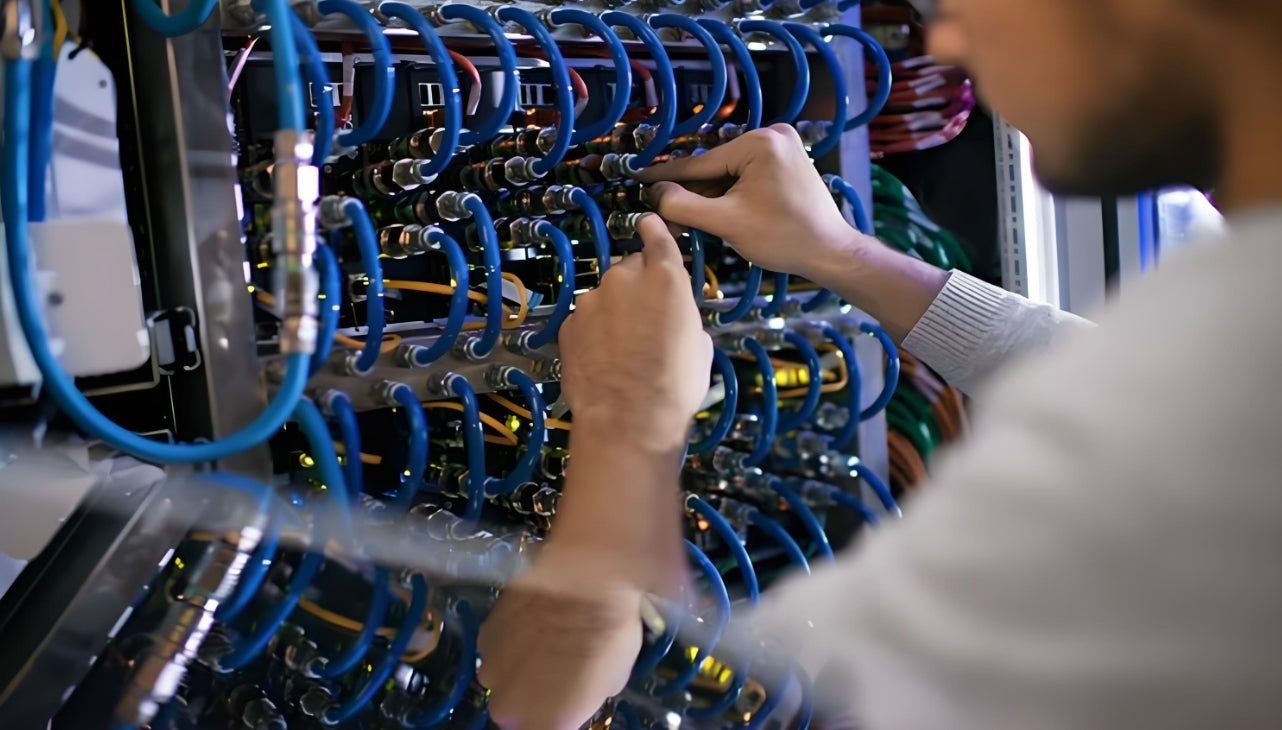
Industrial networks demand fiber connectivity built to survive mechanical stress, chemical exposure, and extreme temperatures—standard cables simply aren't designed for this
2. Type 1: Armored Fiber Patch Cable
The armored fiber patch cable is the most widely deployed ruggedized cable type for enterprise and industrial applications. It builds on standard patch cable construction by wrapping a layer of interlocking or corrugated stainless steel armor around the inner cable assembly—between the aramid yarn and the outer jacket. This relatively simple addition transforms the cable's mechanical durability profile dramatically.
2.1 Construction Breakdown
| Layer | Material | Function |
|---|---|---|
| Fiber core | OS2 single-mode or OM3/OM4/OM5 multimode | Signal transmission |
| Tight buffer coating | 900μm PVDF or UV-acrylate | Protects fiber from microbend stress |
| Strength members | Aramid (Kevlar) yarn | Tensile load bearing |
| Armor layer | Helical stainless steel tape or interlocking SS mesh | Crush resistance, rodent protection, mechanical impact |
| Outer jacket | PVC or LSZH | Environmental protection, flame retardancy |
2.2 Key Performance Specifications
- Crush resistance: 1,000–3,000 N/cm² (vs. ~300–500 N/cm² for standard cable)
- Minimum bend radius: 15–20× cable diameter (installation); 10× (installed)
- Operating temperature: -20°C to +70°C (standard); some variants rated -40°C to +85°C
- Tensile load: 100–400 N depending on cable diameter and fiber count
- Connector compatibility: LC, SC, FC, ST, LC/APC, SC/APC, FC/APC — all standard terminations available
- Fiber types: OS2 single-mode, OM3, OM4, OM5 multimode
- Typical insertion loss: ≤0.3 dB (LC/UPC or SC/UPC); ≤0.3 dB (APC variants)
2.3 Where Armored Cables Deliver Real Value
Primary Deployment Scenarios
Data center subfloor runs: Where cables pass under raised-floor tiles or through areas where heavy equipment may cross. Armored cables survive accidental crushing from server cart wheels and maintenance crew foot traffic that would permanently damage standard cables.
Industrial plant floors: In manufacturing, chemical processing, and automotive assembly environments, cables run across floors, through cable glands, and near heavy machinery. The armor layer protects against dropped tools, compressive loads, and casual physical abuse.
Warehouse and logistics networks: Forklift traffic, pallet drops, and high-density cable routing in areas without dedicated cable pathways make armored cable the practical choice over constant replacement of standard cables.
Rodent-prone underground runs: In buried or partially-exposed cable runs in agricultural, campus, and industrial settings, the stainless steel armor is the primary and most cost-effective rodent deterrent available.
What Armored Cable Won't Do
The standard armored patch cable is not waterproof. The stainless steel armor provides no ingress protection against water unless the outer jacket is specifically rated for it. If your deployment involves submersion, water jets, or prolonged rain exposure at the connector interface, you need IP67/IP68 waterproof construction—covered in the next section.
3. Type 2: IP67 / IP68 Waterproof Fiber Patch Cable
For any outdoor, marine, or wet-area deployment where water is a primary threat, IP-rated waterproof fiber patch cables are the correct specification. The IP (Ingress Protection) rating system, defined by IEC 60529, provides a standardized way to communicate exactly what level of dust and water protection a cable or connector achieves—and for fiber networks, this matters enormously at the connection point.
3.1 Understanding IP Ratings for Fiber Cables
| IP Rating | First Digit (Solids/Dust) | Second Digit (Water) | Practical Meaning for Fiber |
|---|---|---|---|
| IP65 | 6 — Dust-tight | 5 — Water jets from any direction | Suitable for outdoor enclosures, washdown areas; not for submersion |
| IP67 | 6 — Dust-tight | 7 — Immersion up to 1m for 30 min | Standard outdoor patch cables; temporary water exposure acceptable |
| IP68 | 6 — Dust-tight | 8 — Continuous submersion (manufacturer-specified depth) | Permanent underwater or flood-prone deployments |
3.2 Construction Details
IP67/IP68 waterproof fiber patch cables achieve their rating through several combined measures:
- Polyurethane (PU) or TPU outer jacket: PU/TPU provides superior flexibility, chemical resistance, and UV stability compared to standard PVC or LSZH. It remains pliable at -40°C and resists oil, fuel, and cleaning chemicals far better than PVC.
- Sealed connector housings: The critical waterproofing challenge in fiber is at the connector. IP67/IP68 connectors use O-ring seals, threaded locking rings, or push-pull locking mechanisms with integrated seals to prevent water ingress at the mating interface.
- Water-blocking inner construction: Gel-filled or water-swellable tape wraps around the fiber bundle prevent capillary wicking of moisture along the cable length.
- Stainless steel armor (in armored variants): Many IP67/IP68 cables combine waterproof sealing with mechanical armor for dual protection—addressing both water ingress and crush/rodent threats simultaneously.
3.3 Connector Options for Waterproof Applications
| Connector Type | IP Rating (mated) | Locking Mechanism | Primary Application |
|---|---|---|---|
| IP67 LC Duplex | IP67 | Rubber boot + snap-lock | Outdoor data networks, enterprise campus |
| IP67 MPO/MTP | IP67 | Sealed push-pull housing | High-density outdoor backbone, multi-fiber runs |
| SC/APC Waterproof | IP67 | Threaded lock ring | PON/FTTX outdoor ONU/ONT connections |
| ODC (Outdoor Duplex Connector) | IP68 | Screw-lock bayonet | FTTA base stations, outdoor telecom infrastructure |
| DLC / HLC (Dense/High-density LC) | IP67 | Sealed push-pull | High-density outdoor patch panels |
3.4 Deployment Environments
- Cellular towers and rooftop base stations: Connections between outdoor RRU/AAU units and internal BBU equipment pass through weatherproof enclosures—IP67 cables handle rain, condensation, and seasonal temperature variation.
- CATV headend and outdoor distribution nodes: Cable television plants routinely have outdoor passive cabinets and distribution nodes that experience water intrusion during heavy rain events.
- Port and maritime infrastructure: Ship-to-shore communications, vessel-mounted sensor networks, and port surveillance systems all require IP68-rated fiber to survive salt spray, rain, and potential submersion.
- Food and beverage processing: Regular washdown with high-pressure hoses is standard practice in food processing plants. IP67/IP68 waterproof cables survive direct water jet exposure that would destroy standard cables within days.
4. Type 3: Military-Grade Fiber Optic Cable
When "ruggedized" still isn't enough, military-grade fiber optic cables represent the highest tier of protection available in commercial fiber connectivity. These cables combine the toughest available jacket materials, multi-layer mechanical protection, and performance specifications verified under military standards such as MIL-DTL-85045, MIL-PRF-49291, and NATO STANAG 3910.
Military-grade fiber cables are purpose-built for scenarios where failure is not an operational option—and where the environmental conditions are genuinely extreme: chemical warfare agent (CWA) exposure, electromagnetic pulse (EMP) events, physical abuse from field deployment and repeated coiling and uncoiling, extreme temperature ranges, and simultaneous exposure to multiple aggressive factors.
4.1 Construction: Why It's Different
| Layer | Material | Protection Offered |
|---|---|---|
| Core tube | SUS (Stainless steel spring) tube | Extreme crush and puncture resistance |
| Inner strength | Kevlar (para-aramid) fiber braid | Tensile strength up to 2,000 N; anti-crush support |
| Braid reinforcement | Stainless steel or tinned copper braid | EMI shielding (in shielded variants), crush resistance |
| Outer jacket | TPU (Thermoplastic Polyurethane) | Chemical/fuel/oil resistance; -55°C to +125°C range; UV stability |
4.2 Performance Specifications
- Operating temperature: -55°C to +125°C (far exceeding standard or industrial cable specs)
- Tensile strength: Up to 2,000 N (vs. 100–400 N for standard armored cable)
- Minimum bend radius: 10× cable OD under load; 7.5× unloaded (surprisingly flexible given the protection level)
- Chemical resistance: JP-8 jet fuel, hydraulic fluid, DEET-based insect repellent, battery acid, CWA decontamination solutions (bleach/ammonia-based)
- Flame rating: Passes VW-1, FT-1, MIL-C-24643 flame tests
- Insertion loss: Typically ≤0.3 dB per connector, OTDR-verified
4.3 Applications Beyond Military
Despite the name, military-grade fiber cables aren't only for defense contracts. The same properties that make them suitable for battlefield communications translate directly to:
Commercial Applications of Military-Grade Fiber Cables
Mining operations: Underground mines combine blast vibration, methane and chemical exposure, heavy vehicle traffic, and permanent wet conditions. Military-grade cables survive all of these simultaneously.
Broadcast and film production: ENG (Electronic News Gathering) cameras, live outside broadcast trucks, and film production environments involve cables that are repeatedly coiled, driven over, exposed to rain and mud, and pulled under tension during rapid deployment. TPU jacket materials survive abuse that destroys standard cables in a single production day.
Emergency response and temporary infrastructure: Fire departments, emergency medical services, and disaster response organizations deploy fiber networks rapidly in unpredictable conditions. Military-grade cables coil and uncoil thousands of times without performance degradation.
Oil and gas infrastructure: Offshore platforms, drilling operations, and pipeline monitoring systems expose cables to hydrocarbon chemicals, salt spray, extreme temperatures, and constant mechanical stress.
5. Type 4: FTTA Patch Cable for 5G & Base Stations 2025 KEY TYPE
The FTTA (Fiber to the Antenna) patch cable is a specialized ruggedized cable category that has become mission-critical infrastructure in the 5G era. As mobile network operators globally accelerate their 5G NR (New Radio) deployments, the fiber connection between the Active Antenna Unit (AAU) and the Baseband Unit (BBU)—or between the Remote Radio Unit (RRU) and the BBU in 4G LTE networks—has become a known reliability bottleneck.
FTTA cables address a unique set of requirements: they must be compact enough to route through tower climbing infrastructure, rugged enough to survive years of outdoor exposure at height, flexible enough to route around complex antenna mounting hardware, and optically precise enough to support 10G/25G fronthaul links that modern 5G requires.
5.1 FTTA Cable Construction
| Component | Specification | Rationale |
|---|---|---|
| Fiber type | OS2 G.657.A1 or G.657.A2 single-mode | G.657.A2 allows tighter bend radius (7.5mm) for routing around tower hardware |
| Connector type | LC duplex (most common); ODC, DLC, FullAXS for specialized applications | LC duplex is the universal 5G fronthaul standard; ODC/FullAXS for specific OEM requirements |
| Jacket material | LSZH + UV-stabilized outer jacket; TPU on premium variants | UV stability critical for rooftop/tower exposure; LSZH for code compliance inside buildings |
| Armor type | Hard spiral steel armored tube (in armored variants) | Protects against cable tray edges, zip-tie overtightening, and incidental impact during installation |
| Strength members | Two parallel FRP or aramid members | Dual strength members facilitate easier pulling during tower installation and prevent kinking |
| IP rating (connector) | IP67 standard; IP68 for ODC/FullAXS connectors | Connector sealing is the critical waterproofing requirement for outdoor antenna connections |
5.2 5G Fronthaul Requirements Driving FTTA Specs
The shift from 4G LTE to 5G NR changes the performance requirements for FTTA cables in ways that many network planners underestimate:
- Higher bandwidth: 5G eCPRI (enhanced Common Public Radio Interface) fronthaul links operate at 10 Gbps, 25 Gbps, or 100 Gbps depending on the antenna configuration. The fiber must be OS2 single-mode to support these speeds at typical tower distances (50–300 meters).
- Latency sensitivity: 5G introduces new latency-sensitive applications (urLLC—Ultra-Reliable Low Latency Communications) that have no tolerance for the additional latency introduced by poor connector quality or excessive insertion loss. FTTA cables must meet ≤0.3 dB insertion loss per connector, verified with clean-room manufacturing processes.
- More antenna points: 5G Massive MIMO antennas have significantly more fiber connection points than their 4G predecessors. A 64T64R 5G Massive MIMO antenna may require 4–8 fiber connections vs. 2 for a typical 4G panel. Multiplied across thousands of base stations, this increases the total FTTA cable volume—and the quality consistency requirements.
- Small cells and indoor 5G: 5G small cells on streetlight poles, building facades, and indoor distributed antenna systems (DAS) bring FTTA cable requirements into urban micro-deployment scenarios where cable routing is tight and installation access is difficult.
FTTA for Existing 4G Infrastructure
If you're managing a mixed 4G/5G infrastructure—which describes the majority of operators globally in 2025—FTTA cable specifications differ between the two generations. 4G RRU connections typically use OM3/OM4 multimode or OS2 singlemode at 1G–10G; 5G AAU connections standardize on OS2 G.657.A1/A2 at 10G–25G per fiber pair. Before specifying FTTA cables for a mixed-technology site, verify the fiber type and connector specification with your radio hardware vendor, as incorrect fiber type is a common source of interoperability issues in hybrid network builds.
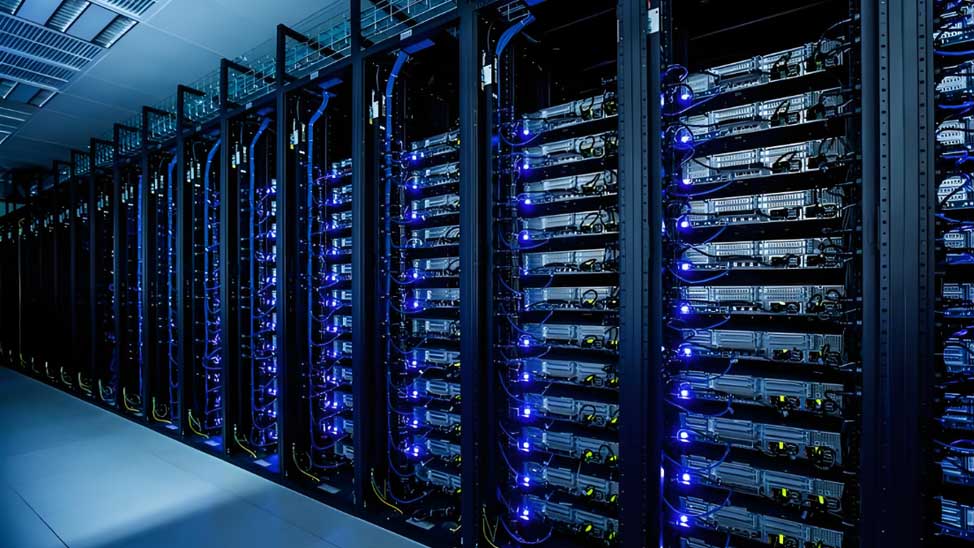
FTTA ruggedized fiber patch cables are purpose-built for 5G fronthaul—connecting Active Antenna Units to Baseband Units in outdoor, weather-exposed tower installations
6. Side-by-Side Comparison: All Four Ruggedized Cable Types
Now that we've covered each type in depth, here's a consolidated comparison across the dimensions that matter most for procurement and specification decisions:
| Feature | Armored | IP67/IP68 Waterproof | Military-Grade | FTTA |
|---|---|---|---|---|
| Primary Threat Addressed | Crush, rodents, mechanical impact | Water, dust, moisture ingress | Chemical, extreme temp, high-cycle flex | Outdoor UV, moisture, tower-specific routing |
| Jacket Material | PVC / LSZH | PU / TPU | TPU (heavy-duty) | LSZH / UV-stabilized TPU |
| Armor Type | Stainless steel helical tape | SS armor + waterproof seals | SUS spring tube + SS braid | Hard spiral steel tube (armored variant) |
| IP Rating | None (unless IP-rated variant) | IP67 / IP68 | IP67 or per military spec | IP67 (standard); IP68 (ODC connectors) |
| Operating Temp | -20°C to +70°C | -40°C to +85°C | -55°C to +125°C | -40°C to +85°C |
| Tensile Strength | 100–400 N | 200–600 N | 500–2,000 N | 150–300 N |
| Chemical Resistance | Moderate (PVC jacket) | Good (PU jacket) | Excellent (TPU + fuel/CWA rated) | Good (UV-stabilized LSZH/TPU) |
| Flex Cycles | Moderate (fixed installation) | Good (flexible outdoor) | Excellent (100,000+ cycles) | Good (fixed after installation) |
| Typical Cost Premium vs. Standard | 1.5–2× | 2–3× | 5–10× | 2–3× |
| Fiber Type | OS2, OM3, OM4, OM5 | OS2, OM3, OM4 | OS2, OM3, OM4 | OS2 G.657.A1/A2 (primary) |
| Connectors Available | LC, SC, FC, ST + APC variants | LC, SC, MPO, ODC | MIL-spec + LC, SC, FC | LC duplex, ODC, FullAXS, DLC |
| Best Application | Industrial floors, data center subfloor, buried runs | Outdoor enclosures, towers, marine, food processing | Military, mining, broadcast, oil & gas | 5G/4G base stations, DAS, outdoor telecom |
7. How to Select the Right Ruggedized Fiber Patch Cable
With four distinct types—each addressing different threat profiles—the selection process isn't always obvious. The following framework walks you through the key decision variables systematically.
Step 1: Identify the Primary Threat(s)
Most deployment environments have a primary threat and secondary threats. Start here:
Is water the primary concern? If the cable will be outdoors, in marine environments, food processing, or wet industrial areas → IP67/IP68 waterproof is your baseline, potentially combined with armor if mechanical threats also exist.
Is mechanical impact/crush the primary concern? Industrial floor runs, cable trays in high-traffic areas, or buried pathways with vehicle exposure → armored fiber patch cable, with stainless steel mesh armor for maximum crush resistance.
Is chemical or extreme temperature exposure the primary concern? Oil/gas, mining, offshore, military field deployments → military-grade TPU-jacketed cable is the only class with verified resistance to fuel, hydraulic fluid, and extreme cold/heat simultaneously.
Is this a telecom antenna deployment? 5G/4G base stations, outdoor DAS, rooftop antenna runs → FTTA-specific cables with IP67+ connector ratings and UV-stabilized jackets are purpose-built for this requirement.
Step 2: Define Environmental Envelope
| Condition | Minimum Specification Required |
|---|---|
| Outdoor UV exposure (continuous) | UV-stabilized jacket (TPU or UV-LSZH); standard PVC rated <2 years outdoor |
| Temperature < -20°C | TPU jacket; verify low-temperature bend radius; SUS spring tube in cable core |
| Temperature > 70°C | Military-grade or high-temp industrial variant; standard cables deform above 70°C |
| Water jets or rain exposure | IP65 minimum; IP67 preferred for any extended outdoor exposure |
| Temporary or repeated submersion | IP67 (temporary); IP68 (permanent or flood-prone environments) |
| Petroleum / chemical exposure | PU or TPU jacket; PVC degrades rapidly in hydrocarbon exposure |
| Repeated flexing / high-cycle application | Military-grade TPU; verify minimum bend radius is suitable for flex radius in application |
Step 3: Verify Optical Performance Requirements
Ruggedized construction doesn't automatically mean compromised optical performance—but it's important to verify:
- Fiber type match: Always specify the fiber type required by your active equipment. A 5G RRU specifying OS2 G.657.A2 requires exactly that—not OM4, and not standard G.652 OS2.
- Insertion loss budget: Ruggedized connectors typically add ≤0.3 dB per connection. If your link budget is tight (e.g., 25G ER4 transceivers with limited power margin), verify connector IL specs with the manufacturer before procurement.
- Return loss: For singlemode applications, particularly PON and coherent DWDM, specify APC connectors (≥60 dB return loss) over UPC (≥45 dB). This applies to waterproof and FTTA variants as much as to standard connectors.
- Factory testing: Reputable manufacturers provide per-reel or per-unit OTDR traces and IL/RL test reports. Require these for any order above 10 units.
Step 4: Match Connector Type to Interface Hardware
One of the most common specification errors in ruggedized cable procurement is mismatching the connector type to the actual port interface on the equipment. FTTA cables, in particular, come with multiple connector options (LC, ODC, FullAXS, NSN Boot, DLC) that are vendor-specific. Always verify the exact connector specification in your radio hardware's installation manual before ordering custom-length FTTA assemblies.
8. Installation Best Practices for Ruggedized Fiber Cables
Even the toughest ruggedized fiber cable can be damaged during installation if handling isn't appropriate. These practices apply across all ruggedized types.
8.1 Handling and Routing
- Respect the minimum bend radius: Armored cables have larger minimum bend radii than standard cables—typically 15–20× the outer diameter during installation. Exceeding this during a pull can kink the armor and create permanent microbend points in the fiber. Use bend-radius limiters at termination points and corners.
- Pulling tension limits: Even ruggedized cables have maximum pulling tension ratings. Armored cables: typically 200–400 N; military-grade: 500–2,000 N. Use appropriate pulling grips (mesh grips for the cable body, not pulling on the connector under any circumstances).
- Don't coil excessively tight: Military-grade and FTTA cables are often stored and deployed from reels. Minimum reel diameter should be 20–25× the cable diameter to prevent stress concentration during storage.
8.2 Connector Care
- Inspect and clean before every mating: Even waterproof connectors require end-face cleaning before mating. Use IEC 61300-3-35 compliant end-face inspection (200× minimum) and appropriate one-click or reel-type cleaners. A contaminated fiber end-face adds 0.5–1.5 dB of insertion loss and accelerates connector wear.
- Cap unused connectors immediately: In outdoor and industrial environments, leave no fiber end-face exposed to the air without a dust cap. Even momentary exposure in a dusty environment can contaminate a well-polished connector.
- Torque IP67/IP68 connector hardware correctly: Threaded waterproof connectors (ODC, NSN Boot) require correct torque to achieve their IP rating. Under-torqued connections leak; over-torqued connections damage seals. Follow manufacturer torque specifications (typically 0.5–1.5 Nm for ODC connectors).
8.3 Post-Installation Testing
All ruggedized fiber cable deployments should include:
- End-face inspection: 200–400× inspection scope on every connector before closing enclosures. Non-negotiable in any outdoor deployment where re-access is difficult.
- Insertion loss testing: Light source and power meter verification of each link. Accept no single-connector loss >0.5 dB in any ruggedized application.
- OTDR trace: For cable runs over 50 meters or in any application where future fault location will be difficult (buried, in conduit, at height), capture and archive an OTDR trace immediately after installation. This baseline trace is essential for future troubleshooting.
- IP integrity check: For IP67/IP68 waterproof installations, verify connector mating with a brief water spray test (IP65-level test: spray from any direction for 1 minute minimum) before finalizing the installation and closing weatherproof enclosures.
9. Key Questions Answered: Ruggedized Fiber Patch Cables
Network engineers, field deployment teams, and procurement managers ask these questions regularly when specifying ruggedized fiber patch cables. Here are direct, detailed answers based on real-world deployment experience.
Frequently Asked Questions
Conclusion: Specify for the Environment, Not the Budget
The phrase "ruggedized fiber patch cable" covers a broad category—and the right choice within that category can mean the difference between a fiber link that runs reliably for 20 years and one that generates service calls twice a year. The four types covered in this guide each have a distinct performance profile:
- Armored cables for mechanical threat environments: industrial floors, data center subfloor runs, and rodent-prone buried pathways.
- IP67/IP68 waterproof cables for outdoor, marine, and wet-area deployments where moisture ingress at the connector interface is the primary failure mode.
- Military-grade cables for the most demanding applications: oil and gas, mining, broadcast, field communications, and any scenario involving chemical exposure, extreme temperatures, and high-cycle flexing simultaneously.
- FTTA cables for 5G and 4G antenna infrastructure—purpose-built for the exact requirements of outdoor telecom fronthaul, with appropriate UV resistance, IP ratings, and G.657.A1/A2 fiber specs.
In each case, the premium over standard patch cable is modest relative to the cost of a cable failure: the labor to troubleshoot and replace a failed link in a difficult location, the lost throughput during the outage, and the operational disruption to whatever the network is supporting.
Specify for the environment. The cable is the cheapest part of this equation.
Related Articles
- Armored vs Unarmored Fiber Optic Cable: Complete Decision Guide — When does armor pay off? Full TCO analysis for enterprise networks.
- Fiber Optic Pigtail: Complete Guide to Types, Splicing & Applications — LC vs SC, APC vs UPC, fusion vs mechanical—everything you need to know.
- How to Choose the Right Fiber Type: Singlemode vs Multimode — OM3/OM4 vs OS2: matching fiber type to link speed and distance.
- How AI Infrastructure Is Reshaping Data Center Cabling Requirements — Understanding the unique cabling demands of AI workloads.

AMPCOM Technical Team
Structured Cabling Experts · 17+ years in enterprise fiber infrastructure
Need Ruggedized Fiber Patch Cables for Your Project?
AMPCOM offers armored, IP67 waterproof, and FTTA-ready fiber patch cables for industrial, outdoor, and 5G deployments—factory-tested, ISO 9001 certified, and shipped to 100+ countries.
Get Free Consultation

