
Compute Is Not the Bottleneck — The Network Is: How the "Fiber Famine" Is Throttling AI Data Centers
Published:Executive Summary: For three years the AI story was easy to tell: we cannot get enough GPUs. In 2026 that narrative is quietly breaking. Compute is no longer the binding constraint for most serious builders — the bottleneck has migrated one layer down, into the network. From optical-module lead times and coherent-line-system backlogs to raw fiber availability and pre-terminated trunk supply, the thing throttling AI data-center deployments is increasingly the glass and the light, not the silicon. This article traces that bottleneck migration and asks the planning question that should now dominate infrastructure strategy: if the constraint has moved, where should the capital go? We close with a practical action framework for builders and a rethink of infrastructure investment logic.
Quick Navigation
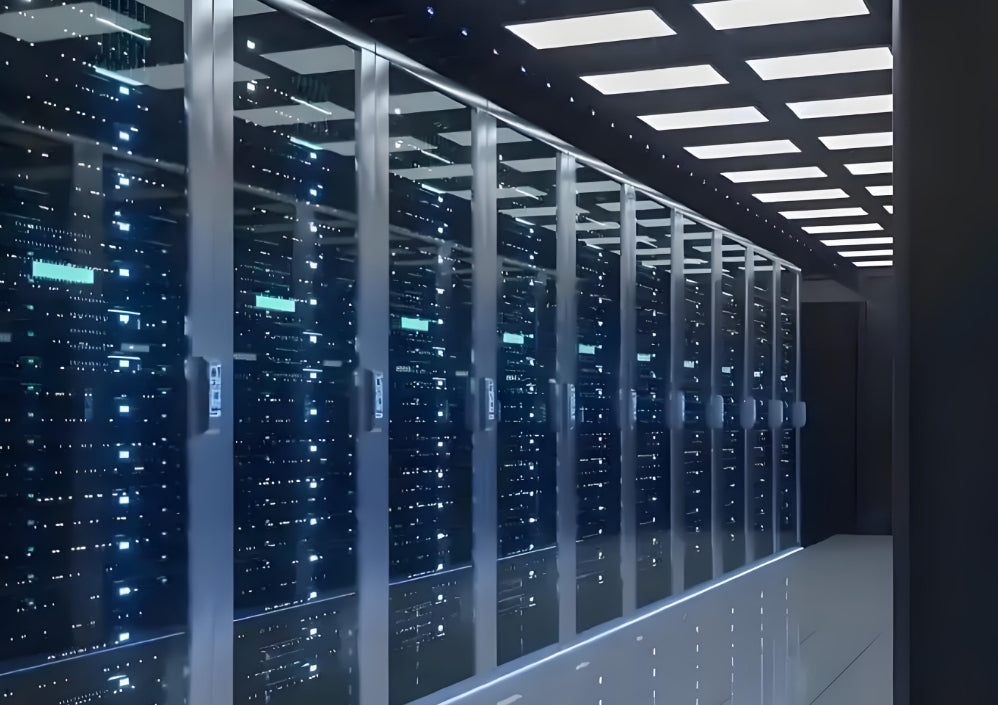
As AI buildouts accelerate, the network — not the compute — has become the pacing constraint for new data centers
1. The Bottleneck Has Moved — From Silicon to Glass
Every industrial gold rush has a constraint that shifts over time. The 2023–2024 AI buildout was throttled by GPU allocation. Through 2024 and 2025 the pinch migrated to advanced packaging — CoWoS capacity, HBM supply, and the packaging substrate that turns silicon into shippable accelerators. By 2026, for well-capitalized hyperscalers and sovereign AI programs, compute allocation has eased while the interconnect fabric has tightened. The new binding constraint is the network: the optics that move tensor gradients between racks, the trunks that wire the spine, and the glass itself.
This is not a fringe observation. The build is unambiguously happening — Dell'Oro reports the data-center physical infrastructure market reached $14B in 2Q26, up 27% year over year — but the portion of that spend that is now rate-limiting go-live is connectivity, not racks. HPE has lifted its data-center networking outlook to 50%+ CAGR through FY29, a signal that capital is already voting with its feet on where the constraint lives.
Customer Scenario
A Tier-2 cloud builder's 2026 regional plan called for 4,000 GPU racks online by Q2. The compute was allocated and the shells were poured on schedule. What slipped was the spine: 800G/1.6T optics plus pre-terminated OS2 trunks became the gating line item, pushing the fabric commissioning — and therefore the revenue-generating go-live — from Q2 into Q4. The racks were ready; the network was not. This is the bottleneck migration made concrete, and it is the pattern our engineers now see repeated across AI infrastructure cabling requirements.

Urban data centers are discovering the network layer — not compute — sets the go-live date
A: For Tier-1 hyperscalers and well-capitalized sovereign programs, GPU allocation has eased and lead times have normalized versus 2023–2024. The new pinch point is the interconnect fabric and the active optics feeding it. Compute is necessary but no longer sufficient — and increasingly not the thing keeping your data center from earning revenue.
2. Anatomy of the "Fiber Famine" — Where the Glass Runs Short
"Fiber famine" is a metaphor, but the underlying signals are measurable. A 2026 Neos industry survey found that 82% of operators delayed network builds because of fiber availability — not labor, not permits, not capital. The CRU fiber-price index has climbed to 263, reflecting tightened input supply. On the active side, Ciena's order backlog has exceeded $10B, concentrated in coherent optics and line systems that light the glass. And the supply-response itself tells the story: Cisco's Open Transport 3000 multi-rail optical line system was launched precisely to do more with less — −75% power per rail and −80% space — a direct engineering answer to a world where glass and optics are the scarce resource.
The scarcity is not uniform. It concentrates in the long-haul and metro layers and in the highest-speed active optics, while intra-data-center multimode remains comparatively abundant. Knowing which bucket your project sits in is the first step to de-risking it.
| Layer / Component | 2026 Supply Status | What It Means for Builders |
|---|---|---|
| Long-haul / metro dark fiber | Scarce | Lease lead times blown out; secure routes early or pay a premium |
| Submarine / inter-region | Constrained | Capacity sold years ahead; plan inter-region links on multi-year horizon |
| Coherent optics / line systems | Very scarce (>$10B backlog at leaders) | Longest lead times in the stack; lock vendors 12–18 months out |
| 800G transceivers | Tightening | Allocations tightening as 800G goes mainstream |
| 1.6T optics | Very tight | Early-adopter constraint; design for it but don't assume spot availability |
| OS2 single-mode trunk (pre-term) | Tightening | Standardize and pre-buy; factory pre-termination eases install but not supply |
| Intra-DC multimode (OM4/OM5) | Abundant | Readily available for short-reach links |
Customer Scenario
A metro "AI inference edge" rollout planned to light new inter-site routes to cut latency for enterprise customers. The GPUs were in hand and the servers were racked. What stalled the launch was the inability to provision new lit routes — dark-fiber lease lead times had stretched from 90 days to over nine months in the target metros. The company could compute; it could not connect. The fiber famine, not the silicon, set the launch date.
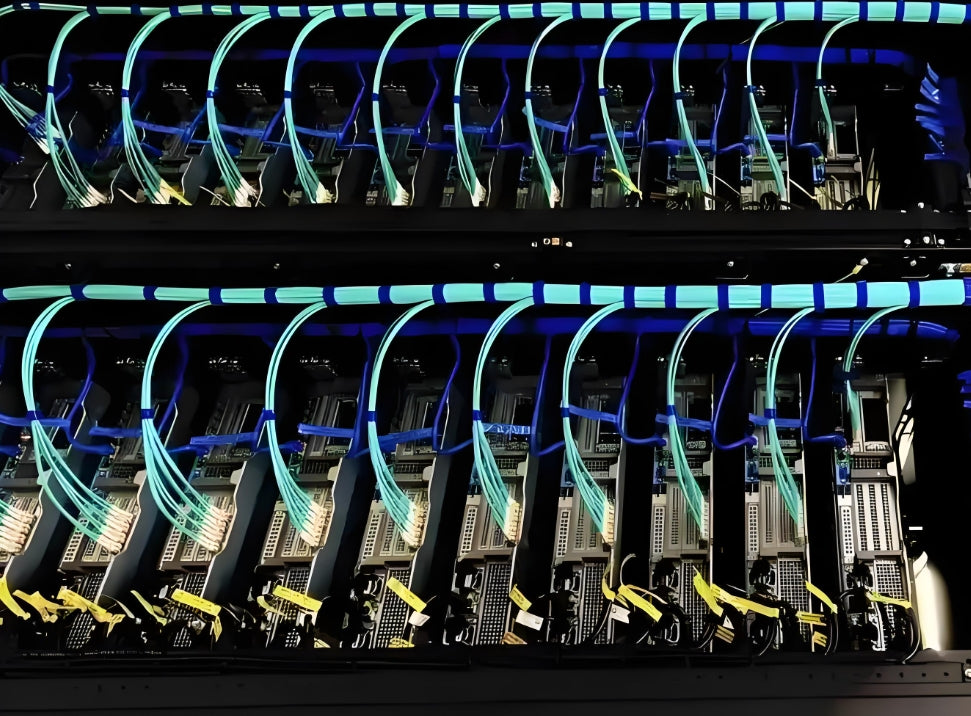
Fiber optic cabling is the high-speed backbone now gating AI data-center deployment
A: The glass itself is cheap; the constraint is the surrounding ecosystem — drawing-tower and cabling/armoring capacity, skilled install and splicing crews, and especially the active optics that turn dark fiber into bandwidth. Capacity additions lag demand by 12–24 months and capex is lumpy, so supply cannot pivot as fast as AI demand spikes. For the single-mode vs multimode choice inside the building, see our guide on choosing the right fiber type.
3. It's Not Just Fiber — The Whole Connectivity Layer Is Gating Deployment
The bottleneck is not only raw glass. Inside the data center, the entire connectivity layer is under pressure as clusters scale. The industry is mid-shift to VSFF (very-small-form-factor) pre-terminated connectivity: MMC-style connectors now deliver roughly 3× the density of legacy MPO, growing at ~32.4% per year, while single-mode OS2 has climbed to 67% share of new AI-cluster deployments and factory pre-termination has become the mainstream method. That is healthy engineering — but it also means the products everyone suddenly wants are the ones with the longest queues.
Speed compounds the problem. The move from 800G to 1.6T does not just double bandwidth; it tightens polarity, loss-budget, and reach margins, and it pulls lead times further out for the optics and the test/validation capacity needed to commission them. The trend line is unambiguous — read our breakdown of what 800G and 1.6T mean for 2026 cabling.
| Link Type | Typical Reach | Role in AI Clusters | 2026 Note |
|---|---|---|---|
| Direct-attach copper (DAC) | < 3 m | Intra-rack, server-to-ToR | Cheap, low latency — but dies at reach/scale |
| Active electrical (AEC) | ~3–7 m | Rack-scale, power-efficient | Useful bridge, still copper-class reach |
| Active optical (AOC) | ~10–100 m | Intra-row, some EoR | Flexible but costlier per link |
| Single-mode MPO / VSFF trunk (OS2) | Building-scale | Spine, EoR/ToR fabric, future-proof | The gating layer at cluster scale |
Customer Scenario
A colocation tenant took possession of a 90-day "rack-ready" shell and expected to be live within a quarter. The structural and power work was done. What consumed the next six months was the connectivity layer: sourcing VSFF pre-terminated OS2 trunks, qualifying 1.6T-ready optics, and booking fiber test/validation capacity. Pre-termination compressed the install window — but it could not conjure supply that simply was not in the channel. The shell was ready; the fabric was the project.
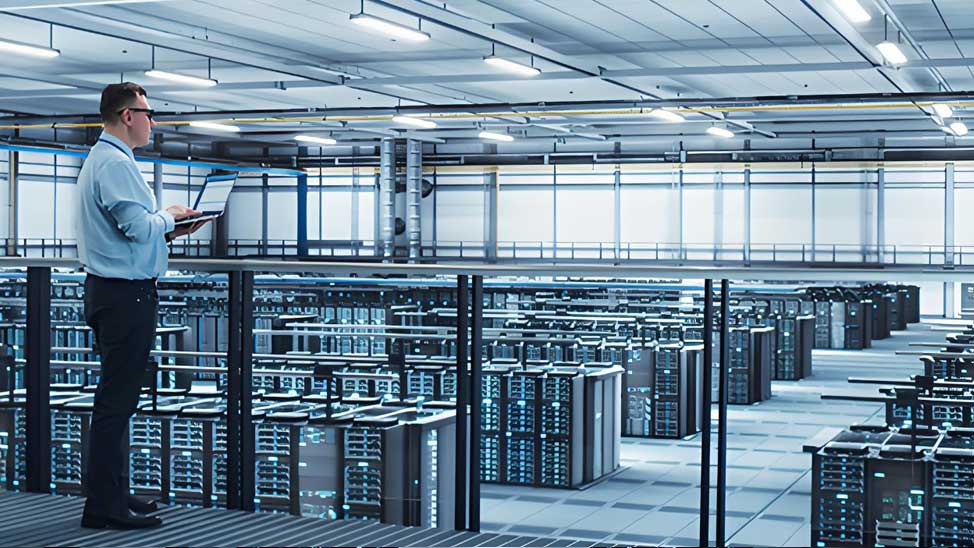
Advanced high-speed server rooms live or die by the connectivity layer, not just the compute
A: No. DAC is excellent for sub-3-meter intra-rack links but collapses at reach and scale — exactly where AI clusters hurt. The spine and inter-rack fabric must be fiber. Pouring copper into the short-reach corner eases one symptom; it does not remove the bottleneck. The constraint is the building-scale fabric, and that is single-mode glass.
4. The Investment Logic Is Inverting
For a decade the reflexive infrastructure move was: when in doubt, buy more compute. That logic assumed compute was the scarce, high-leverage input. The bottleneck migration flips the assumption. When the binding constraint is the network, the marginal dollar earns the most deployed throughput precisely where the glass and the optics are thinnest. In other words: invest where the constraint is, because that is the only place a new dollar actually unlocks capacity.
The market is already repricing around this. HPE's 50%+ networking CAGR outlook, Vultr's $1.2B AMD Helios AI-rack order, and Cisco's Open Transport 3000 launch all point the same direction — capital is following the network. The ROI of de-risking is highest exactly where lead times are longest, which is why supply-locking, not just spec-ing, has become a finance decision.
Customer Scenario
Two developers broke ground on near-identical 100 MW AI campuses in the same quarter. Developer A pre-bought OS2 pre-terminated trunks and locked 1.6T-ready optics 18 months out, accepting slightly higher carrying cost. Developer B opted to spot-buy at install time. Result: Developer A commissioned on schedule; Developer B slipped two quarters and absorbed an ~8% budget overrun on rush freight and allocation premiums. Same racks, same compute — different network strategy, different go-live. The financial logic of which fiber designs stay manageable at 800G/1.6T turned directly into schedule and P&L.

Structured network cabling is where infrastructure investment logic now concentrates
A: If you can already provision compute, the higher-ROI move is securing the connectivity layer — optics plus pre-terminated fiber — because that is what is rate-limiting go-live and is hardest to accelerate later. A GPU you can still buy next quarter; a coherent-optic slot or a pre-term trunk allocation you failed to lock may not be available when your shell is ready. Spend against the constraint.
5. What Builders Should Do Now — An Action Framework
The bottleneck migration is not a reason to panic; it is a reason to re-sequence. The builders who win 2026 schedules are the ones who treat network procurement as a front-loaded, finance-grade activity rather than a late-stage install task. Five moves:
- Start fiber and optic procurement 12–18 months out. Long-haul/coherent and 1.6T optics need the longest horizon; standard OS2 pre-term trunks need 6–9 months. Earlier than feels natural.
- Standardize on pre-terminated OS2 / VSFF. It compresses install time and reduces on-site rework risk — but standardize early so supplier queues work for you, not against you.
- Qualify second sources now. Single-vendor allocations are the fastest way to inherit someone else's bottleneck. A qualified alternate is schedule insurance.
- Design for 1.6T today. Don't strand capital on an 800G-only fabric you will rip out in 24 months. Future-proof the trunk; stage the optics.
- Lock install and test capacity, not just product. The shortage extends to skilled splicing crews and fiber validation bandwidth — book them with the hardware.
For a repeatable sourcing playbook — RFP structure, supplier scorecards, and total-cost-of-ownership math — our Cable Procurement Strategy guide lays out the steps.
| # | Insight (Bottleneck Migration) | Where Capital Should Flow | First Move |
|---|---|---|---|
| 1 | Constraint moved from GPU to network | From compute to the connectivity layer | Pre-buy OS2 pre-term + lock optics |
| 2 | Fiber availability scarce (82% delays; CRU 263) | Secure glass and routes early | 12–18 month procurement horizon |
| 3 | Whole connectivity layer gating (VSFF, 1.6T) | Standardize pre-term / VSFF | Qualify second sources |
| 4 | Investment logic inverting | Highest ROI at the constraint | De-risk longest-lead items first |
| 5 | Builders who pre-bought won schedule | Lock supply = schedule certainty | Design for 1.6T now |
Customer Scenario
A sovereign AI program rewrote its 2026 capital plan after a single slipped go-live. It moved network procurement from "Month 9 install task" to "Month 0 finance-gated commitment," pre-awarded two trunk suppliers, and reserved coherent-optic slots a year ahead. The compute budget was unchanged — only the sequence moved. The result was a published go-live that held, while peers slipped. Bottleneck migration, handled deliberately, becomes a competitive advantage rather than a surprise.
AMPCOM server-room cabling: standardize the connectivity layer to de-risk AI data-center schedules
A: 12–18 months for long-haul/coherent systems and 1.6T optics; 6–9 months for standard OS2 pre-terminated trunks and VSFF connectivity. The honest answer: earlier than your instinct says. In 2026 the network — not the racks, not the GPUs — sets your go-live date.
Related Articles
- Data Center Cabling: Copper or Fiber? — AMPCOM Blog
- Structured Cabling for AI Data Centers: What Is Changing — AMPCOM Blog
- What Are DAC Cables? Types, Latency and When They Beat AOC and Transceivers — AMPCOM Blog
- Best Practices for Data Center Cabling Standards and Certification — AMPCOM Blog
- Why Fiber Optic Cabling is Key to Sustainable Data Center — AMPCOM Blog

AMPCOM Industry Research Team
Tracking the shift from compute-led to network-led AI infrastructure buildouts, and translating bottleneck migration into actionable cabling and procurement strategy
Ready to De-Risk Your AI Data Center Network?
AMPCOM delivers pre-terminated OS2 and VSFF connectivity, 1.6T-ready fiber solutions, and second-source-qualified cabling built for the network-led buildout era.
Contact AMPCOM

