
Copper Leased Line vs Fiber: Cost-Benefit Analysis
Published:Executive Summary: An installed fiber drop runs $300-$800 versus $150-$300 for a Cat6 copper drop — fiber typically costs two to three times more upfront. Yet copper's 100-meter reach ceiling, PoE-only power capability, and 10-15 year bandwidth limits mean most enterprises pay that premium twice: once for fiber, or once for copper and again when re-cabling is forced by an upgrade. On leased line services the same economics repeat: copper circuits are cheaper to provision but cap out around 1-2 Gbps, while fiber leased lines deliver symmetric 1G-400G+ with 30-40% lower latency. This guide compares both media across infrastructure cost, operating cost, leased line services, and total cost of ownership so you can budget with real 2026 pricing.
Quick Navigation
- 1 The Cost Question: Copper vs Fiber in 2026
- 2 Performance Capabilities: What Each Medium Delivers
- 3 Infrastructure Cost: Cable, Termination, and Installation
- 4 Leased Line Services: Copper vs Fiber Access
- 5 Operating Cost: Power, Maintenance, and Upgrades
- 6 Scenario-Based Decision Guide
- 7 Cost-Benefit Framework and Best Practices
- 8 Key Questions (FAQ)
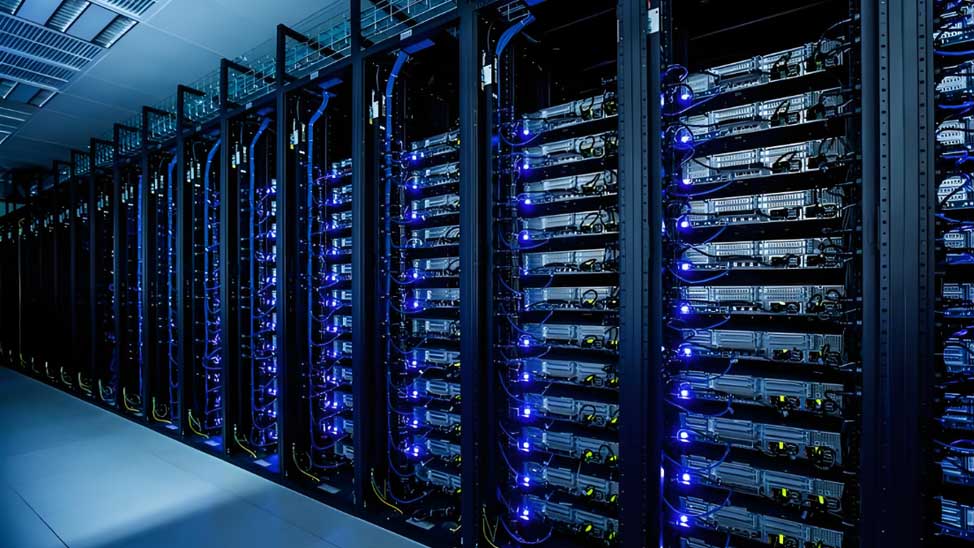
Copper and fiber are complements, not rivals — the cost question is where each medium earns its premium in your network
1. The Cost Question: Copper vs Fiber in 2026
The copper versus fiber cost debate usually starts with a price per foot and ends with a fleet of hidden costs. In early 2026, bulk copper cable ranges from $0.15 to $0.60 per foot (Cat6 UTP at $0.15-$0.35, Cat6a at $0.40-$0.60), while fiber runs $1.00 to $4.00 per foot. But cable is a small fraction of any structured cabling project — installation labor represents 40-70% of total cost, and termination, testing, and certification add more. A standard commercial drop costs $100-$250 installed, of which 60-70% is labor rather than materials, according to Fact.MR.
The per-drop economics tell the real story: Cat5e runs about $170 installed, Cat6 $175-$275, Cat6a about $325, while a fiber drop runs $500-$1,500 or more — the premium reflecting fusion splicing, OTDR testing, and specialized training that copper does not require. Per-foot comparisons flatter copper; per-drop and per-lifecycle comparisons change the picture dramatically.
For leased line services, the same pattern repeats at the carrier level. Copper circuits (E1/T1, SHDSL, Ethernet over copper) are cheaper to provision and faster to turn up in areas with existing copper plant. Fiber services (FTTO, dark fiber, dedicated internet access) carry higher monthly fees but deliver symmetric bandwidth, lower latency, and headroom that copper circuits cannot match. For the fundamentals of how leased lines operate in practice, see our guide to why fiber leased lines win for business connectivity.
2. Performance Capabilities: What Each Medium Delivers
Cost only makes sense relative to capability. The performance gap between copper and fiber drives every cost calculation that follows.
| Metric | Copper (Cat5e-Cat8) | Fiber (OM3-OM5, OS2) |
|---|---|---|
| Max bandwidth | 1 Gbps (Cat5e), 10 Gbps (Cat6a), 25-40 Gbps (Cat8, to 30m) | 100 Gbps+ standard; 400G/800G/1.6T in production |
| Max distance | 100 m per TIA-568 (10G on Cat6 only to 55 m) | OM3/OM4: 100-550 m; OS2: 40 km+ without regeneration |
| Latency | 5-40 ms typical | 1-5 ms — 30-40% lower propagation delay |
| EMI immunity | Susceptible; shielded variants mitigate | Complete immunity to electromagnetic interference |
| Power delivery | PoE/PoE++ up to 90W (802.3bt) | None — fiber carries no power |
| Upgrade path | Re-cable beyond category ceiling | Replace transceivers only; same strands scale |
Two numbers dominate the decision. First, the 100-meter copper limit: any horizontal run beyond 100 m (or 55 m for 10G on Cat6) forces fiber. Second, the bandwidth ceiling: copper's practical ceiling is 40 Gbps at 30 meters, while fiber carries 400G+ today and 1.6T in deployment. For detailed cable category guidance, see our Cat5e to Cat8 cable categories guide and our single-mode vs multimode fiber comparison.
3. Infrastructure Cost: Cable, Termination, and Installation
Budgeting correctly means separating cable material, termination, installation labor, and testing — each behaves differently between the two media.
| Cost Component | Copper | Fiber |
|---|---|---|
| Cable per foot | $0.15-$0.60 (Cat6 to Cat6a) | $1.00-$4.00 (OM4 to OS2) |
| Installed drop (interior) | $150-$300 (Cat6), $200-$400 (Cat6a) | $300-$800 interior; $1,000+ complex/exterior |
| Termination per end | $10-$20 (punch-down RJ45 keystone) | $25-$75 (fusion splice) or $15-$40 (pre-terminated) |
| Test equipment | $2,000-$8,000 (Cat6a certifier) | $3,000-$30,000 (OTDR + power meter + splicer) |
| Technician training | Standard low-voltage skills | BICSI or manufacturer splicing certifications |
| Whole-building (100-200 drops) | $15,000-$30,000 (mixed copper) | $15,000-$30,000+ (fiber-dominant, fewer drops) |
The practical takeaway: fiber runs two to three times the per-drop cost of copper for horizontal work, and the gap narrows on backbone runs where distances exceed copper's reach and copper would require intermediate closets. Pre-terminated fiber assemblies close the gap further by shifting termination to the factory — see our fiber optic cable supplier selection guide for 2026 and our network cable TCO procurement strategy for pricing leverage.

Labor, not cable, dominates per-drop cost — which is why copper and fiber drops cluster closer than per-foot pricing suggests
4. Leased Line Services: Copper vs Fiber Access
When the decision moves from your building to the carrier's network, the same physics applies to leased lines. A leased line is a dedicated, uncontended point-to-point circuit — and whether it runs over copper or fiber determines what your business can do with it.
4.1 Copper Leased Lines
Copper-based leased lines include legacy E1/T1 circuits (2 Mbps / 1.5 Mbps), SHDSL, and Ethernet over copper services. They are cheaper to provision where copper plant exists, turn up faster, and suit voice trunks and modest data needs. The limits are real: most copper circuits deliver 100 Mbps to 2 Gbps symmetric at best, and reach is constrained by loop length — beyond a few hundred meters, line rates drop sharply. In 2026, copper leased lines remain a pragmatic choice for backup circuits, low-bandwidth sites, and areas without fiber coverage.
4.2 Fiber Leased Lines
Fiber services — FTTO (fiber to the office), dark fiber, dedicated internet access, and WDM circuits — deliver symmetric 1G, 10G, 100G and beyond, with 30-40% lower latency, no distance penalty, and carrier-grade reliability. Monthly pricing is higher, but the service class enables cloud-heavy workloads, video conferencing at scale, real-time applications, and future growth without renegotiating contracts every few years. For how fiber leased lines support critical operations, see our guide to fiber leased lines in key operations and our fiber leased lines in action case studies.

Fiber leased lines deliver symmetric bandwidth with lower latency; copper circuits win on provisioning cost where 2 Gbps suffices
5. Operating Cost: Power, Maintenance, and Upgrades
Upfront cost is the visible half of the equation. Operating cost — power, maintenance, and upgrade events — is where fiber's long-term advantage compounds.
- Power: Copper transceivers and long copper runs consume more power per bit than optical links. At scale, fiber's lower power draw cuts both energy bills and cooling load — a material line item in data centers and multi-floor offices
- Maintenance: Copper corrodes in humid environments, degrades with temperature swings, and is vulnerable to EMI — all sources of intermittent faults that burn troubleshooting hours. Fiber resists EMI, moisture, and aging; a properly installed fiber plant is effectively maintenance-free for 25+ years
- Upgrade: This is the decisive number. Upgrading fiber means replacing optical transceivers at $500-$3,000 per link — the same single-mode strand installed in 2005 for 1G can carry 400G today. Upgrading copper beyond its category ceiling means pulling new cable, which multiplies cost by the labor rate per drop and typically forces downtime across the affected zone
- Downtime: The Network Installers cites the true cost of network downtime as the single largest hidden line item in cabling decisions — for revenue-critical operations, one outage can exceed the entire cabling budget
For power-related cabling decisions where copper's PoE capability is essential, pair the cost model with thermal planning — see our 802.3bt cabling and heat best practices guide and our 23 AWG vs 24 AWG PoE long-run analysis.
6. Scenario-Based Decision Guide
There is no universal winner — there is a right answer per segment. Use this map to budget each part of your network correctly.
| Scenario | Recommended Medium | Cost Rationale |
|---|---|---|
| Horizontal drops to workstations | Cat6/Cat6a copper | $150-$400 per drop; supports 10G and PoE; upgrade cycle aligned to office refresh |
| PoE endpoints (cameras, APs, VoIP) | Cat6a copper (PoE++) | Only copper delivers power; budget for heat management on 90W runs |
| Backbone / inter-floor | Fiber (OM4 or OS2) | Distances exceed copper's 100 m; fiber drops amortize over 25-year life |
| Runs over 100 meters | Fiber | Copper would require intermediate closets and repeaters — more cost, more failure points |
| 100G+ / AI cluster links | Fiber (OS2 or OM5) | Copper tops out at 40 Gbps/30 m; fiber only option at scale |
| High-EMI environments (industrial) | Fiber | Complete EMI immunity; shielded copper is expensive and hard to ground correctly |
| Business internet access | Fiber leased line | Symmetric bandwidth and low latency justify premium for cloud-dependent operations |
| Backup / low-bandwidth circuits | Copper leased line | Cheapest dedicated circuit where 100 Mbps-2 Gbps suffices and latency is not critical |
Most networks are hybrid — and that is correct. The benchmark question is not "copper or fiber?" but "which medium in each segment?" For a complete office network design that mixes both, see our next-generation office network blueprint and our data center copper vs fiber decision guide.
7. Cost-Benefit Framework and Best Practices
Build your decision on a 10-15 year total cost of ownership model, not on per-foot price. Here is the framework AMPCOM recommends:
Five-Step Cost-Benefit Framework
Step 1 — Scope the segments: List every network segment (horizontal, backbone, PoE endpoints, leased line) with distance, bandwidth, and change frequency.
Step 2 — Price upfront cost: Per-drop installed pricing (materials + termination + labor + testing) for both copper and fiber in each segment.
Step 3 — Model operating cost: Annual power, expected maintenance events, and anticipated upgrade events over 10-15 years.
Step 4 — Add downtime risk: Estimate outage probability per medium and multiply by the hourly cost of downtime for that segment.
Step 5 — Compare TCO: Fiber usually wins when total drops exceed ~100, any run exceeds 100 m, bandwidth needs exceed 10G, or the plant must last 15+ years. Copper wins for short PoE drops, small offices, and budget-constrained projects.
Cost-Smart Procurement Checklist
- Specify installed per-drop cost, not cable per foot — labor is 40-70% of the total
- Budget 10-15% more for Cat6a over Cat6 where 10G at full distance or Wi-Fi 7 APs are planned
- Use pre-terminated fiber for horizontal runs where routes are measured — cuts field termination cost significantly
- Negotiate leased lines on contract length — 3-year terms typically price 20-40% below month-to-month
- Plan upgrade events into the model; one copper re-cable can exceed the entire fiber premium
- Verify suppliers against real lead times and test reports — see our supplier reliability guide
For a deeper dive into the performance limits that drive these costs, see our cable length and signal loss analysis, our Cat6 10G distance and alien crosstalk guide, and our sustainable data center fiber analysis.
Key Questions
Q1: How much more expensive is fiber cabling than copper?
Bulk fiber runs $1.00-$4.00 per foot versus $0.15-$0.60 for copper, and an installed fiber drop runs $300-$800 versus $150-$300 for Cat6 — roughly two to three times the per-drop cost. The premium comes from specialized termination, fusion splicing, and testing, not the glass itself, and it narrows on backbone runs where copper would need intermediate closets.
Q2: What is the difference between a copper leased line and a fiber leased line?
A copper leased line (E1/T1, SHDSL, Ethernet over copper) delivers up to 1-2 Gbps over limited distances and is cheaper to provision. A fiber leased line (FTTO, dark fiber, WDM) delivers symmetric 1G-400G+ with 30-40% lower latency, no distance penalty, and higher reliability — at a higher monthly cost that pays off for cloud-dependent and real-time workloads.
Q3: Why is fiber cheaper over the long term despite higher upfront cost?
Fiber uses less power, resists EMI and corrosion, fails less often, and upgrades by replacing transceivers instead of re-cabling. A single-mode fiber installed in 2005 for 1G can carry 400G today on the same strands. Copper hits its bandwidth ceiling in 10-15 years and requires full re-cabling to upgrade — the single largest hidden cost in the comparison.
Q4: Is the 100-meter copper cable limit real?
Yes. TIA-568 specifies 100 meters (90 meters permanent link plus 10 meters patch cords) for horizontal copper. Cat6 supports 10G only to 55 meters; Cat6a reaches the full 100 meters at 10G. Fiber has no practical in-building limit — 40 km or more without regeneration — which is why any run approaching 100 meters deserves a fiber evaluation.
Q5: Does it matter that fiber cannot deliver PoE?
For powered endpoints like IP cameras, Wi-Fi access points, and VoIP phones, copper with PoE remains essential — fiber cannot carry power. The standard design pairs fiber backbones with Cat6/Cat6a PoE drops, using each medium where it is strongest. PoE is a feature of copper, not a reason to avoid fiber for backbone transport.
Q6: When should I choose copper instead of fiber?
Choose copper for short horizontal runs (under 100 meters), PoE endpoints, small offices, and budget-constrained projects where 1-10G suffices. Choose fiber for backbone runs, distances over 100 meters, 100G+ links, high-EMI environments, and any infrastructure expected to last 15-25 years without re-cabling.
Q7: Does upgrading to higher speeds require re-cabling fiber?
No. Fiber bandwidth is upgraded by replacing optical transceivers at each end ($500-$3,000 per link), not the cable. Copper upgrades beyond a category's ceiling — for example moving Cat6 past 10G — require pulling new cable, which multiplies labor cost many times over and typically forces downtime in the affected zone.
Q8: How should I calculate the ROI of a cabling or leased line decision?
Model total cost of ownership over a 10-15 year horizon: upfront materials and installation, annual power and maintenance, expected upgrade events, and downtime cost. Fiber typically wins at 100+ drops, any run over 100 meters, or bandwidth needs beyond 10G; copper wins for small, short, PoE-only, or budget-constrained deployments.
About AMPCOM Network Cabling Solutions
AMPCOM supplies a comprehensive range of copper and fiber network infrastructure products engineered for campus, data center, and enterprise deployments:
- Network Cables: Cat5e through Cat8 bulk copper cables for structured campus wiring — available at AMPCOM network cable collection
- Patch Cables: Cat6 and Cat6a shielded and unshielded patch cords in precise lengths — browse AMPCOM patch cable collection
- Patch Panels: Cat6 and Cat6a fixed-port, tool-less keystone, and fiber distribution panels — visit AMPCOM patch panel collection
- Fiber Patch Cables: OS2 singlemode and OM3/OM4/OM5 multimode with LC, SC, and MPO connectors — explore our complete fiber patch cable collection
- Wiring Management: Server racks, PDUs, cable managers, and accessories for complete campus infrastructure — see AMPCOM wiring management solutions
Related Articles
- Why Fiber Leased Lines — The technical and economic case for choosing fiber leased lines over copper circuits for business internet access, cloud connectivity, and inter-site networking
- Fiber Leased Lines in Action — Real-world deployment examples showing how organizations use fiber leased lines for data center interconnect, branch connectivity, and high-bandwidth applications
- Single-Mode vs Multimode Fiber — The performance and cost differences between OS2 single-mode and OM3/OM4/OM5 multimode fiber, and which to specify for each link distance
- Ethernet Cable Categories: Cat5e to Cat8 — Every copper category explained with bandwidth, distance, and cost characteristics to help you right-size horizontal cabling decisions
- Fiber Optic Cable Supplier Selection Guide 2026 — How to evaluate fiber suppliers on price, lead time, test documentation, and quality — critical when fiber's higher unit cost demands procurement discipline

AMPCOM Technical Team
Network infrastructure and cost-analysis specialists with 17+ years in copper and fiber cabling, leased line services, and enterprise network economics
Need a copper vs fiber cost analysis for your project?
Our technical team provides free consultation and project-specific pricing for copper drops, fiber backbones, pre-terminated assemblies, and complete structured cabling systems worldwide.
Get Free Expert Consultation

