
Delivering an AI Cluster in 6 Months: Pre-Terminated Structured Cabling & On-Site Construction Speed-Up Playbook
Published:Executive Summary: The 18-month data center is over. For AI training clusters, the new baseline is 6 months from steel to first GPU job — and the cable plant is the single biggest schedule risk on the critical path. A modern GPU rack burns through 1,100+ fibers; a single cluster needs 8,000+ fiber connections. This playbook shows how pre-terminated structured cabling, zone-based design, and disciplined on-site sequencing compress an 18-month build into a 6-month delivery — and exactly what breaks when teams try to cut corners to hit the date.
Quick Navigation
- 1 The 6-Month Reality: Why the Timeline Collapsed
- 2 Pre-Terminated Structured Cabling: The Non-Negotiable Foundation
- 3 Designing for Speed: Zone-Based Structured Cabling Architecture
- 4 The 6-Month Master Schedule (Month-by-Month)
- 5 On-Site Construction Speed-Up Tactics
- 6 Testing & Commissioning Without Blocking the Schedule
- 7 Case Study: 6-Month Delivery in Practice
- 8 Key Takeaways — The 6-Month Do / Don't Summary
- 9 Frequently Asked Questions

High-density AI clusters demand a cable plant built for speed — pre-terminated trunks and zone-based structured cabling replace weeks of field splicing on-site
Chapter 1: The 6-Month Reality — Why the Timeline Collapsed
Eighteen months used to be a normal data center build. Structural steel, MEP (mechanical/electrical/plumbing), then a leisurely cabling phase while the network team measured, pulled, and spliced at its own pace. AI changed the economics of that pace entirely.
A GPU training cluster is a revenue-generating asset from the day it goes live — and in many colocation and hyperscale contracts, it is penalty-clocked from the day it is late. The hardware delivery schedule of the accelerator vendor and the power utility now sets the build window, not the cable contractor. Against a 6-month target, the traditional field-termination workflow is not just slow. It is the critical-path showstopper.
The three delays that kill a 6-month schedule are predictable: on-site termination labor (fusion splicing that needs scarce skilled technicians at height, in hot racks), sequential commissioning (testing cannot begin until the entire build is "done"), and unpredictable field conditions (conduit congestion, misrouted trunks, measurement errors that surface only at pull time). Every one of these has a direct, repeatable countermeasure — and it starts with the cabling architecture, not the crew.
Q: Is 6 months really achievable, or is it just marketing?
A: It is achievable and already happening at scale — but only for teams that treat cabling as a factory-and-logistics problem, not a field-craft problem. The 6-month number assumes the cable plant is designed, pre-terminated, and tested before it reaches the site. Teams that still plan to fuse-splice 8,000 fibers on-site should budget 14–18 months and expect to miss the window. The timeline is real; the method that unlocks it is what most legacy installers lack.

A high-speed AI network center — the cabling density here is what compresses traditional build timelines from months to weeks
Chapter 2: Pre-Terminated Structured Cabling — The Non-Negotiable Foundation
Structured cabling for AI data centers means one thing above all others: the permanent link is built in the factory, not in the rack row. A structured system separates the permanent backbone (pre-terminated MPO trunks and cassettes) from the variable patch layer (short, factory-made jumpers). That separation is what lets you install fast without sacrificing the documentation and maintainability that structured cabling exists to provide.
2.1 Pre-Terminated Trunk + Cassette vs Field Splicing
The core decision is whether termination happens in a climate-controlled factory or on a ladder in a 40°C aisle. The math is not close:
| Dimension | Field Fusion Splicing | Pre-Terminated MPO Trunk + Cassette |
|---|---|---|
| Throughput per technician | ~12–20 fibers / shift | 24–288 fibers per 10-min plug-in |
| First-pass yield | 70–85% (environment variables) | 99%+ (factory-controlled) |
| Skill dependency on-site | High — certified splicers at height | Low — plug-and-play mating |
| Rework discovery | Found after full build | Caught at factory test (Tier 1) |
| Schedule impact at 8,000 fibers | ~14 weeks of pure termination | Near-zero field termination |
A single qualified splicer completes roughly 12–20 terminations per shift. One MPO-24 trunk carrying 24 fibers in a single pull replaces an entire day of splicing with a 10-minute mate. For an 8,000-fiber cluster, pre-termination is not an incremental improvement — it is the difference between making the date and missing it.
2.2 Two-Layer Fiber Design: Intra-Cluster vs Inter-Facility
Specify your fiber infrastructure in two independent layers and order each separately:
💡 Layer 1 — Intra-cluster (multimode): NVLink / InfiniBand scale-up fabric at distances under 100 m uses OM4 or OM5 with MPO-to-LC breakout cassettes. This is the dense, short-reach layer that dominates the fiber count.
💡 Layer 2 — Inter-facility (singlemode): DCI and upstream links beyond 500 m use singlemode OS2 behind the MPO trunk interface. Getting this wrong at order time becomes a change order that costs weeks.
Q: Doesn't pre-termination lock me into a design I can't change later?
A: Only if you design the permanent layer carelessly. The structured approach deliberately keeps the permanent trunk generic (MPO trunks between fixed zones) and pushes variability into the patch layer (short LC jumpers you can re-map freely). MPO trunks are rated for 200–500 mate/de-mate cycles, so re-patching is routine. The thing you must freeze is the zone topology and trunk lengths — and that is exactly what a 6-month schedule forces you to do anyway.

Pre-loaded patch panels and pre-tested trunk assemblies turn rack rows into drop-in units — the heart of a fast-track structured cabling build
Chapter 3: Designing for Speed — Zone-Based Structured Cabling Architecture
Speed is designed in, not bolted on. The single most important architectural decision for a 6-month build is to break the data hall into independent, identically-designed zones — each a self-contained cabling module that can be fabricated, installed, and commissioned on its own clock.
3.1 Why Zones, Not One Big Build
| Attribute | Traditional Single-Phase Build | Zone-Based Structured Build |
|---|---|---|
| Commissioning start | After 100% installed | After first zone installed |
| Fault isolation | Whole hall re-test risk | Isolated to one zone |
| Parallel workstreams | Limited | Full — zones in different phases |
| Acceptance milestones | One big handover | Verifiable per-zone gates |
| GPU burn-in overlap | Impossible | Zone 1 live while Zone N cabled |
3.2 The Three Things You Must Freeze Before the Factory Order
Design Freeze Checklist (non-negotiable for prefab)
1. Zone topology: Number of racks per zone, switch placement, and trunk routing between MDF/IDF — locked in 3D BIM.
2. BOM & lengths: Every trunk length, cassette count, and patch panel type calculated and signed off. Change orders on prefab cost 3–5× more than field changes.
3. Labeling scheme: TIA-606-B compliant codes for every cabinet, panel, port, and cable — baked into the factory build, not written on-site with a label gun.
⚠️ The #1 killer of fast-track schedules is the change order. A frozen BOM is what makes prefab fast. Every late design tweak after the factory order is a premium-priced rebuild, a shipping delay, or a site workaround. Spend the extra two weeks in design — it pays back tenfold in avoided rework.
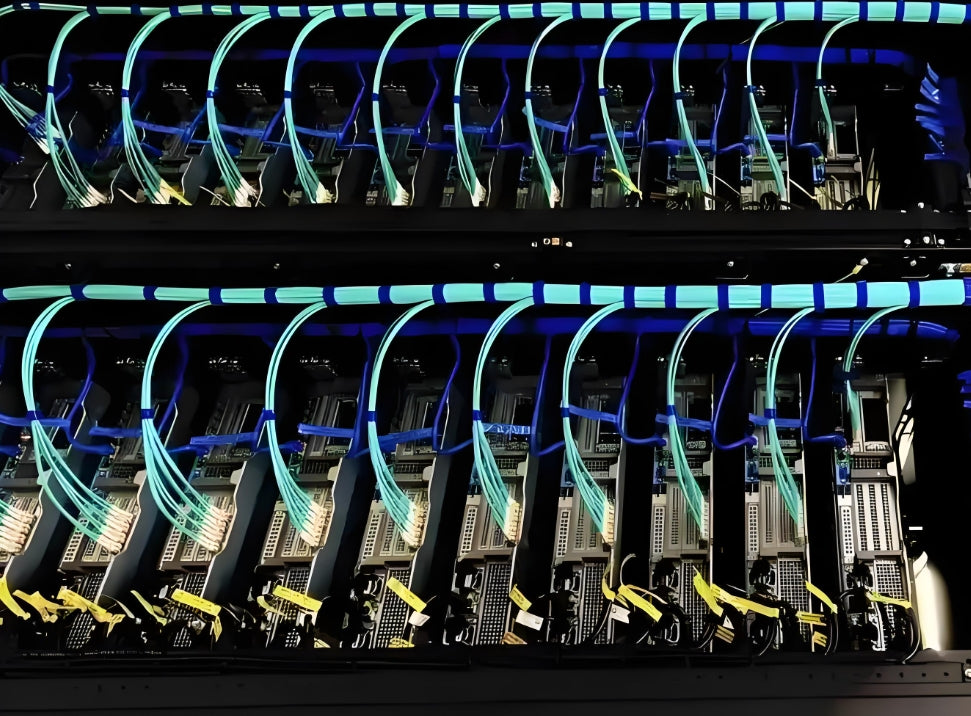
A frozen, zone-based design lets the factory build and test the entire permanent link before the first rack arrives on-site
Chapter 4: The 6-Month Master Schedule (Month-by-Month)
A 6-month (≈26-week) delivery is only possible because workstreams overlap. The table below is a representative plan for an 8,000-fiber, ~64-rack training cluster. Notice that fabrication, infrastructure, and commissioning all run in parallel from month one.
| Workstream | Month 1 | Month 2 | Month 3 | Month 4 | Month 5 | Month 6 |
|---|---|---|---|---|---|---|
| Design & BOM | BIM routing, BOM lock, factory PO | Factory review | — | — | — | — |
| Factory Fab | Rack assemblies build | QC + factory test | Ship Zone 1–2 | Ship Zone 3–N | — | — |
| Site Infra | Tray, conduit, grounding | Parallel (Zone 2) | Parallel (Zone 3) | Parallel (final) | — | — |
| Trunk Pull | — | Zone 1 MPO pull | Zones 2–N | — | — | — |
| Rack Drop-In | — | Zone 1 racks | Zones 2–N | Final alignment | — | — |
| Commissioning | — | Zone 1 OTDR | Z1 channel + Z2 OTDR | Zones 3–N | Full system | Live traffic |
| GPU Burn-In | — | — | Zone 1 (overlap) | Zones 2–N | Full cluster | Handover |
The discipline that makes this work is zone-gate acceptance: each zone is tested and signed off before the next zone's trunks are pulled. A fault stays in its zone instead of cascading into a full-hall re-test — and the project manager gets a verifiable milestone to report every few weeks instead of one terrifying handover at month six.
Q: What if the GPUs arrive before month 6?
A: That is the goal, not a problem. Because commissioning is zone-based and parallel, the first certified zone can accept GPU hardware and begin burn-in while later zones are still being cabled. This overlap — not the calendar — is what compresses 18 months into 6. The cable plant must simply stay one zone ahead of the hardware install team at all times.
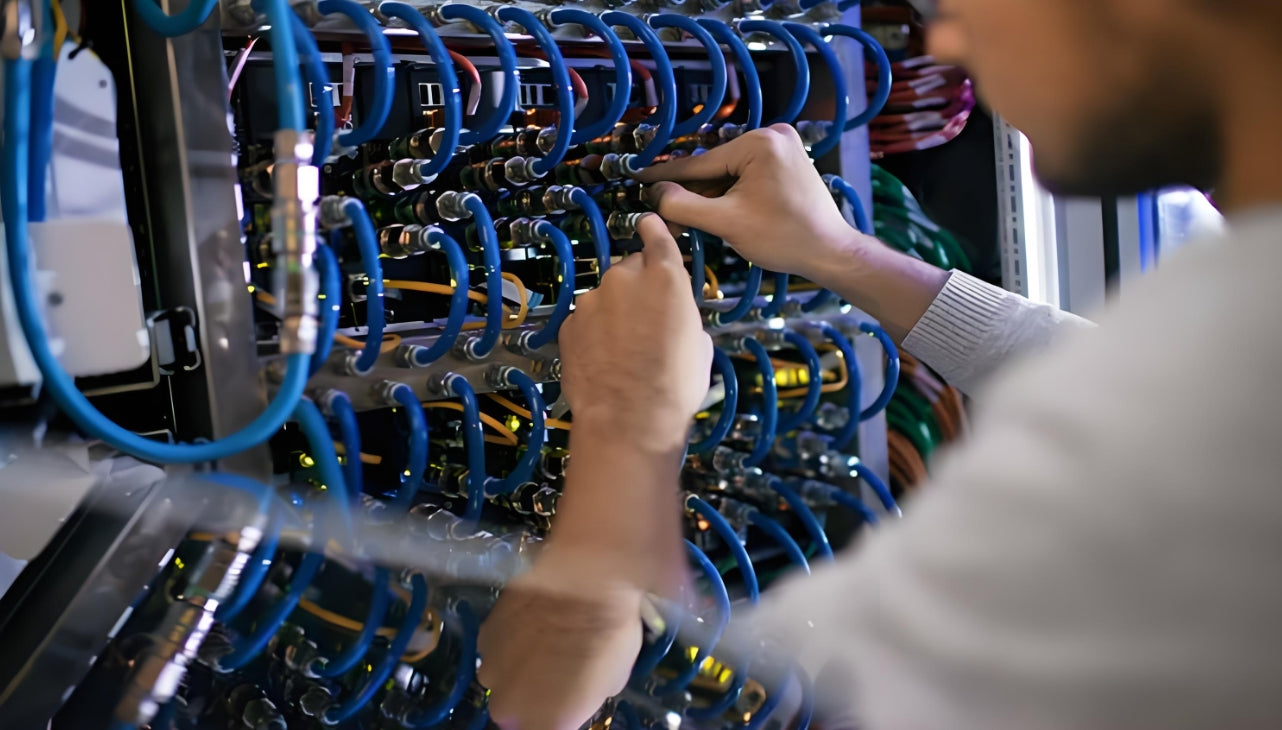
On a fast-track site, cable pulling and testing run in the same aisle — not in sequence — to protect the delivery date
Chapter 5: On-Site Construction Speed-Up Tactics
The factory does the hard part; the site does the fast part. But "fast" on-site still requires deliberate tactics. These are the ones that separate a 6-month delivery from a slipped one.
🔁 Parallel Workstreams
- Run infra, trunk pull, and commissioning in different zones simultaneously
- Never let one trade block the next — stagger by zone, not by phase
- Keep cable plant one zone ahead of GPU install
📦 Staged Material Logistics
- Phased delivery by zone to avoid site congestion
- Inspect on arrival; barcode/QR track every assembly
- Protect fiber end-faces; store copper dry
👷 Skilled-Labor Leverage
- Reserve scarce splicers for the few field joints that remain
- Semi-skilled crews handle drop-in & patching (plug-and-play)
- Factory absorbs the high-skill termination load
📐 Pre-Staged Rack Packages
- Factory pre-loads panels, trunks, managers, labels
- Single crane-lift unit drops into position
- On-site work = align, mate pigtails, dress
5.1 The Skilled-Technician Shortage Is the Real Constraint
The bottleneck in 2026 is not cable or connectors — it is people. Certified fusion splicers and experienced structured-cabling leads are in short supply globally. Pre-terminated structured cabling is the structural answer: it moves the high-skill work into the factory (where capacity scales) and leaves the site work to plug-and-play mating that semi-skilled crews can execute reliably. A build that needed 20 splicers on-site now needs 2 — and they are reserved for the handful of unavoidable field joints.
5.2 Don't Let Speed Break the Physics
Fast pulling is not reckless pulling. The two failure modes that surface weeks later — both invisible at install time — are bend-radius violations and return-loss spikes from contaminated end-faces. In high-density AI racks, over-long patch cords are the leading cause of tight bends that quietly degrade 400G+ signal integrity. Pull force limits (≤100 N for 12-fiber MPO), minimum bend radius (≥30 mm for OM4), and end-face cleaning before every mate are the non-negotiables that keep a fast build from becoming a flaky one.
✅ What Wins Time Safely
- Factory pre-termination & testing
- Zone-based parallel commissioning
- Frozen BOM, staged logistics
- End-face cleaning SOP at every mate
❌ What Steals the Date
- Late design changes / change orders
- Sequential (not parallel) commissioning
- Rushing pulls past bend-radius limits
- Skipping factory test-report review

Parallel, zone-based site execution — the disciplined sequencing that lets a 6-month delivery actually happen
Chapter 6: Testing & Commissioning Without Blocking the Schedule
In a fast-track build, commissioning is a continuous parallel track, not a final step. It starts the moment the first trunk is pulled and runs alongside every other workstream. The methodology is tiered:
Tier 1 — Factory Test (every prefab assembly, before shipping)
Every pre-terminated MPO trunk and rack assembly gets factory OTDR and insertion-loss testing to IEC 61300-3-4, delivered as a PDF report tied to the serial number. Reading these reports before accepting delivery catches defects before they become on-site delays.
Tier 2 — Site Acceptance (every installed link)
An MPO OLTS or OTDR validates that nothing was damaged in shipping or pull-in. At 400G+ the loss budgets are far tighter than legacy 10G — a 0.5 dB excess that was invisible at 10G becomes a dark link at 400G SR4. Use a two-point OLTS for final acceptance; OTDR traces are harder to read against channel-level loss limits.
Tier 3 — System Test (live traffic / BERT)
Once all zones pass Tier 2, the full channel is validated end-to-end under load. This is where bit-error-rate, jitter, and latency are confirmed against the specific AI workload the cluster will run.
💡 Loss-budget reality check: At 400G SR4 over OM4 the total channel budget is roughly 2.9 dB; at 800G SR8 it tightens further. Test every link with a calibrated OLTS before a single GPU goes live — a flaky link found during training costs far more than the 10 minutes of testing that would have caught it.
Q: Can we skip Tier 1 factory reports to save time?
A: Never. Skipping factory reports trades minutes now for days later. A defective trunk caught at the factory is a free swap under warranty; the same defect found during site commissioning becomes a pulled rack, a delayed zone, and a missed milestone. The factory test report is the cheapest insurance in the entire 6-month plan — insist on it with every order.

Fluke certification — every link in an AI cluster must be verified against its specific loss budget before serving 400G+ workloads
Chapter 7: Case Study — 6-Month Delivery in Practice
📍 Representative Build: 8,000-Fiber Training Cluster, 6-Month Delivery
Scope: A 64-rack AI training cluster — ~8,200 fiber connections, mixing OM4 MPO scale-up fabric (intra-cluster) and OS2 singlemode (DCI). Target: steel-to-first-GPU-job in 6 months.
Method: The hall was split into 8 identical 8-rack zones. The BOM and zone topology were frozen in month 1 via 3D BIM. The factory built and tested all MPO-24 trunks, cassettes, and pre-loaded rack packages in months 1–2, shipping zones as they cleared QC. On-site crews pulled trunks and dropped in pre-built racks zone by zone from month 2, while commissioning ran in parallel from the first installed zone.
Result: Zone 1 passed Tier 2 and began GPU burn-in in month 3 — while zones 4–8 were still being cabled. Full-system live-traffic test completed in month 5; formal handover and cluster acceptance in month 6. Zero field splices on the permanent layer; the two remaining certified splicers handled only the handful of DCI field joints.
What nearly broke it: A late request to add two racks to Zone 5 in month 3. Because the BOM was frozen and prefab was already shipping, this became a small, separately-quoted add-on rather than a rebuild — exactly the kind of change that, on a traditional build, would have cascaded across the schedule.
Chapter 8: Key Takeaways — The 6-Month Do / Don't Summary
If you remember nothing else from this playbook, remember the table below. These are the decisions that determine whether a 6-month AI cluster delivery lands or slips.
| Phase | Do This | Avoid This |
|---|---|---|
| Design (Month 1) | Freeze zone topology, BOM, and labeling in 3D BIM | Iterative field measurement; open-ended design |
| Fabrication | Pre-terminate & factory-test all trunks and racks | Plan to fuse-splice thousands of fibers on-site |
| Architecture | Two-layer fiber (OM4 intra / OS2 inter) | One fiber type assumed for all reach lengths |
| Site Execution | Zone-based parallel workstreams; staged logistics | Sequential phases; congested, unplanned material |
| Commissioning | Tiered T1/T2/T3, parallel from first zone | One big test after 100% install |
| Change Control | Frozen BOM; small add-ons quoted separately | Late design tweaks after factory PO |
| Quality Gate | Review factory test reports; clean end-faces; honor bend radius | Rush pulls past limits; skip OLTS acceptance |
📌 The one-sentence version: A 6-month AI cluster delivery is won in the factory and the design room — pre-terminated structured cabling plus a frozen, zone-based BOM — and merely executed on-site. Teams that try to win it with more splicers and longer hours will miss the date every time.
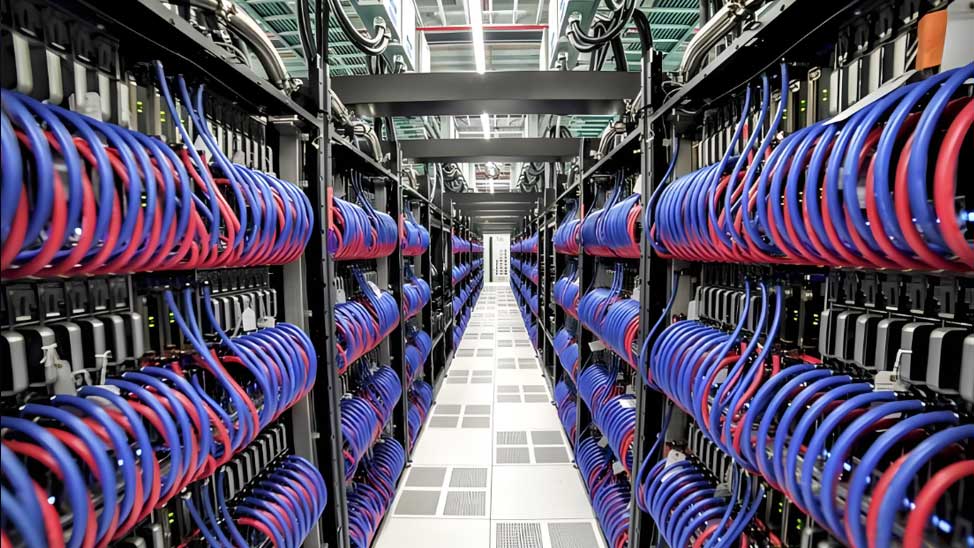
A disciplined, pre-terminated structured cabling build is what turns an 18-month plan into a 6-month delivery
Chapter 9: Frequently Asked Questions
Q: How many skilled technicians do I actually need on-site for a 6-month build?
A: Far fewer than a traditional build. With pre-terminated trunks and factory-built rack packages, the on-site high-skill need collapses to a small team of certified leads who handle the few unavoidable field joints (typically DCI singlemode) and supervise plug-and-play mating by semi-skilled crews. A build that historically needed 15–20 splicers on-site can run with 2–3, because the factory absorbed the termination load. That is precisely how you beat the global skilled-labor shortage.
Q: What is the minimum planning time I should budget before placing the factory order?
A: For an 8,000-fiber cluster, budget 3–4 weeks for design freeze and BOM lock (BIM routing, zone topology, trunk lengths, labeling scheme). This is the most important investment in the entire project — it is what makes prefab fast. Cutting this phase to "save time" is the classic false economy that triggers change orders later, and change orders on prefab cost 3–5× more than the equivalent field change.
Q: Can I mix pre-terminated MPO with some field splicing in the same build?
A: Yes, and most real builds do. The permanent layer (intra-cluster backbone) should be fully pre-terminated MPO. Field splicing is reserved for the long-reach OS2 DCI segments where custom lengths to outside-plant entry points make factory truncation impractical. Keep the two layers clearly separated in documentation so polarity and loss budgets are tracked independently. The key is that the field-splice volume stays small enough to never touch the critical path.
Q: Does pre-termination really cost more, and does it pay back within a 6-month window?
A: Pre-terminated assemblies typically carry a 15–25% material premium over field-terminated components. But on any cluster above ~5,000 ports, the total cost of ownership is generally 10–20% lower once you subtract reduced on-site skilled-labor cost, fewer change orders, and — most importantly — faster time-to-revenue for the GPUs. In a penalty-clocked 6-month contract, the schedule protection alone usually dwarfs the material premium.
Q: How do I keep bend-radius and return-loss problems from surfacing after handover?
A: Two habits: (1) enforce a strict end-face cleaning SOP before every mate — contaminated connectors are the top cause of return-loss spikes at 400G+; and (2) use a structured patch-cord length matrix (typically 1/2/3/5 m increments) so over-long cords don't create tight bends in dense racks. Both are verified at Tier 2 site acceptance with a calibrated OLTS, not left to visual inspection. What passed at 10G will fail at 400G, so the test, not the eye, is the gate.
Planning a 6-Month AI Cluster Delivery?
AMPCOM supplies pre-terminated MPO fiber trunks, factory-built rack packages, and Cat8 copper solutions engineered for fast-track AI data center builds. Get a zone-based BOM, loss-budget plan, and lead-time quote for your next cluster.
Contact AMPCOM for a Custom Quote →

