
Shielded vs Unshielded Cable: How to Choose
Published:
Buy the wrong Ethernet cable type for your environment, and you are not just wasting money on over-spec'd hardware — you could be shipping a network that drops packets under load and fails certification on day one.
The shielded vs unshielded cable decision splits neatly into two camps on paper: run UTP where it is quiet, STP where it is noisy. But the reality is messier. Alien crosstalk, incomplete grounding chains, and the growing density of wireless devices in commercial spaces mean that what worked five years ago may not work for a 10GBASE-T deployment today. This guide gives you the engineering rationale behind each cable type, the shielding taxonomy most installers get wrong, and a practical decision framework you can use on your next project — whether that is a 200-drop office floor or a hyperscale data center.
Quick Navigation
- 1 Why Cable Shielding Matters: EMI and Your Network
- 2 UTP Deep Dive: The Unshielded Workhorse
- 3 Shielded Cable Types: Decoding S/FTP, F/UTP and the Alphabet Soup
- 4 Head-to-Head: Shielded vs Unshielded Cable Compared
- 5 The Grounding Requirement: Why Half-Shielded Is Worse Than None
- 6 Alien Crosstalk: The Hidden Killer of 10G Networks
- 7 Cat6A, Cat7, Cat8: Where Shielding Becomes Non-Negotiable
- 8 Decision Framework: How to Choose the Right Cable
- 9 AMPCOM's Shielded and Unshielded Cable Solutions
- 10 Key Questions About Shielded vs Unshielded Cables
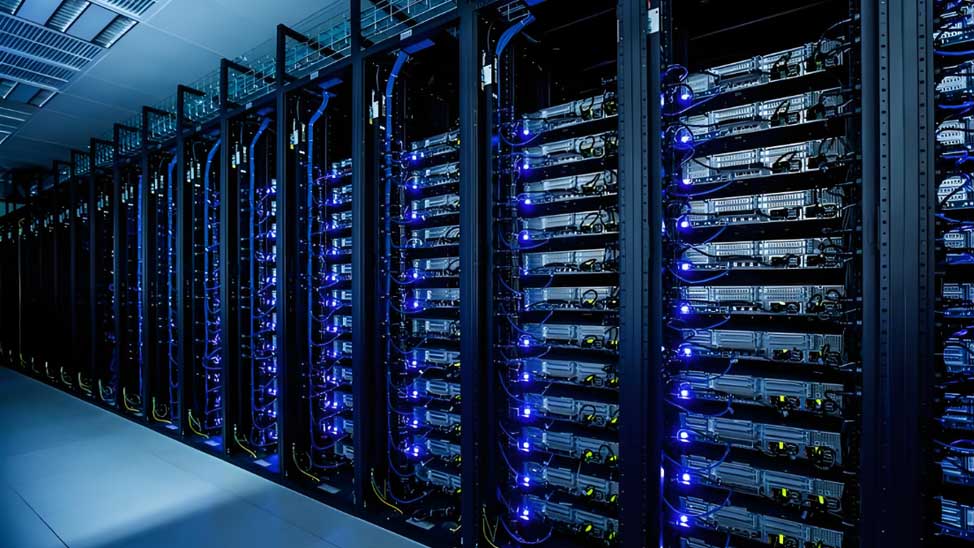
A properly grounded shielded cabling system eliminates electromagnetic interference that would otherwise degrade 10G and higher network performance
Why Cable Shielding Matters: EMI and Your Network
Every Ethernet cable is, by physical definition, an antenna. A long, thin conductor running through a building will absorb electromagnetic energy from its surroundings — whether you want it to or not. The question is not whether interference exists. It is whether your cabling can reject enough of it to keep your bit error rate below the threshold where TCP retransmissions start eating your throughput.
Where EMI Comes From
Electromagnetic interference in commercial and industrial buildings is not a rare edge case. It is everywhere. The most common sources installers routinely encounter:
| EMI Source | Typical Environment | Impact on Unshielded Cable |
|---|---|---|
| Power cables (110V/220V AC) | Every building | 60 Hz coupling. Significant when run parallel within 30 cm. Induces common-mode noise that UTP's differential signaling partially cancels — but not completely. |
| Fluorescent lighting ballasts | Offices, warehouses | Broadband noise from 10 kHz to several MHz. Older magnetic ballasts are particularly bad. |
| HVAC equipment, compressors | Mechanical rooms, rooftops | Impulse noise from motor startups. Can cause burst errors that TCP interprets as congestion. |
| Industrial machinery, VFDs | Manufacturing floors | Variable-frequency drives generate conducted EMI from 2 kHz to 150 kHz. One of the hardest interference sources to mitigate. |
| Medical imaging equipment | Hospitals, clinics | MRI and CT scanners generate intense magnetic fields that can saturate cable shielding if not properly specified. |
| Radio transmitters, cell towers | Urban rooftops, near broadcast facilities | RF interference from 700 MHz to 6 GHz. Modern cellular base stations within 100 meters can couple significant energy into unshielded horizontal runs. |
| Adjacent Ethernet cables | Data centers, wiring closets | Alien crosstalk (AXT) — the interference between cables in the same bundle. Becomes the dominant noise source above 250 MHz. |
How Shielding Actually Works
Shielding protects signal integrity through two physical mechanisms, and they are conceptually different:
- Reflection: The metallic shield reflects incident electromagnetic waves back toward the source. This is the primary mechanism at high frequencies — above roughly 30 MHz, a properly grounded foil shield reflects over 90% of incident EMI energy.
- Absorption: Any energy that penetrates the shield is converted to a tiny current within the shield material itself and shunted to ground through the drain wire. This is why grounding is non-negotiable — a floating shield cannot absorb and dissipate energy, so it re-radiates it into the signal conductors.
For non-shielded cables, the defense is entirely different. UTP relies on balanced differential signaling: the two conductors in each twisted pair carry equal and opposite voltages. When external noise couples into both conductors equally (common-mode), the receiver's differential amplifier subtracts it out. The effectiveness of this approach depends entirely on how precisely the pair maintains its balance — which is why cable construction quality matters far more for UTP than for shielded cable.
UTP Deep Dive: The Unshielded Workhorse

UTP remains the default choice for office environments — but only when installation practices respect separation distances from power and lighting
What UTP Gets Right
UTP has dominated commercial structured cabling for three decades, and not by accident. For the vast majority of office environments running 1 Gigabit Ethernet or below, a well-manufactured Cat5e or Cat6 UTP cable will deliver reliable performance at a fraction of the cost of shielded alternatives. The advantages are real:
- Lower material cost: UTP cable is typically 30-50% cheaper per foot than equivalent-category shielded cable. On a 2,000-drop office project, that difference can be tens of thousands of dollars saved on cable alone.
- Faster termination: Without shield layers to fold back and drain wires to manage, a technician can terminate a UTP keystone jack in roughly half the time of a shielded equivalent. Across hundreds of terminations, that labor differential adds up fast.
- Smaller diameter, tighter bend radius: UTP Cat6A is typically 7-8 mm in diameter. Shielded Cat6A S/FTP is 8-9 mm. In a 2-inch conduit, that 1 mm difference can mean fitting 10 cables instead of 14 — and conduit fill calculations care about every millimeter.
- No grounding dependency: The single biggest installation failure mode for shielded cable — incomplete or improper grounding — does not exist for UTP. There is simply nothing to ground wrong.
Where UTP Falls Short
The limits of UTP become real at two points: high frequency and high density. When you push Cat6A to 500 MHz for 10GBASE-T, the signal wavelengths become short enough that even minor imbalances in pair twisting create measurable crosstalk. And when you bundle 48 cables together in a data center tray, the alien crosstalk between adjacent cables can exceed the noise margin built into the 10GBASE-T physical layer — even if every individual cable passes certification in isolation.
This is not a theoretical concern. Field studies of large Cat6A UTP deployments in data centers have documented alien crosstalk failures in roughly 3-8% of tested links when cables are tightly bundled in groups of 24 or more. The same bundles built with shielded cable see failure rates below 0.5%.
When UTP Is the Right Call
Standard commercial offices with desktop workstations, VoIP phones, and Wi-Fi access points — where cable runs stay away from power distribution and you are deploying 1G or 2.5G Ethernet. In these environments, Cat6 UTP is the cost-effective sweet spot.
Residential and small business networks where the total drop count is under 50 and no industrial equipment shares the building. Cat5e UTP handles gigabit speeds reliably here.
Expanding an existing UTP installation — mixing shielded and unshielded cable in the same pathways creates a worst-of-both-worlds situation. If the backbone is UTP, stay UTP for horizontal runs unless a specific link requires an upgrade.
Shielded Cable Types: Decoding S/FTP, F/UTP and the Alphabet Soup
If there is one thing that causes unnecessary confusion in cabling specifications, it is the shielding nomenclature. The ISO/IEC 11801 naming convention uses a two-part code: the first letter describes the overall cable shield, and the part after the slash describes the individual pair shielding. Here is what every combination actually means:
| Designation | Overall Shield | Pair Shield | What You Actually Get |
|---|---|---|---|
| U/UTP | None | None | Standard unshielded twisted pair. No metallic shielding anywhere. Noise rejection depends entirely on pair balance. |
| F/UTP | Foil | None | Single aluminum foil wrap around all four pairs. Blocks external EMI but does nothing for pair-to-pair crosstalk within the cable. Foil is fragile — kinks and tears degrade shielding. |
| S/UTP | Braid (Screen) | None | Copper braid around all pairs. More durable than foil, handles flexing better. Lower EMI coverage (typically 70-85%) compared to foil's near-100%. Less common in modern installations. |
| SF/UTP | Braid + Foil | None | Both a braid and foil overall shield. Excellent external EMI rejection. Still no pair-to-pair protection. Heavy, expensive, and overkill for most applications. |
| U/FTP | None | Foil per pair | Each pair individually foil-wrapped, no overall shield. Excellent pair-to-pair isolation. No protection against external EMI sources. Rare outside specialized applications. |
| F/FTP | Foil | Foil per pair | Foil on each pair plus an overall foil wrap. Near-total EMI rejection in both directions. The main weakness: foil is mechanically fragile, and a single tear in the overall shield during pulling can degrade protection. |
| S/FTP | Braid | Foil per pair | The gold standard. Individually foil-wrapped pairs plus an overall copper braid. Combines the best EMI coverage of foil with the durability of braid. This is the construction used in virtually all Cat6A shielded and Cat8 cables. Also called SSTP in some manufacturer literature. |
| SF/FTP | Braid + Foil | Foil per pair | Maximum protection. Braid and foil overall shield plus foil per pair. Used in military, aerospace, and extreme industrial environments. Impractically thick and expensive for commercial networking. |
Head-to-Head: Shielded vs Unshielded Cable Compared
| Comparison Factor | Shielded (STP / S/FTP) | Unshielded (UTP) |
|---|---|---|
| EMI Rejection | Excellent. Pairs individually foil-wrapped, overall braid drains to ground. Effective from 60 Hz power line noise up to GHz RF interference. | Moderate. Relies on pair balance and differential signaling. Works well in electrically quiet environments. Degrades at high frequencies and in dense bundles. |
| Alien Crosstalk (AXT) | Effectively eliminated by individual pair shielding. The dominant AXT coupling path between adjacent cables is broken by the foil barrier. | The primary weakness of UTP at Cat6A and above. AXT between tightly bundled cables cannot be cancelled by active electronics because the noise source is unknown and unpredictable. |
| Cost (Cable) | 20-40% more expensive per foot than equivalent-category UTP. Cat6A S/FTP bulk cable: approximately $0.35-0.50/ft vs $0.20-0.30/ft for UTP. | Lower material cost. The price gap narrows at Cat6A and above where UTP must use larger conductors and tighter pair twists to compensate for the lack of shielding. |
| Cost (Total Installation) | Higher material cost partially offset by reduced testing time — S/FTP installations typically skip alien crosstalk field testing, saving hours of labor. | Cheaper cable but mandatory AXT field testing on Cat6A UTP installations can add 2-4 minutes per link. On a 1,000-link project, that is 30-65 hours of additional testing labor. |
| Installation Speed | Slightly slower termination. Folding back shield layers and managing drain wires adds approximately 30-45 seconds per termination. | Faster. No shield layers to manage. A skilled technician terminates a UTP keystone jack in 60-90 seconds. |
| Grounding Required | Yes, absolutely mandatory. Requires shielded connectors at both ends, shielded patch panel bonded to rack, rack bonded to TGB (Telecommunications Grounding Busbar). | No. No grounding path needed. This is the single biggest operational advantage of UTP. |
| Cable Diameter | Cat6A S/FTP: 8.0-9.5 mm. Cat8 S/FTP: 8.5-10.0 mm. Larger diameter means fewer cables per conduit. | Cat6A UTP: 7.0-8.5 mm. Smaller diameter equals higher conduit fill capacity. |
| Weight | Heavier. Cat6A S/FTP weighs approximately 55-65 lbs per 1,000 ft. Cable trays must be rated accordingly. | Lighter. Cat6A UTP weighs approximately 35-45 lbs per 1,000 ft. Easier overhead pulling. |
| Bend Radius | Larger minimum bend radius. Typically 4x cable diameter for S/FTP during installation, 2x for long-term static placement. | Smaller minimum bend radius. Typically 4x for installation, same as shielded — but the smaller diameter means a tighter absolute bend is allowed. |
| Future-Proofing | Better positioned for 25GBASE-T and 40GBASE-T. Shielding becomes mandatory for copper Ethernet above 10 Gbps. An S/FTP installation today avoids recabling tomorrow. | Limited to 10GBASE-T (Cat6A). 25G and 40G copper require Cat8, which mandates shielding. UTP is a dead end for next-generation copper speeds. |
✓ Choose UTP When
- Budget-constrained office deployments at 1G or 2.5G
- Drop counts under 24 cables per bundle
- Cable pathways are separated from power distribution by 30+ cm
- No heavy machinery, medical imaging, or broadcast equipment nearby
- Expanding an existing UTP infrastructure
✓ Choose Shielded When
- 10GBASE-T or higher on copper (Cat6A or Cat8)
- High-density bundles (24+ cables in a single pathway)
- Industrial floors with VFDs, motors, or welding equipment
- Hospitals near MRI, CT, or X-ray equipment
- Data centers where AXT testing would be prohibitively expensive
- Any environment where you cannot guarantee physical separation from power
The Grounding Requirement: Why Half-Shielded Is Worse Than None

A shielded cabling system is only as good as its grounding path — the bonding conductor from patch panel to rack to TGB must be continuous and low-impedance
The Antenna Effect
This is the single most misunderstood aspect of shielded cabling, and it is responsible for the majority of post-installation performance issues. A shielded cable with an incomplete or floating ground does not provide "partial" protection. It actively makes things worse.
Here is why: an ungrounded metallic shield is electrically floating. When ambient electromagnetic fields hit it, they induce currents in the shield that have nowhere to drain. The shield then re-radiates that energy — coupling it directly into the twisted pairs it was supposed to protect. Measured in a lab, a floating-shield Cat6A cable can exhibit 3-6 dB worse noise performance than an equivalent UTP cable at 300-500 MHz. You would have been better off using unshielded cable.
This is why the "just buy shielded to be safe" advice — while well-intentioned — can backfire catastrophically if the installation team does not complete the grounding chain.
What a Complete Grounding Chain Looks Like
The grounding path for a shielded cabling system has five links. Every single one must be verified:
The Five Links of Shield Grounding
1. Cable drain wire to connector: The drain wire inside the shielded cable must make solid contact with the metal shell of the shielded RJ45 plug or the IDC termination point on a shielded keystone jack. A drain wire cut too short, folded back incorrectly, or not contacting the connector body breaks the chain at step one.
2. Connector to patch panel: Shielded RJ45 jacks have metal bodies designed to make circumferential contact with the patch panel's grounded port openings. Plastic keystone frames in a metal patch panel defeat this — the jack body must contact metal.
3. Patch panel to rack: The patch panel itself must be bonded to the equipment rack. This is typically done with a grounding lug and a 6 AWG copper bonding conductor — the same way you bond any other equipment to the rack. Paint, anodizing, or powder coating on the rack rails must be removed at the bonding point to ensure metal-to-metal contact.
4. Rack to TGB (Telecommunications Grounding Busbar): The rack must be bonded to the room's grounding busbar using a minimum 6 AWG conductor. This busbar is the single grounding reference point for all telecommunications equipment in the space.
5. TGB to building ground: The TGB bonds to the building's main electrical ground — typically through the structural steel or a dedicated grounding electrode conductor. This should already be in place and verified by a licensed electrician, but do not assume it is correct.
The $12,000 Grounding Mistake
A 300-bed hospital expansion in Texas specified Cat6A S/FTP throughout to meet the facility's EMI control plan. During commissioning, 14% of links failed certification. The root cause: the installation team used shielded keystone jacks in plastic patch panel frames. The jack bodies had no metal-to-metal contact with the rack, so the individual pair shields were floating — turning every cable into an antenna. The fix required replacing all plastic frames with metal ones and re-terminating 140 jacks. Two days of rework and $12,000 in labor and materials that would have been avoided with a five-minute grounding audit during the first rack build.
Alien Crosstalk: The Hidden Killer of 10G Networks
If you have been in networking for a while, you know about NEXT (near-end crosstalk) and FEXT (far-end crosstalk) — the interference between pairs within the same cable. Active electronics can cancel these out because the interfering signal is known: it is the same data the PHY is transmitting, just coupling into adjacent pairs.
Alien crosstalk (AXT) is a fundamentally different problem. The interfering signal comes from a different cable carrying different data. The receiver has no reference copy of the alien signal, so DSP-based cancellation does not work. AXT is pure noise — and once it exceeds the signal-to-noise margin designed into the PHY, you get bit errors that TCP must retransmit.
Why AXT Becomes Dominant Above 250 MHz
At lower frequencies — the 100 MHz where Cat5e operates, or even the 250 MHz of Cat6 — AXT is usually manageable because the coupling between adjacent cables is relatively weak and the receiver's noise margin is generous. At 500 MHz (Cat6A / 10GBASE-T), the coupling efficiency between parallel cables increases significantly. The cables effectively become coupled transmission lines, and the signal leaking from one cable into its neighbors can exceed the noise floor that the 10GBASE-T PHY can tolerate.
This is not a cable quality problem. It is physics. Two parallel conductors separated by a few millimeters of PVC jacket will couple at 500 MHz, period. The only practical solutions are: (a) physically separate the cables enough that coupling drops below the noise threshold, or (b) put a grounded metallic barrier between them.
UTP attempts solution (a) — through larger conductor spacing, tighter twists, and internal splines. Shielded cable delivers solution (b) — the foil around each pair is that metallic barrier.
Cat6A, Cat7, Cat8: Where Shielding Becomes Non-Negotiable
The relationship between Ethernet cable categories and shielding is not uniform — it changes dramatically as you move up the performance ladder. Understanding this progression is critical for making a forward-looking cable choice:
| Category | Max Frequency | Max Speed | Shielding Required? | Real-World Recommendation |
|---|---|---|---|---|
| Cat5e | 100 MHz | 1 Gbps (100 m) | No. UTP is standard. | UTP for all applications. Shielded Cat5e exists but has no practical advantage at these frequencies. |
| Cat6 | 250 MHz | 1 Gbps (100 m), 10 Gbps (55 m UTP) | No for 1G. Shielded recommended for 10G at longer distances. | UTP for standard office 1G deployment. If you need 10G, skip Cat6 entirely and go to Cat6A. |
| Cat6A | 500 MHz | 10 Gbps (100 m) | No, but strongly recommended in dense bundles. UTP Cat6A relies on larger conductors and tighter twists to suppress AXT. | S/FTP strongly recommended for data centers and any installation with 24+ cables per bundle. UTP acceptable for low-density office deployments with good pathway separation. |
| Cat7 | 600 MHz | 10 Gbps (100 m) | Yes. S/FTP by definition. Uses non-RJ45 connectors (GG45, TERA). | Niche standard. Not recognized by TIA-568. Exists in European broadcast and some industrial applications. Skip for Ethernet networking — Cat6A or Cat8 are better choices. |
| Cat7A | 1,000 MHz | 10 Gbps, supports 25G/40G lab demonstrations | Yes. S/FTP mandatory. Non-RJ45 connectors. | Same as Cat7. ISO-recognized (Class FA), not TIA-recognized. Limited practical value for standard networking. |
| Cat8 | 2,000 MHz | 25 Gbps / 40 Gbps (30 m) | Yes — mandatory. S/FTP construction with foil per pair and overall braid. Shielded RJ45 connectors (Cat8.1) or non-RJ45 (Cat8.2). | Data center top-of-rack and end-of-row switching. 40GBASE-T over copper up to 30 meters. Not needed for horizontal office cabling. |
Cat8's mandatory S/FTP construction represents the physical limit of what twisted-pair copper can achieve — 2,000 MHz and 40 Gbps over 30 meters
The Cat6A Decision Point
For most projects being specified today, the decision is really about Cat6A — and specifically, whether to deploy it as UTP or S/FTP. Here is the honest assessment that manufacturers' datasheets will not give you:
- Cat6A UTP can work at 10G in low-density deployments where cables are not tightly bundled. But it requires careful installation: minimum bend radius enforcement, no kinking, proper pathway separation from power, and mandatory alien crosstalk field testing. It is a viable choice when the installation team is experienced and the environment is controlled.
- Cat6A S/FTP is the conservative, low-risk choice. It handles high-density bundling, forgives minor installation variances, skips AXT testing, and provides a clear path to future higher-speed applications. The cable costs more, but the total installed cost — including testing labor — is often within 10-15% of UTP on large projects.
If your project has any of these characteristics, S/FTP is the right call for Cat6A: data center deployment, cable bundles of 24 or more, industrial or medical environment, or a client that will hold you to a performance warranty longer than the standard one year.
Decision Framework: How to Choose the Right Cable
Walk through these questions in order. By the time you reach the bottom, you will have your answer:
Shielded vs Unshielded Cable Decision Tree
Q1: What speed do you need to support? If 25G or 40G over copper is in your roadmap, the answer is Cat8 S/FTP — shielding is mandatory and UTP is not an option. If 10G is your target, proceed to Q2.
Q2: How many cables will share the same pathway? If you are bundling more than 24 cables in a single tray, conduit, or pathway, go with shielded Cat6A S/FTP. The alien crosstalk risk in UTP at this density is real, and the testing labor to prove it is not happening will eat your margin.
Q3: What is the electromagnetic environment? If your cable runs pass within 30 cm of power distribution, fluorescent lighting, or HVAC equipment, or if the building houses industrial machinery, medical imaging, or broadcast equipment — shielded cable is the safe choice. Err on the side of caution here; troubleshooting intermittent EMI-induced errors is expensive.
Q4: Can your installation team reliably execute shielded terminations? Shielded cable requires competent grounding. If your team is unfamiliar with shield termination, drain wire management, and patch panel bonding — either budget for training and QA, or stay with UTP. A poorly grounded shielded installation is worse than UTP.
Q5: Is the existing infrastructure UTP or shielded? If you are expanding a legacy UTP installation, maintain consistency unless a specific link justifies an upgrade. Mixing cable types in the same pathways adds complexity without benefit.
Q6: What is the total cost of ownership? Do not compare cable prices. Compare total installed and tested cost — including alien crosstalk testing hours for UTP vs the material premium for S/FTP. On projects over 500 drops, the all-in cost difference between Cat6A UTP and Cat6A S/FTP is often single-digit percentage points.
AMPCOM's Shielded and Unshielded Cable Solutions
At AMPCOM, we manufacture both shielded and unshielded Ethernet cables across the full category range — from Cat5e UTP for budget-conscious office deployments to Cat8 S/FTP for 40GBASE-T data center applications. Here is what sets our cable construction apart:
Shielded Product Lines
- Tough Armor Double Shielded (S/FTP): Our flagship shielded patch cord series. Individually foil-wrapped pairs with an overall tinned copper braid. The Tough Armor jacket resists abrasion, crush, and repeated flexing — designed for data center environments where cables are frequently handled during MAC (moves, adds, changes). Available in Cat6A, Cat7, and Cat8.
- Velocity LSZH Double Shielded (S/FTP): Same S/FTP construction with a low-smoke zero-halogen jacket. Complies with IEC 60332-1 flame retardancy and IEC 60754-2 halogen content requirements. Specified for projects in the EU, healthcare, transportation, and any environment where LSZH is required by local fire code.
- Ultra-Flexible Double Shielded (S/FTP): Stranded conductors and a high-strand-count braid for installations requiring tight bends or frequent repositioning. Ideal for top-of-rack switch-to-server patching where standard solid-conductor patch cords would fatigue.
Unshielded Product Lines
- Tough Armor Unshielded (UTP): Heavy-duty UTP with an abrasion-resistant jacket. 24 AWG solid bare copper conductors, 50-micron gold-plated contacts. Category coverage from Cat5e through Cat6A.
- Velocity LSZH Unshielded (UTP): UTP construction with LSZH jacket. The go-to choice for commercial office projects in jurisdictions with strict smoke and toxicity requirements.
- Ultra-Slim Unshielded (UTP): 28 AWG stranded conductors in a 4.0 mm diameter jacket. Designed for high-density patching fields where standard-diameter patch cords obstruct airflow. Available in Cat6 and Cat6A.
Key Questions About Shielded vs Unshielded Cables
- What is the difference between STP and UTP Ethernet cable?
- STP (Shielded Twisted Pair) cable incorporates metallic shielding — either foil, braid, or both — around the conductor pairs to block electromagnetic interference by reflecting and absorbing external noise. UTP (Unshielded Twisted Pair) has no metallic shielding and instead relies on precisely balanced twisted-pair geometry and differential signaling to reject common-mode noise. The practical difference: STP provides 20-40 dB better EMI rejection at frequencies above 100 MHz but costs more, weighs more, is thicker, and requires a complete end-to-end grounding path. UTP is cheaper, lighter, easier to terminate, and sufficient for electrically quiet environments — but offers minimal protection in high-noise or high-density scenarios.
- Do I really need shielded Ethernet cable for my home or office?
- For most residential and standard office environments where cable runs stay at least 30 cm away from power lines, fluorescent fixtures, and HVAC equipment, Cat5e or Cat6 UTP is the cost-effective choice and will perform reliably at gigabit speeds. The scenario where you should consider shielded even in an office is: (a) you are deploying 10GBASE-T, (b) your cable bundles exceed 24 drops in a shared pathway, (c) the building has known EMI sources like large UPS systems or radio equipment on the roof, or (d) you are in a jurisdiction where local fire or building codes mandate shielded or LSZH cable. If none of those apply, UTP will serve you well.
- What happens if shielded cable is not properly grounded?
- An improperly grounded shielded cable performs worse than the equivalent unshielded cable. The floating metallic shield acts as an unintended antenna: ambient electromagnetic fields induce currents in the ungrounded shield that have no drain path, so the shield re-radiates that absorbed energy directly into the twisted pairs. In laboratory measurements, a floating-shield Cat6A S/FTP cable can exhibit 3-6 dB higher noise than a Cat6A UTP cable at 300-500 MHz. This is why partial shielding — shielded cable with unshielded connectors, or shielded connectors in a plastic patch panel — is the worst of both worlds. Every component in the channel must be shielded and grounded for the system to work.
- Is Cat8 always shielded?
- Yes. Cat8 is the only Ethernet cable category where shielding is mandatory by the IEEE 802.3 standard. Every Cat8 cable uses S/FTP construction: each of the four twisted pairs is individually wrapped in aluminum foil, and all four foil-wrapped pairs are enclosed in an overall tinned copper braid. This double-layer shielding is necessary because Cat8 operates at 2,000 MHz — a frequency where alien crosstalk between adjacent cables would make reliable 25GBASE-T or 40GBASE-T transmission physically impossible without shielding. There is no such thing as Cat8 UTP.
- Which is better for data centers: shielded or unshielded cable?
- Shielded cable is the default recommendation for data centers in 2026. The combination of high-density cable bundles (routinely 48-96 cables per overhead tray), the prevalence of 10G/25G/40G links, and the EMI generated by server power supplies and cooling equipment makes UTP a riskier choice. Cat6A S/FTP eliminates the alien crosstalk testing burden and provides headroom for future speed upgrades. For top-of-rack and end-of-row switch connections at 25G/40G, Cat8 S/FTP is the only copper option. The only data center scenario where UTP remains defensible is a small server room with fewer than 100 drops, all at 1G, with proofed pathway separation — and even there, the client should understand they are trading a few thousand dollars in cable savings against limited future upgrade potential.
- Can I mix shielded and unshielded cable in the same network?
- You can, but you should not unless you have a specific, documented reason. Mixing cable types creates inconsistent grounding and shielding behavior across the installation that is difficult to troubleshoot. If you mix shielded horizontal cable with unshielded patch cords, the unshielded segments become EMI entry points that compromise the entire channel. If you mix unshielded permanent links with shielded patch cords in the same rack, you create potential ground loops if the patch panel bonding is not carefully managed. The best practice is homogeneity: choose one cable type for a given deployment and stick with it throughout the channel.
- Does shielded cable reduce network speed?
- No — quite the opposite. Shielded cable does not reduce speed; it protects speed by preventing EMI-induced bit errors that force TCP retransmissions and reduce effective throughput. However, there is a nuanced point worth understanding: in an electrically quiet environment, the additional weight, diameter, and bend radius of shielded cable can lead to installation compromises — tighter bends, crushed jackets, kinked conductors — that degrade performance. In that indirect sense, choosing shielded cable for an environment that does not need it can create installation problems that manifest as speed reductions. The right cable for the right environment is always the fastest cable.
Related Articles
- Data Center Supersonic: Cat8 Network Cables Defining 40G/100G Direct Connect in Copper — Why Cat8's mandatory S/FTP shielding defines the future of high-speed copper direct connect
- Uncompromised Performance: Cat7 Network Cables Building the End-to-End High-Fidelity Data Channel — How Cat7's individual pair shielding builds end-to-end high-fidelity data channels
- Future-Proofing Connectivity: Cat6a Network Cables Building the Foundation for 10G Everywhere — Why Cat6A is the foundation for 10G everywhere and when shielding matters most
- Patch Panel Cable Management: Complete Guide for Data Centers & Enterprise Networks — Managing high-density shielded and unshielded cabling in enterprise patch panel deployments

AMPCOM Technical Team
Industry experts with 17+ years in structured cabling, data center infrastructure, and fiber optic network design
Not sure whether your project needs shielded cable?
AMPCOM's technical team can review your site plans, pathway drawings, and EMI environment to recommend the right cable construction for your specific deployment — no guesswork, no overspend.
Get a Free Cable Recommendation

