
Data Center Power Tax Is Here: What New Requirements for Power Distribution Design and Compliant Cabling?
Published:Executive Summary: On July 1, 2026, Virginia became the first U.S. state to implement a data center electricity consumption tax at $0.011 per kilowatt-hour — projected to generate $600 million annually for the state's general fund. This landmark legislation represents a fundamental shift in data center operational economics, transforming power efficiency from an environmental consideration into a direct financial imperative. This article examines what the tax covers, how it impacts power distribution design, what compliance requirements operators must meet, and how structured cabling infrastructure directly affects your tax exposure.
Quick Navigation
- 1 Understanding the Virginia Data Center Electricity Tax
- 2 Power Distribution Design: New Efficiency Imperatives
- 3 Compliance Requirements Under the New Regulatory Environment
- 4 Cabling Infrastructure: Meeting New Performance Standards
- 5 Practical Implementation: Designing for Tax-Efficient Operations
- 6 Future-Proofing for Evolving Regulations
- 7 The Bottom Line: Efficiency as Competitive Advantage
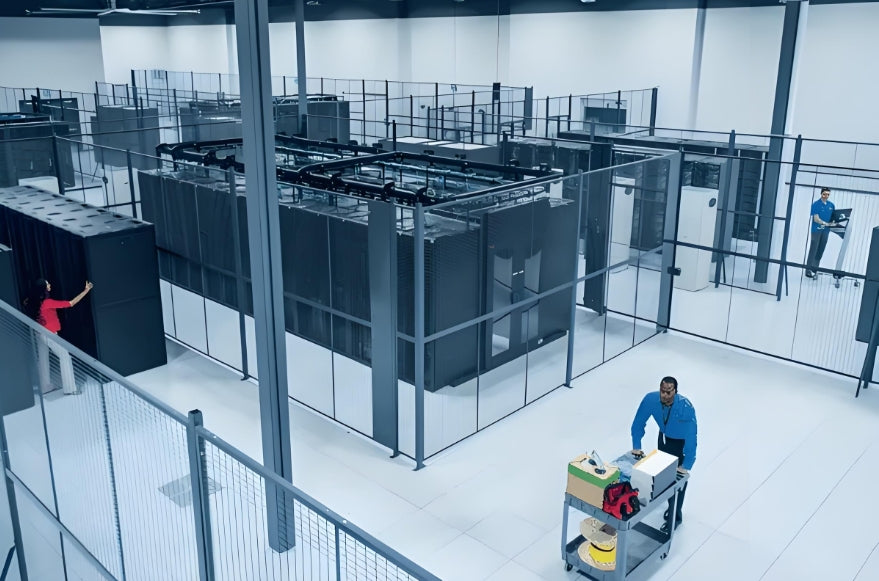
Virginia's landmark data center electricity tax transforms efficiency from an environmental consideration into a direct financial imperative for operators
Chapter 1: Understanding the Virginia Data Center Electricity Tax
What the Tax Covers
The Virginia legislation applies to electricity consumed by data centers from all sources:
- Utility power from traditional grid suppliers
- Competitive retail providers operating in deregulated markets
- Behind-the-meter generation, including on-site solar, fuel cells, and backup generators
This comprehensive coverage means data centers cannot escape the tax through alternative power sources — the consumption itself triggers the levy.
The Cost Impact
For a typical hyperscale data center consuming 500 GWh annually, the tax translates to:
These figures represent pure cost additions that cannot be passed through to customers in most colocation contracts. The burden falls directly on data center operators, making power efficiency improvements immediately financially attractive.
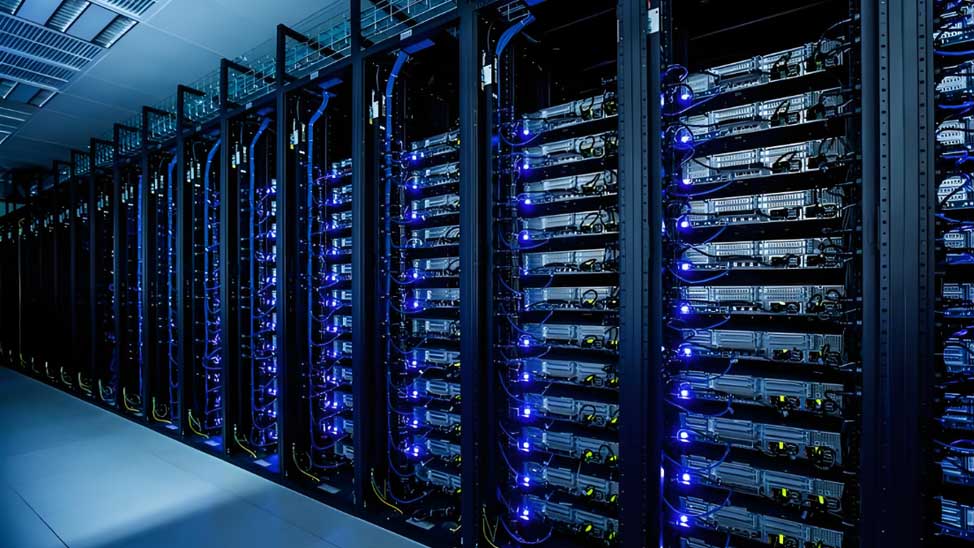
Every transition point in the power distribution chain — from utility feed to IT equipment — introduces losses that now carry direct financial costs under the new tax regime
Chapter 2: Power Distribution Design: New Efficiency Imperatives
Re-evaluating Power Distribution Architecture
Traditional data center power distribution follows a hierarchical path: utility feed → switchgear → UPS → PDUs → IT equipment. Each transition point introduces losses, typically 3-8% across the entire chain. In a tax environment, these losses now carry a direct financial cost.
Key optimization areas include:
- Higher voltage distribution: Moving from 208V to 480V or higher for longer distribution runs reduces I²R losses significantly
- Shorter power pathways: Designing for proximity between power sources and loads minimizes cable runs and associated losses
- High-efficiency UPS systems: Modern UPS units achieve 96-97% efficiency at typical loads, compared to 90-92% for legacy systems
- Intelligent load balancing: Dynamic load distribution across phases and PDUs prevents inefficiencies from unbalanced power draw
The Role of Structured Cabling in Power Efficiency
While power distribution efficiency often focuses on electrical infrastructure, structured cabling systems play an often-overlooked role in overall power consumption:
- Airflow optimization: Properly organized cabling reduces airflow blockage, improving cooling efficiency by 15-25%
- Reduced equipment count: Well-designed cable management eliminates unnecessary patch panels and intermediate connections
- Better thermal management: Organized cable routing prevents hot spots that trigger additional cooling loads
The Cabling-Power Connection
Here's what many operators miss: cabling infrastructure directly affects cooling load. Cluttered cable pathways block cold air supply and force additional cooling capacity — adding kWh to your metered consumption. Every improvement in cable management is also a power efficiency improvement.
Chapter 3: Compliance Requirements Under the New Regulatory Environment
Documentation and Metering Standards
Virginia's tax regime requires accurate electricity consumption measurement. This demands:
Sub-metering at multiple levels:
- Building-level utility meters (already standard)
- PDU-level monitoring for each power distribution unit
- Rack-level power monitoring for tenant billing and tax allocation
- Individual circuit monitoring for high-density deployments
Compliance documentation:
- Monthly consumption reports aligned with tax filing requirements
- Power factor measurements and corrective actions
- Load profile analysis demonstrating efficient operation

Accurate power monitoring at every level — from facility to rack — is essential for tax compliance and efficiency optimization
Impact on Colocation Billing Models
For multi-tenant data centers, the tax creates new billing complexity. Operators must decide whether to:
1️⃣ Pass through the tax as a separate line item (requires clear contract language)
Adds transparency but may drive customer churn if competitors absorb the cost.
2️⃣ Absorb the cost and adjust base pricing accordingly
Simpler billing but requires careful margin analysis across different customer profiles.
3️⃣ Implement tiered pricing based on consumption levels
Most equitable but requires granular metering infrastructure and sophisticated billing systems.
Chapter 4: Cabling Infrastructure: Meeting New Performance Standards
High-Density Power and Data Cabling Considerations
As data centers optimize power distribution for tax efficiency, cabling infrastructure must adapt to support higher densities:
Higher power densities per rack:
- AI servers drawing 15-30 kW per rack require specialized power cabling
- Power over Ethernet (PoE++) deployments at 90W per port demand larger gauge conductors (23AWG vs 24AWG)
- Thermal management becomes critical when bundling high-power cables
Compliance with updated standards:
- TIA-942-B and upcoming TIA-942-C revisions addressing high-density environments
- Shielding requirements for high-power environments to prevent EMI
- Fire safety ratings for cables in high-current pathways

High-density cabling environments require careful thermal management planning — every watt saved in cooling is a watt saved on your tax bill
Copper vs. Fiber: Efficiency Implications
While power distribution focuses on electrical infrastructure, the choice between copper and fiber cabling carries power efficiency implications:
| Factor | Copper | Fiber |
|---|---|---|
| PoE Compatibility | ✅ Native support for 90W PoE++ | ❌ Separate power delivery needed |
| Transceiver Power Draw | Moderate (per port) | Lower for short-reach |
| Thermal Impact | Heat-generating transceivers in cable path | Simplified thermal management |
| 800G/1.6T Support | Limited at 1.6T | Native support for highest speeds |
For most modern data centers, a hybrid approach — fiber for backbone and high-speed interconnects, copper for PoE applications — optimizes both performance and efficiency.
Chapter 5: Practical Implementation: Designing for Tax-Efficient Operations
Step 1: Conduct a Power Distribution Audit
Before making infrastructure changes, assess your current power distribution:
- Map all power pathways from utility connection to rack-level PDUs
- Measure losses at each transition point using power quality analyzers
- Identify inefficiencies: underutilized UPS systems, long cable runs, unbalanced phases
- Calculate tax exposure based on current consumption patterns
Step 2: Prioritize High-Impact Improvements
Focus on changes that deliver the greatest efficiency gains per dollar invested:
Quick Wins (3-6 Month Payback)
- Cable management improvements to optimize airflow
- Patch cord length optimization to reduce slack and improve airflow
- Power factor correction at the PDU level
Medium-Term Investments (12-24 Month Payback)
- UPS system upgrades to high-efficiency models
- PDU modernization with intelligent monitoring
- High-density patch panel deployments to reduce rack footprint and cooling load
Long-Term Strategic Changes (24-48 Month Payback)
- Power distribution architecture redesign for higher voltage
- Fiber backbone upgrades to support higher densities with lower power consumption
- On-site generation with grid-interactive capabilities
Step 3: Implement Comprehensive Monitoring
Accurate consumption data is essential for tax compliance and efficiency optimization:

Comprehensive power monitoring at every level supports both tax compliance and ongoing efficiency optimization
Chapter 6: Future-Proofing for Evolving Regulations
Virginia's data center electricity tax is likely a preview of regulations coming to other jurisdictions. Several factors point to broader adoption:
Grid Stress from AI Expansion
Gartner predicts 26% growth in global data center electricity consumption in 2026, reaching 565 TWh. AI-optimized servers alone account for 31% of this year's data center energy use. As hyperscale operators deploy gigawatt-scale AI clusters, local grids face unprecedented strain.
Policy Responses
Regulators are responding with:
- FERC orders requiring grid operators to explain how they'll handle gigawatt-scale load interconnections
- Capacity markets that charge data centers for peak demand contributions
- Carbon accounting requirements mandating renewable energy purchases
Designing for Regulatory Flexibility
Data center infrastructure must accommodate evolving requirements:
Modular power distribution:
- Design for future expansion without major retrofits
- Include spare capacity for monitoring and control systems
- Plan for both higher densities and distributed generation
Flexible cabling infrastructure:
- Pass-through patch panels for easier reconfiguration
- Multiple topology options (interconnect, cross-connect, end-of-row) in the same facility
- High-density form factors that leave room for future power delivery upgrades
Chapter 7: The Bottom Line — Efficiency as Competitive Advantage
Data center electricity taxes transform efficiency from an environmental consideration into a direct financial imperative. In Virginia, every kilowatt-hour wasted now costs $0.011 more than before — and similar costs are likely coming to other markets.
For data center operators, the path forward requires:
🚀 Immediate Action:
Audit power distribution systems and identify efficiency opportunities
💰 Infrastructure Investment:
Prioritize upgrades that reduce consumption and support compliance monitoring
🔧 Cabling Optimization:
Recognize that structured cabling systems directly impact power efficiency through airflow, thermal management, and equipment density
📊 Monitoring Deployment:
Implement granular power metering to support tax compliance and identify improvement opportunities
The data centers that adapt quickly will not only minimize their tax burden but also position themselves advantageously as similar regulations spread. Those that delay risk falling behind on both compliance and operational efficiency.

AMPCOM Technical Team
Industry experts with 17+ years in structured cabling, data center infrastructure, and fiber optic network design
Need help optimizing your data center power and cabling infrastructure?
AMPCOM provides a full range of structured cabling solutions — including high-density patch panels, fiber optic systems, and cable management products designed for tax-efficient data center operations.
Talk to Our Infrastructure Experts

